On winter mornings, the Forest Service Avalanche Center for the Sierra publishes the avalanche forecast for the day. This is useful information for anyone traveling in the backcountry.
Often a draft of the forecast is started the afternoon before after a day of skiing. It may be updated early in the morning with the benefit of that day’s weather forecast and any late arriving snow or avalanche observations. The snow and avalanche data is built on observations from Sierra Avalanche Center field staff who spend their days skiing. It is augmented with observations, photos and videos shared to the Sierra Avalanche Center website by the public.
The Forest Service Avalanche Center would not exist without community donations, despite being a government operation. Northstar, Heavenly, and Kirkwood have consistently directed significant support to the Sierra Avalanche Center through their donation of lift tickets to the Forest Service.
Northstar, Heavenly, and Kirkwood resorts have been the avalanche center’s largest business supporters for multiple years. This money goes back into supporting the Avalanche Center field staff, paying for skiing and observing, equipment, the website, and our ongoing efforts to increase avalanche awareness by promoting the center.
The Sierra Avalanche Center staff and volunteer board thanks to Northstar, Heavenly, Kirkwood and the Vail Resorts EpicPromise Team for their continued support.
(*) It should be noted that these large ski operations depend on Forest Service permits for their use of public lands.
Above average Sierra snowpack for the month of February continues, with California at 190% of normal snowpack for this time of year. With all this snow, the ski patrol team at Heavenly Ski Resort in South Lake Tahoe is urging skiers to be extremely cautious of avalanche danger.
In 2023, the Sierra Avalanche Center has reported two avalanches where a person was either caught, buried, or injured in an avalanche. One of the two incidents took place outside the ski area boundary at Heavenly. Avalanches that take place inbounds are rare.
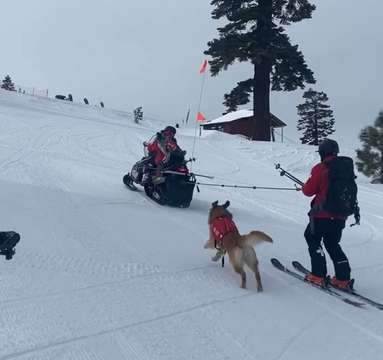
Ryan McPartland is the Ski Patrol Assistant Director at Heavenly Ski Resort. He has been on the ski patrol team for 25 seasons. For the last seven years, he’s had Yuba, his seven year old rescue dog by his side. Before that, McPartland also raised Yuba’s dad.
The legacy of patrol pups is nothing knew for the resort, which started the Heavenly Avalanche Rescue Dog or HARD team back in the late 1980’s. Today, Yuba is one of seven rescue dogs at Heavenly.
Avalanche dogs can search up to two football fields in 30 minutes, while it might take a human about 4 hours to conduct the same search. Making the role of an avalanche dog at a big resort like Heavenly that much more invaluable. McPartland explained,
People get excited by the above average Sierra snowpack, and they should. But they also need to know the risks.
The risk of an avalanche go up significantly once you exit the ski area boundary. McPartland warns. There is no ski patrol there to help you, so it’s very important that you have the training that you’re exposing yourself to a higher level of risk — and you know how to deal with it.
If you do decide to leave the ski area boundary, and ski in the backcountry, there are three things you are going to need:
An avalanche transceiver
An avalanche probe
A shovel
An avalanche transceiver can locate you from an isolated location underneath the snow. The avalanche probe will help with finding how deep under the snow you are, and the shovel that allows the rescuer to chop the snow up, and find you.
Above average Sierra snowpack prompts avalanche awareness
Description: Every year a multitude of people venture out into the snow to go snowshoeing, skiing, snowboarding, snowmobiling or climbing. Many are not fully informed of the dangers and the necessary risk management practices. This book sheds light on the fatalities that occurred last year and what went wrong in order to help others learn and improve their own margin of safety.
FOR IMMEDIATE RELEASE On sale now ISBN: 979-8371006769 <a href="https://<a href='http://www.avalanche-center.org/book/' rel='nofollow'>www.avalanche-center.org/book/https://www.avalanche-center.org/book/
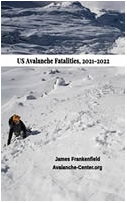
Fatal Avalanches in the US: 2021-2022 reviews in detail all of the fatal snow avalanches of the season. They are summarized collectively, each is described, and noteworthy factors are discussed. Finally, the common factors and problems behind these tragic events are discussed. This information is invaluable for helping skiers, snowboarders, snowmobilers, climbers, and others avoid such incidents in the future.
This 1st edition reviews the 17 avalanche fatalities between October 1, 2021 and September 30, 2022 in clear terms with simple and clear snowpack diagrams and no technical obfuscation. The focus is on understanding what went wrong and how risk management could have been improved.
“While it remains our right to venture forth into avalanche terrain it also remains our responsibility to manage our own risk, to our own acceptable level. Hopefully these experiences of others will contribute in some way to that. “ – James Frankenfield, Author
Fatal Avalanches in the US: 2021-2022: A Review of the Season’s Fatal Avalanches is a must-have book for anyone recreating outdoors in winter. It can be found both in Paperback and Kindle form on Amazon at <a href="https://<a href='http://www.amazon.com/dp/B0BQY4RNZV' rel='nofollow'>www.amazon.com/dp/B0BQY4RNZVhttps://www.amazon.com/dp/B0BQY4RNZV
ABOUT THE AUTHOR – James Frankenfield is a snow and avalanche professional with decades of experience as a skier/climber, snow scientist and engineer and mountain safety educator. He earned his M.Sc. in Physics in 1990 by studying seasonal snow and avalanches and has done scientific work in the field. In 1993 he started Avalanche-Center.org on USENET and a university gopher server and manages this project on the web to this day. He has climbed, soloed and guided alpine climbs throughout the western US, soloed a section of the Northville-Placid trail in winter in 1984, and has soloed multi-day glacier ski tours in the Alps. His website is snowman-jim.org
###
CONTACT: The Avalanche Center (Avalanche-Center.org) 877-604-0166 snowavalanche-center.org
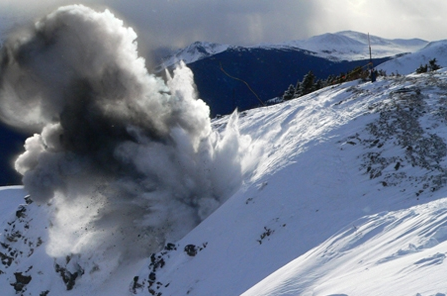
The explosive business of avalanche control keeps the ski area slopes safe for guests.
On many winter days explosions can be heard echoing across many ski areas. These are the sounds of avalanche mitigation.
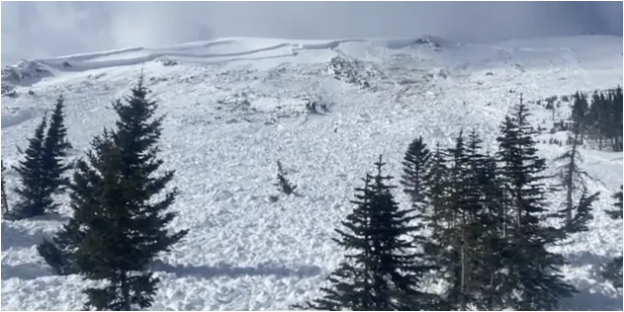
Dutch Draw Avalanche
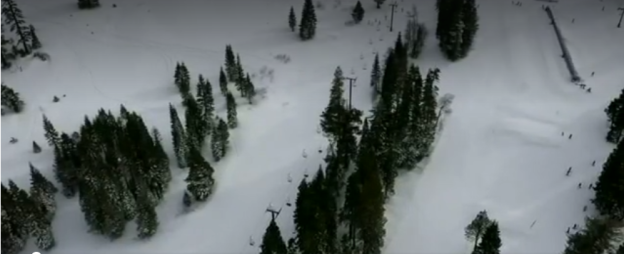
Last week an avalanche was reported in the Dutch Draw area of Park City, Utah between the lifts Peak Five and Ninety-Nine 90. According to Andy Van Houten, snow safety director of Park City Mountain, the avalanche occurred in the back country. “We worked with the Department of Public Safety helicopter,” he said. “It was established that nobody was involved. We had all of our witnesses accounted for, all is good.”
“There is no mitigation outside of the resort and so it’s 100% on the on the user, on themselves; we do worry about it from a rescue perspective but we do not do anything to mitigate that hazard,” Van Houten said.
Mitigation Methods
There are a few ways the ski patrol can mitigate avalanche risks. While the explosive business is the most dramatic two other methods are used as well. Ski cutting and compaction.
Ski cutting is where a patroller will ski intentionally across the top of a slope. This may trigger an avalanche as the slope is traversed. This method is used on smaller slides.
Another form of mitigation is called skier compaction.
“The best thing we can do is get this terrain open to public and get it skied,” Van Houten said. “That’s why we push so hard to get this terrain open, you know, in a timely fashion is that so we can get our guests up there to ski it and that’s what helps us, that kind of skis all the snow and it breaks up the layers that build up.”
Explosives
For bigger slopes there is the explosive business. There is a typically team of patrollers who go out in groups of two or three and carry explosives in their backpacks.
“It’s a cast booster, it’s about the size of a large can of soup and it’s a pentolite TNT combination,” Van Houten said. “It’s got 120-second fuse strain on it. It’s basically like a little cardboard tube and that’s it’s got a sparker in it. When we pull that, that’s what ignites the end of the fuse train. We either rope them, or we just throw them. And it’s like throwing a can of soup into the snowpack. It’s a good-sized shot. But we are usually pretty far away when it detonates and we kind of plug our ears and kind of turn our backs to it a little bit. So we’re not we’re not close to it by any means.”
A brave dog, presumed dead in an avalanche, was found alive several days later at a trailhead.
An avalanche triggered by a skier in Colorado hit a skier and snowboarder on Thursday, and their dog.
The skier deployed an airbag before being partially buried under snow. However, they lost sight of their four-legged friend amidst the chaos.
Fortunately for the skier and snowboarder, they were uninjured and able to make it out under their own power.
After looking all over for the dog presumed dead in the avalanche, the owners and a search crew had basically given up hope.
They left the scene and assumed the dog had died in the avalanche.
Search and rescue members didn’t see any signs of tracks.
Miraculously, however, after several days of being missing, the dog was found at a trailhead of Monarch Pass.
The reunion was incredibly emotional.
This isn’t the first time a pet has been rescued after dire circumstances in the Colorado mountains this season.
In December a video posted on YouTube showed skiers digging out a dog who had been under snow for 20 minutes after an avalanche.
Despite the positive outcome this time, Lazar reaffirmed that the best course of action when caught in an avalanche was for riders to keep an eye on their pet and only attempt to save them once it’s safe to do so
“We don’t want dogs to wear avalanche transceivers. We want people to be searchable by transceivers and not mixable with potential dogs with transceivers on,” Lazar said.
That’s one story that this courageously good boy or girl will remember for the rest of their dog years.
Site where a dog presumed dead in an avalanche was buried.
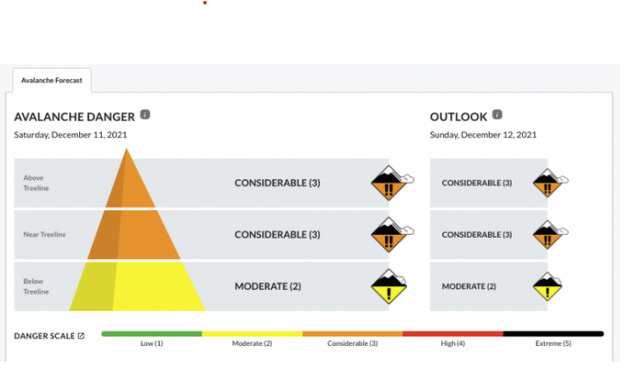
According to the US Forest Service, a skier was killed in an avalanche Saturday, December 11, in Silver Basin, a closed area of Crystal Mountain, Washington, that ski patrol had not mitigated for avalanche hazard. Six skiers from the same party were caught in the slide. The Pierce County Medical Examiner’s Office has identified the deceased as Robert “Bob” Weisel, 66, of Issaquah, Washington. This is the U.S.’s first avalanche fatality of the 2021/22 season.
After a long dry spell that has plagued much of the continental United States this winter, Crystal Mountain reported receiving 12 inches of snow in 24 hours with winds up to 100 mph at the summit Saturday. The Friday evening advisory rated the avalanche hazard as considerable near and above tree line. “Look for storm slabs to develop on Saturday at all elevation bands as the West South is targeted by a potent winter storm,” it warned. It reported of the newly forming storm slab, which was resting atop another recent storm layer and a crust from late November. They advised those entering the backcountry to “choose conservative terrain and realize that early season conditions still exist.”
Silver Basin, where the fatality occurred, is a north- through east-facing slope at approximately 6,500 feet that is marked as a black diamond when open. According to a preliminary report, the six individuals were traveling uphill when they triggered a large avalanche. Another party of two in the area that witnessed the avalanche reported it to Crystal Mountain Ski Patrol at 10:50 a.m. and assisted in the rescue. Four skiers were partially or fully buried, three of whom were successfully recovered. The fourth skier was found unconscious and did not respond to resuscitation efforts. All skiers involved were carrying avalanche equipment and several had taken a recent avalanche course.
A statement from Crystal Mountain following the fatality read, “As snow continues to fall, Crystal Mountain Ski Patrol reminds backcountry skiers to research uphill travel policies and check the avalanche forecasts before heading into the backcountry.”
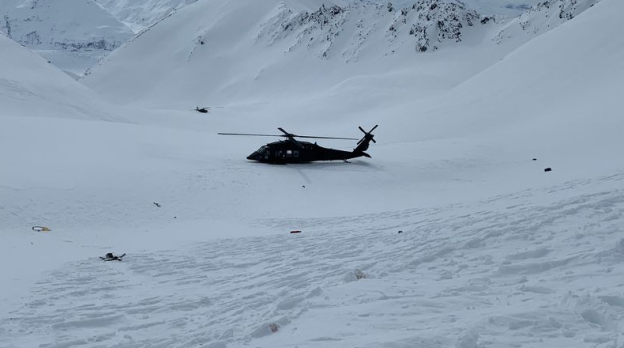
A heli-ski avalanche near Matanuska Glacier killed a Fairbanks woman who was heli-skiing on Saturday. It was witnessed by four others in the group.
Erin Lee, 40, was rescued and taken to Mat-Su Regional Hospital and pronounced dead.
She was part of a group heli-skiing about 7½ miles from the Glenn Highway east of the Matanuska Glacier, said Austin McDaniel, a spokesman for the Alaska state troopers. It wasn’t immediately clear which mountain the avalanche occurred on. Troopers have not visited the exact site. McDaniel also noted that another group was heli-skiing in the same area Saturday.
Group was from Majestic Heli Ski
Lee was one of four guests in the Majestic Heli Ski group led by one guide that afternoon.
Majestic Heli Ski is based near Mile 115 of the Glenn Highway. Which is about halfway between Palmer and Glennallen. Majestic Heli Ski offers packages that include heli-skiing in the Chugach and Talkeetna mountains. Majestic Heli Ski has not made any statements about the heli-ski avalanche near Matanuska Glacier.
Two clients and a guide were at the bottom after finishing a run. Lee began skiing and an avalanche was triggered. One other skier was still at the top. All four watched the slide bury Lee. No other skiers were caught in the avalanche and there were no other injuries, according to McDaniel.
Group had safety gear
Lee was equipped with avalanche safety gear. Including an avalanche beacon, rescue probe, shovel, harness and avalanche airbag system. She did not deploy the avalanche airbag system during the avalanche.
The other skiers in the group were also equipped with safety gear, and the guide had communication equipment. According to the company’s website, Majestic Heli Ski clients receive training about hazards and also how to use the safety gear.
“It sounds like the witnesses, including the guide, were able to see what happened and they were able to go right to the area and use the beacon technology,” McDaniel said.
Lee was recovered from the heli-ski avalanche near Matanuska Glacier by the group. Then flown to the hospital in the Majestic Heli Ski helicopter. It was not clear exactly how long Lee may have been buried. McDaniel said about an hour passed from the time of the avalanche until the time Lee reached the hospital.
It’s not clear what triggered Saturday’s heli-ski avalanche near Matanuska Glacier. McDaniel said there is not currently a plan to investigate that.
“The availability of having witnesses see what happened is key in us making the decision on trying to track down an avalanche specialist to go out there and determine a little bit more closely what had happened,” McDaniel said.
Closest danger forecast was Considerable
The area where this happened is outside the direct forecast zones for the Hatcher Pass and Chugach National Forest avalanche centers. There was a forecast from the Hatcher Pass Avalanche Center, about 60 miles west. It rated the avalanche danger there on Saturday as considerable at all elevations.
New snow fell in much of the Matanuska-Susitna Borough last week. That caused some instability for avalanche conditions in the Hatcher Pass area. Numerous natural, human and remotely triggered avalanches were reported Friday. One crossed and closed a road, the avalanche center wrote.
Guides at Majestic Heli Ski “continuously gather data and evidence, take field observations, perform snowpack tests, monitor weather conditions and evaluate and forecast the snow stability and the avalanche hazard,” according to their website.
Avalanche deaths not a common occurrence, says State Trooper
All backcountry recreating has risks, McDaniel said But avalanche deaths are a less common occurrence. Lee was the fourth person in Alaska to die in an avalanche this season. In early February, three climbers died in an avalanche on a steep and challenging route of Bear Mountain near Chugiak.
Five men also died heli-skiing Saturday when their helicopter crashed above the Knik Glacier in the Chugach Mountains southeast of Palmer. One man who survived the crash remains in serious condition. That group consisted of the pilot, three guests and two guides from Tordrillo Mountain Lodge.
McDaniel said he and other officials with the state troopers could not recall any deaths other than the six Saturday that were related to heli-skiing in recent years. A Southeast Alaska Backcountry Skiing Adventures heli-ski guide was buried in an avalanche near Haines in 2014. He eventually died, following the death of another guide from the same company on a Haines-area heli-ski trip in 2013. An avalanche near Haines killed an Alaska Heliskiing company guide and a snowboarder in 2012.
A Heli-ski avalanche near Matanuska Glacier killed a skier from Fairbanks
AP – Two Alpine Meadows avalanche lawsuits have been filed by the widow and a friend of a dead skier. They accuse the resort of negligently rushing to open the unsafe slopes for a busy holiday weekend.
Cole Comstock, 34, of Blairsden, California, was killed. His close friend Kaley Bloom was seriously injured. They were caught in an avalanche on an Alpine Meadows ski run on Jan. 17, 2020. Nobody else was seriously hurt.
Two Alpine Meadows avalanche lawsuits filed
The two Alpine meadows avalanche lawsuits were filed in Placer County Superior Court by Bloom and by Cole’s widow. They seek unspecified damages from Alpine Meadows. The allegations include negligence, gross negligence and breach of contract. Raymond’s lawsuit also alleged the resort was to blame for her late husband’s death.
The resort had closed the previous day following several days of heavy snow and high winds that dramatically increased avalanche risks, the lawsuits claimed. The National Weather Service in Reno reported wind gusts up to 116 mph the night before the avalanche.
Alpine Meadows “premature opening” that Friday “was in response to public and economic pressure to open that particular lift and callous disregard for the dangerous combination of conditions,” according to Bloom’s lawsuit. He says he suffered severe and ongoing injuries.
Avalanche Control work done
The avalanche happened after avalanche control work was performed, the resort said in a statement. Such work involves the use of explosive detonations. They intentionally trigger avalanches while guests are not in the area.
“While we cannot comment on ongoing litigation, January 17, 2020 was a devastating day for our team at Squaw Valley Alpine Meadows, and we continue to share our deepest sympathies with the family and friends of those affected,” Alex Spychalsky, a spokeswoman for both of the neighboring resorts, said in an emailed statement.
Raymond’s lawsuit says Alpine Meadows “should not have opened the ski run under the circumstances.”
Most skiers who buy ski resort passes must sign release forms. Those warn that winter activities “can be dangerous and involve the risk of injury or death.”
But Raymond’s lawsuit said the resort increased the risks beyond those normally assumed by skiers. Cole and Bloom believed they were skiing on a run that was safe because avalanche control had been performed.
Reopening the runs after they’d been closed the day before “created a false and reckless illusion of safety,” the lawsuit said. “Inadequate and/or incomplete mitigation measures did not decrease or mitigate the risks, but instead further increased the risk and turned a dangerous area into a deadly one.”
Raymond’s lawsuit notes that most ski fatalities occur outside of ski resorts. In-bounds avalanche deaths are rare.
Experienced Skier
Comstock was an experienced skier. He grew up in the Sierra Nevada and skied both in-bounds and out-of-bounds. Depending on the conditions of the day and information from the resort and the ski patrol, his widow said in the lawsuit.
Raymond was on the other side of the mountain when she got a phone call from friends. Telling her there had been an avalanche. She went to wait for her husband beneath a chairlift.
That’s when she saw the ski patrol pulling a stretcher with someone covered with snow and blood. They stopped and began administering CPR to the victim. Then she recognized her husband’s maroon ski boots and realized it was him.
She said blood spewed from his mouth with each push on his chest as the ski patrol team took turns at CPR for 45 minutes.
“Eventually they stopped as she watched them pull the white sheet over him. Her last image of her husband was a broken and already dead body,” the lawsuit said.
Seven people were killed in an avalanche at Alpine Meadows in 1982.
Two Alpine Meadows lawsuits were filed after a guest died in an avalanche.
By the end of Friday the Sierra Avalanche Center had received numerous reports of Tahoe avalanches.
“Perfect Day” leads to many avalanches
Friday started as a perfect winter day. About a foot of new snow fell overnight. In the morning the sky cleared. Then by the end of the day the Sierra Avalanche Center had received many avalanche reports. Some happened naturally but many were caused by skiers and snowboarders.
In the morning the Sierra Avalanche Center posted its forecast. The center stated the obvious – that storm slabs in the new snow were a big concern. They rated the avalanche danger as “considerable,” meaning that skiers and snowboarders were likely to trigger avalanches.
Reports of Tahoe avalanches continued through the weekend. There were no fatalities but multiple people were buried in avalanches. At least one person was seriously injured.
New storm snow problem, different from Utah and Colorado
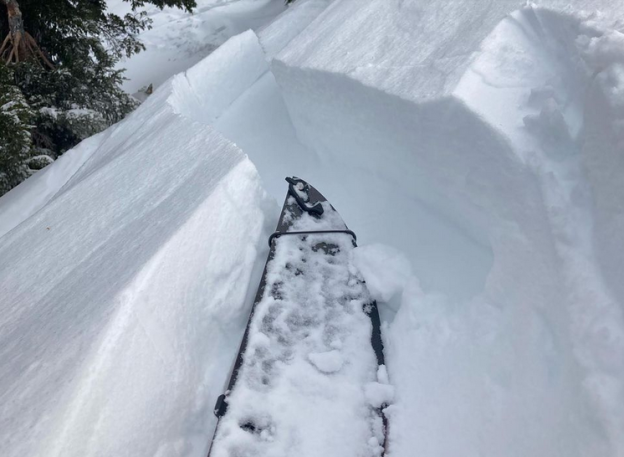
In the United States avalanches have killed 25 people so far this season, including 18 just in February. The snowpack across the mountain west has been riddled with inherent dangers since the beginning of the winter. In Colorado and Utah those persistent dangers are still playing a role in avalanches. The Sierra Nevada’s snowpack is generally faster to resolve those weaknesses. The avalanches on the holiday weekend were simply from new snow. According to the Sierra Avalanche Center the main issues are things like storm slabs and wind slabs.
Slew of Tahoe Avalanches
At Castle Peak, atop Donner Summit, a snowboarder jumped off a rock and was engulfed in snow.
Another skier-triggered avalanche near Carson Pass buried a person for about five minutes. The victim survived but had severe injuries.
At Mount Tallac the El Dorado County Sheriff’s Office dispatched a search and rescue team in a helicopter to respond to an avalanche triggered by a group of backcountry skiers. The response ended when authorities confirmed that no one had been caught in the avalanche.
“I would say any time you’re caught in a slide and you walk away, it’s lucky,” said Andrew Oesterreicher, a volunteer and board member with Tahoe Nordic Search and Rescue (TNSAR). “You don’t ever want to rely on that luck.”
An anonymous skier reported an avalanche on Flagpole Peak. After their first run they decided the snowpack was “bomber” and solid. So they skied a more aggressive line next.
“Clearly, it was a stupid mistake getting caught up with powder fever,” the skier reported. A few turns down the line a storm slab of new snow slid down the mountain, along with the skier.
TNSAR didn’t get any calls to respond to incidents over the weekend, Oesterreicher said. If they are dispatched it usually means the situation is tragic.
“The brutal reality is, typically, by the time we’re responding to an avalanche situation, it’s pretty much a recovery at that point,” Oesterreicher said. “Just because it takes our team so long to get to the scene.”
U.S. Forest Service, Sierra Avalanche Center
The Sierra Avalanche Center works to prevent accidents by issuing daily forecasts. The U.S. Forest Service hires three full-time avalanche forecasters who backcountry ski and then write reports. The Sierra Avalanche Center fundraises on behalf of the U.S. Forest Service to cover much of the payroll and related expenses. There are also three part-time paid observers who go skiing to check on conditions.
Due to the pandemic the center lost two fundraising sources they rely on to fund the Forest Service. The loss adds up to about $100,000, which is about a quarter of their annual budget.
PARK CITY, Utah — The Park City Mountain Canyons Ski Patrol closed off its access to the backcountry adjacent to the resort. The unusual step was taken after a couple of recent deadly slides amid high avalanche danger. Prior to a couple of recent fatal avalanches there had been numerous others in past years as well.
According to Utah.gov, “avalanches pose a significant hazard in Utah’s mountains between the months of January and April. These are seasons of heavy snow accumulation and unstable snowpack conditions.”
“An avalanche is a mass of snow, ice, and debris that slides rapidly down steep mountain slopes at speeds up to 80 mph when triggered by ground shaking, sound, or movement,” the official website stated.
Avalanches in Utah have claimed over 100 lives between 1958 and 2021. The snowpack this year is unusually thin, which contributes to the danger.
Park City Mountain responds to avalanche danger
Ski resorts around Utah are taking action to protect local winter enthusiasts.
Park City Mountain announced that resort management had directed the Canyons Ski Patrol to close off access to its adjacent backcountry areas. Skiers and snowboarders frequently access these areas from the resort.
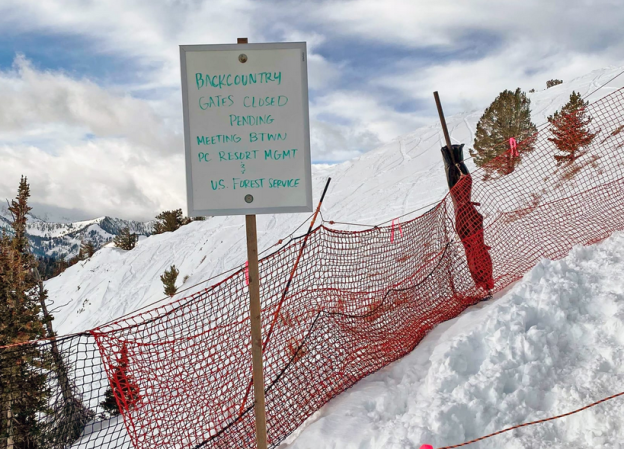
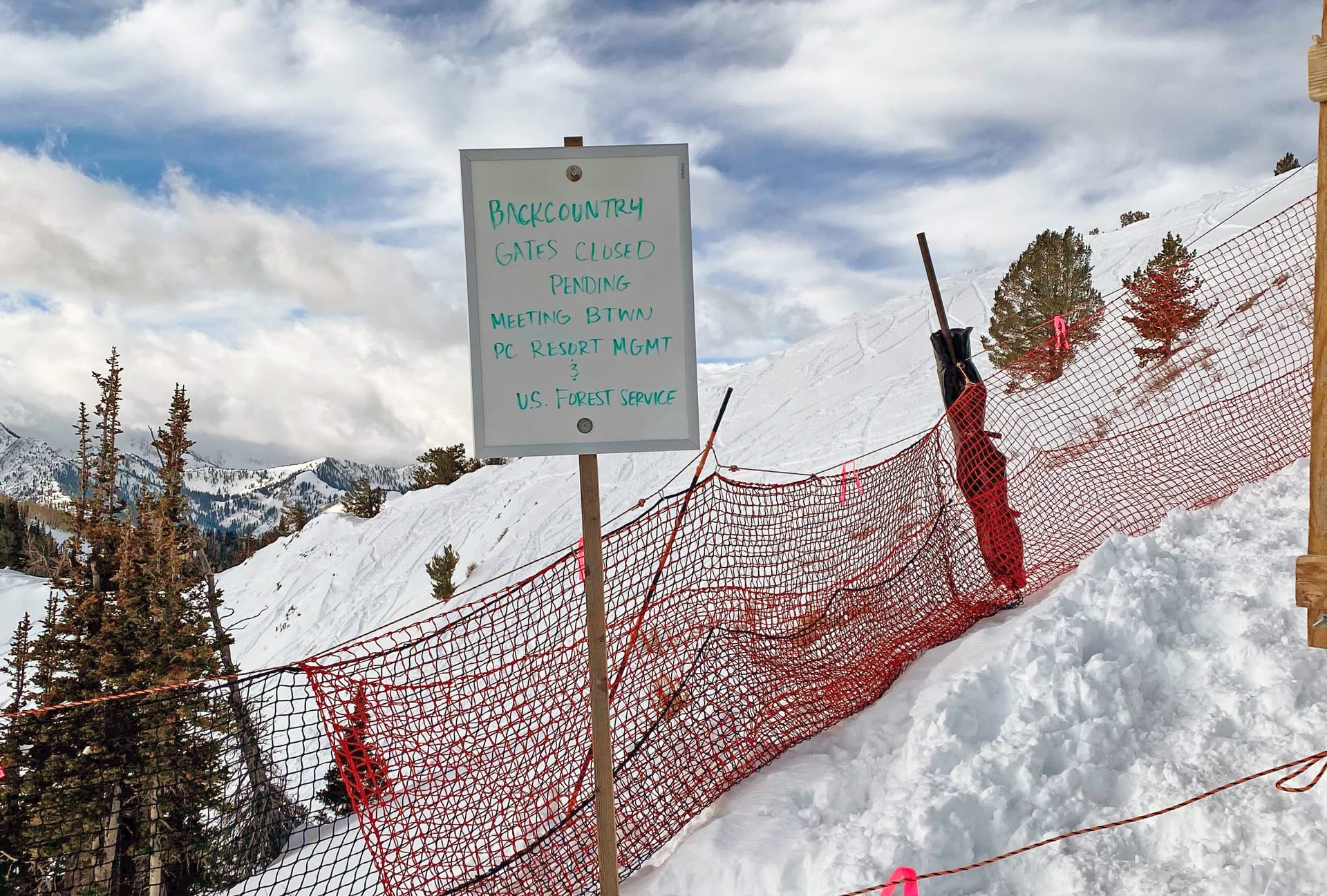
The resort posted signs at backcountry access points, restricting access. The sign reads, “Backcountry gates closed pending meeting between PC resort management and U.S. Forest Service.”
Due to the two deaths in January, the resort closed access to the backcountry from inbounds “until further notice.” Resort officials plan to meet with the U.S. Forest Service Thursday.



 avalanche-center.org