Category Archives: colorado

New Essential Reading for Winter Recreation: Fatal Avalanches in the US, 2021-2022

Press Release via Google News and PR*Urgent

Description: Every year a multitude of people venture out into the snow to go snowshoeing, skiing, snowboarding, snowmobiling or climbing. Many are not fully informed of the dangers and the necessary risk management practices. This book sheds light on the fatalities that occurred last year and what went wrong in order to help others learn and improve their own margin of safety.

FOR IMMEDIATE RELEASE
On sale now
ISBN: 979-8371006769
<a href="https://<a href='http://www.avalanche-center.org/book/' rel='nofollow'>www.avalanche-center.org/book/https://www.avalanche-center.org/book/

Fatal Avalanches in the US: 2021-2022 reviews in detail all of the fatal snow avalanches of the season. They are summarized collectively, each is described, and noteworthy factors are discussed. Finally, the common factors and problems behind these tragic events are discussed. This information is invaluable for helping skiers, snowboarders, snowmobilers, climbers, and others avoid such incidents in the future.

This 1st edition reviews the 17 avalanche fatalities between October 1, 2021 and September 30, 2022 in clear terms with simple and clear snowpack diagrams and no technical obfuscation. The focus is on understanding what went wrong and how risk management could have been improved.

“While it remains our right to venture forth into avalanche terrain it also remains our responsibility to manage our own risk, to our own acceptable level. Hopefully these experiences of others will contribute in some way to that. “ – James Frankenfield, Author

Fatal Avalanches in the US: 2021-2022: A Review of the Season’s Fatal Avalanches is a must-have book for anyone recreating outdoors in winter. It can be found both in Paperback and Kindle form on Amazon at <a href="https://<a href='http://www.amazon.com/dp/B0BQY4RNZV' rel='nofollow'>www.amazon.com/dp/B0BQY4RNZVhttps://www.amazon.com/dp/B0BQY4RNZV

ABOUT THE AUTHOR – James Frankenfield is a snow and avalanche professional with decades of experience as a skier/climber, snow scientist and engineer and mountain safety educator. He earned his M.Sc. in Physics in 1990 by studying seasonal snow and avalanches and has done scientific work in the field. In 1993 he started Avalanche-Center.org on USENET and a university gopher server and manages this project on the web to this day. He has climbed, soloed and guided alpine climbs throughout the western US, soloed a section of the Northville-Placid trail in winter in 1984, and has soloed multi-day glacier ski tours in the Alps. His website is snowman-jim.org

###

CONTACT: The Avalanche Center (Avalanche-Center.org)
877-604-0166
snowavalanche-center.org
Avalanche Mitigation Spaceships

Avalanche mitigation spaceships will be used on Colorado mountain highways.

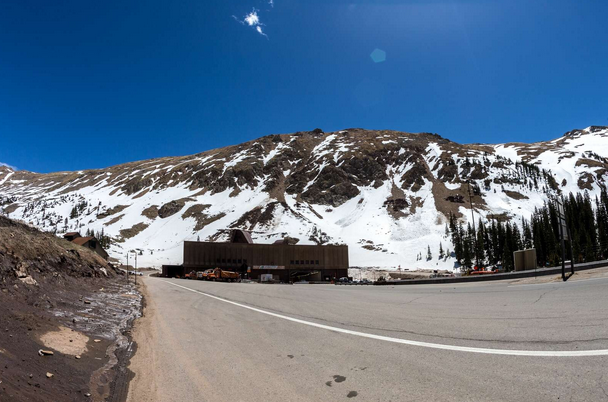
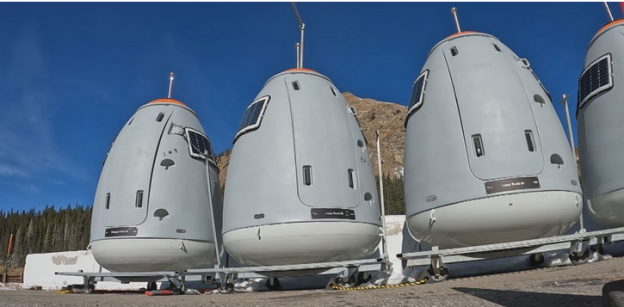
The egg-shaped devices lined in a row in the parking lot at the Eisenhower-Johnson Tunnels loom like spaceships getting ready for liftoff.

“Looks a little like the CDOT space force this side of the road,” said winter operations manager Jamie Yont. “These are our Gazex exploders, we have them for avalanche control around the west side of the Eisenhower Tunnel.”

The avalanche mitigation spaceships actually have no propulsion, they are taken up to mountain ridge tops by helicopter. There they are connected to towers from which a mixture of hydrogen and oxygen fill a chamber. The mixture can be remotely sparked to cause an explosion that triggers avalanches to keep roads safe.

CDOT has 16 spaceships: 12 at the Eisenhower-Johnson Tunnels, two on Berthoud Pass and two on Wolf Creek Pass.

They have been using the relatively new technology for a few years. They putting them in place in November and then bring them back down in May.

“It’s relatively new technology,” said Yont. “… we have had them for four or five winter seasons.”

November 8, 2022

Avalanche mitigation spaceships in Colorado

Dog Presumed Dead In Avalanche Is Found Alive Days Later

A brave dog, presumed dead in an avalanche, was found alive several days later at a trailhead.

An avalanche triggered by a skier in Colorado hit a skier and snowboarder on Thursday, and their dog.

The skier deployed an airbag before being partially buried under snow. However, they lost sight of their four-legged friend amidst the chaos.

Fortunately for the skier and snowboarder, they were uninjured and able to make it out under their own power.

After looking all over for the dog presumed dead in the avalanche, the owners and a search crew had basically given up hope.

They left the scene and assumed the dog had died in the avalanche.

Search and rescue members didn’t see any signs of tracks.

Miraculously, however, after several days of being missing, the dog was found at a trailhead of Monarch Pass.

The reunion was incredibly emotional.

This isn’t the first time a pet has been rescued after dire circumstances in the Colorado mountains this season.

In December a video posted on YouTube showed skiers digging out a dog who had been under snow for 20 minutes after an avalanche.

Despite the positive outcome this time, Lazar reaffirmed that the best course of action when caught in an avalanche was for riders to keep an eye on their pet and only attempt to save them once it’s safe to do so

“We don’t want dogs to wear avalanche transceivers. We want people to be searchable by transceivers and not mixable with potential dogs with transceivers on,” Lazar said.

That’s one story that this courageously good boy or girl will remember for the rest of their dog years.

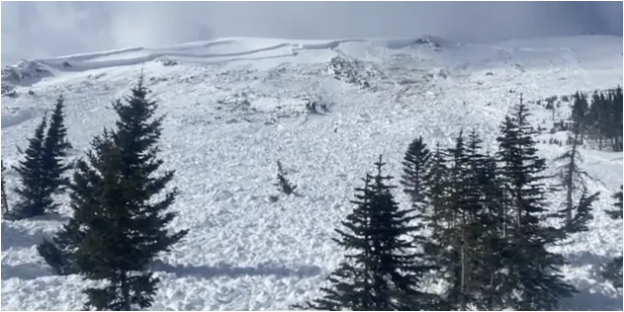
Site where a dog presumed dead in an avalanche was initially buried. It was found later.
Site where a dog presumed dead in an avalanche was buried.

Silverton Avalanche School dropped from lawsuit

It appears that Silverton Avalanche School was dropped from the lawsuit by the Marshall family, along with their guide. Neither party has commented so a settlement amount was most likely agreed on.

The family of Peter Marshall, who died in an avalanche during an AIARE advanced avalanche safety class with the Silverton Avalanche School, has dropped the school and teacher from their lawsuit. It appears that a settlement was reached. A complaint remains open against Backcountry Access, their owner K2 Sports, and K2 owner Kohlberg & Company.

Settlement Reached with Silverton Avalanche School?

Two years after the death Marshall’s wife and daughter sued San Juan Search and Rescue, the Silverton Avalanche School and the school’s guide, Zachary Lovell, in a wrongful death lawsuit. Last month the family dropped its claims against the county, school and guide. Attorneys for the Marshall family have not returned calls or responded to emails and representatives from the county and school declined to comment, indicating a settlement amount was most likely agreed upon.

The Fatal Avalanche Accident and the Allegations

The family had argued that the school and guide had misled Marshall into taking the class by “falsely presenting” that school staff “possessed deep operational experience in avalanche terrain.” The family also claimed the school and guide displayed gross negligence.

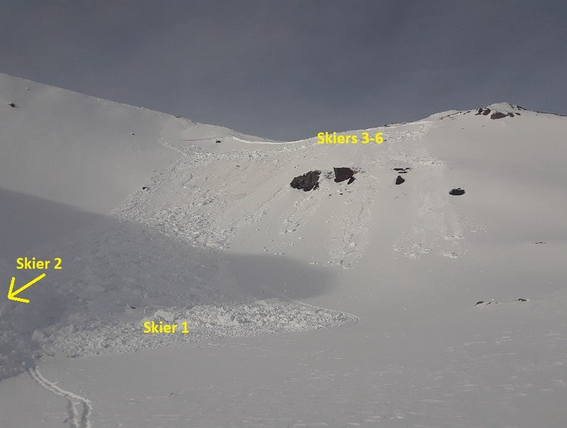
Marshall had been participating in the Silverton Avalanche School Level 2 American Institute for Avalanche Research and Education (AIARE) class on Jan. 5, 2019. He was swept down a slope in an avalanche that caught five other skiers. Four were not buried. Another was buried but was able to extricate himself. When the skiers freed Marshall from the debris, he was not breathing.

The Colorado Avalanche Information Center (CAIC) report pointed to several mistakes during the advanced class, including a group of skiers gathered on a slope steep enough to slide, those skiers misjudging the steepness of that slope and a failure to recognize clear avalanche hazards. The guide triggered the first avalanche, which swept the whole group down the slope. A second avalanche buried Marshall under several feet of snow.

Remaining Complaint Against Backcountry Access and K2 Sports

The family of the 40-year-old Longmont skier is still suing K2 Sports and its subsidiary Backcountry Access, which makes an air bag backpack that was not deployed when rescuers found Marshall buried in more than 8 feet of avalanche debris. “Peter Marshall attempted to trigger his Float 32 avalanche air bag system but it did not fully deploy or inflate,” according to the complaint filed in Boulder District Court.

Marshall’s Backcountry Access Float 32 pack was not inflated. Colorado Avalanche Information Center investigators said in their report that the air bag backpack “was functioning properly,” with “the trigger out of the pack strap, but the bag was not deployed.”

K2 Sports, owned by private equity firm Kohlberg & Company, denied the allegations in a response filed this month. The K2 lawyers cited 16 facts they believe eliminate liability in their motion to dismiss the case. 

Previous Float Pack Problems

The complaint notes that Backcountry Access recalled “substantially similar” Float packs due to a problem that could lead to a failure to deploy. The U.S. Consumer Products Safety Commission reported the recall of 8,200 Float 18 packs on Nov. 26, 2013. They warned that the trigger assembly can fail “resulting in the air bag not deploying, posing a risk of death and injury in the event of an avalanche.”

The complaint by the Marshall family argues Backcountry Access “should have known insufficient changes were made to the design of avalanche air bags manufactured after the recall to prevent such failures.” The lawsuit argues that Backcountry Access should have been aware of “safer alternative designs,” such as a remote or automatic triggering or inflation system.

Another skier in the group was wearing an avalanche air bag and attempted to use it when he was swept off his feet. It also failed to inflate. “Later, he determined that he assembled the trigger mechanism incorrectly,” reads the CAIC report. It did not identify the brand of air bag used by that skier.

A 2014 study showed 60% of avalanche accidents involving skiers with un-inflated air bags were because the skier never pulled the trigger. That study also showed 12% of so-called non-inflation incidents were due to user error, including assembling the trigger mechanism incorrectly.

Site of fatal avalanche. During a Level 2 AIARE course held by Silverton Avalanche School.
Site of the fatal avalanche during a Level 2 AIARE course behind the lawsuit against Silverton Avalanche School (settled) and Backcountry Access.

Mistrial in Colorado Avalanche Case against snowboarders

A mistrial in the Colorado Avalanche case against two snowboarders has been declared.

The two snowboarders are facing charges in Summit County for an avalanche they triggered last spring. Evan Hannibal, 26, and Tyler DeWitt, 38, appeared in Summit County District Court Thursday for what was supposed to be day one of their trial, but only half of those summoned for jury duty appeared.

Now they will have to wait until June for their day in court. The judge had to declare mistrial in the colorado avalanche case.

“I’m disappointed for a lot of reasons,” said Judge Edward Casias. “I’m disappointed for the parties not being able to address this the way they should have today. Both the People and Mr. Hannible and Mr. Dewitt were entitled to a jury trial of 6.”

Jason Flores-Williams, attorney for the defendants said about half of the 40 summoned showed up.

“…and when we started questioning jurors about what they knew about the case, if they had any biases, it became pretty clear that we weren’t going to be able to get 6 impartial jurors,” said Flores-Williams.

Judge Casias thanked those who did show up and had some words for those who didn’t.

“It’s an important case. Every case is important,” he said. “There are very few civic responsibilities we ask of you. Jury service and voting really are the two that we ask you to be engaged in with your community and some of the people that were summonsed chose not to and I will address that with them and probably the community at large.”

Eisenhower Tunnel Avalanche and Damage

Hannibal and DeWitt were snowboarding on March 25 when they triggered an avalanche just above the Eisenhower Tunnel.

“The avalanche put debris on the road that was over 400 feet wide and 20 feet deep,” said Ethan Greene, Director of the Colorado Avalanche Information Center.

The pair reported the slide to the CAIC and handed over GoPro video to go with the report. They never realized it would be used in a court case against them.

They now face a misdemeanor for reckless endangerment and may have to pay some restitution for damage caused.

The trial has been rescheduled for June 7, 8, and 9.

Mistrial in Colorado Avalanche Case
A Mistrial in Colorado Avalanche Case was declared.

Avalanche investigators must testify in Colorado criminal case

Avalanche investigators from the Colorado Avalanche Information Center (CAIC) must testify in the trial of Evan Hannibal and Tyler DeWitt according to Judge Casias. He dismissed a motion from the Attorney General’s Office to void subpoenas to keep them off the witness stand.

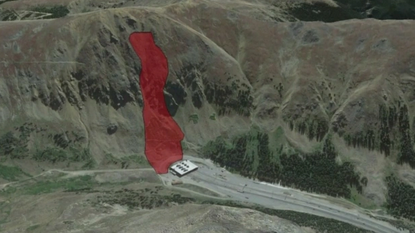
On March 25 DeWitt and Hannibal were snowboarding above the Loop Road at the Eisenhower/Johnson Memorial Tunnels. They triggered an avalanche. Nobody was injured but it covered more than 400 feet of the roadway up to 20 feet deep and damaged a remote avalanche-control installation.

The District Attorney charged both snowboarders with misdemeanor counts of reckless endangerment.

Much has been made of the avalanche center’s role. The center contacted the defendants after the avalanche to collect information to put together a report on the incident. The defendants voluntarily supplied information. Which was later shared with the Summit County Sheriff’s Office.

The defense attorney Jason Flores-Williams fought to suppress the report as evidence. He argued that it represented a violation of the defendants constitutional rights because they were never informed the information could be used against them. Judge Casias ruled there were no violations. The avalanche center employees weren’t acting as law enforcement agents in their investigation and there was no formal search or seizure.

The avalanche center was directly involved the case a few days later. Subpoenas for their avalanche investigators were issued. They required the center’s Director Ethan Greene and forecaster Jason Konigsberg to testify as expert witnesses. On Feb. 26 the Attorney General filed a motion to quash the subpoenas on the grounds that such testimony could have an “unintended adverse ‘chilling’ impact on the CAIC’s ability to gather important information from people involved in avalanches.”

On Tuesday Assistant Attorney General Jeff Fugate defended the office’s stance. He claimed that forcing the men to testify would harm future efforts to gather information following an avalanche. It could create a situation where backcountry users would no longer view the CAIC as impartial.

“The center is very aware of conversations taking place in the backcountry community. And advice being widely shared that people should no longer speak to the CAIC if they are involved in an avalanche,” Fugate said. “…That’s the exact opposite message the center has worked hard to implement in Colorado. People should be willing to share information with the center without hesitation or reservation because the more information the center has, the better it can educate the public about avalanche safety.”

“The agency has fulfilled their role by sharing this information. However, appearing as an expert for the prosecution takes them outside of this informational or educational role. It leaves the wrong impression or the misunderstanding that the CAIC is now ‘on a side.’ That’s something this agency just wants to avoid at all costs.”

Fugate said the fear wasn’t that community members would stop reporting avalanches altogether. But they may report an avalanche and refuse to provide any follow-up interviews, photos or videos.

Fugate continued to say that the subpoenas for the avalanche investigators were unnecessary. They say prosecutors could find other avalanche experts who weren’t working for the state to serve as witnesses.

In response Deputy District Attorney Stephanie Cava called the assertions speculative. She said her office often deals with situations like this. She compared the situation to someone getting in a car crash, calling the police and still potentially getting a ticket.

She also said that some fears were driven by inaccurate news reporting. She singled out a recent story from The Colorado Sun. Which mistakenly called the case the state’s first criminal case involving an avalanche. She claims there were three cases that went to trial in Summit County in 2014 after a fatal avalanche. While those cases did not receive the same news coverage Cava claimed it did not impact avalanche reporting. She noted that field reporting to the avalanche center nearly doubled from 2014 (1,392) to 2020 (2,771).

Cava also says that reports her office seeks a set amount of restitution in the case were false. Any restitution amounts will be decided if the men are convicted. She noted that the most recent plea offer her office made to the defendants was rejected. It involved the defendants pleading guilty to reckless endangerment, performing 120 hours of public service and paying $25,000 in restitution.

Cava also said that prosecutors are given wide latitude to call witnesses. Quashing them in this case could create a bad precedent in the district. She claims that witnesses from state agencies frequently testify without compromising their impartiality.

“When a (Colorado Bureau of Investigation) forensic scientist comes and testifies in a DUI case, they don’t get up there and speak on behalf of the people,” Cava said. “… (They) don’t get up there and say, ’That person was drunk.’ They say, ‘Well this is the test that I did, this is how I did it and, based on that information, you could see these sorts of signs.’ They don’t give a conclusory opinion.”

Casias noted that avalanche investigators Greene and Konigsberg would be reluctant witnesses and that the case potentially could have impacts on future avalanche reporting. But he said the district attorney’s office didn’t err in issuing the subpoenas.

As expert witnesses, Casias said the men would be asked only to share their objective findings from their investigation.

“They don’t get to sit here and say this person is guilty or not guilty of any criminal conduct,” Casias said. “… Their expertise and their knowledge is providing an objective determination of what caused the avalanche to go.”

The trial is set for March 25-26.

The scene of the crime in a Colorado avalanche court case.
The scene of the crime
Avalanche

Avalanche testimony in criminal case could have “chilling effect”

Avalanche testimony by Colorado Avalanche Information Center boss Ethan Green in a criminal case could hinder the function of the agency, according to the state Attorney General.

Defendant Provided his video

Evan Hannibal provided his helmet video of the avalanche he triggered above Interstate 70 last March. The avalanche buried a service road and destroyed an avalanche mitigation installation protecting I-70. He thought the Colorado Avalanche Information Center (CAIC) would use his submission to help educate others.

But Summit County prosecutors used the video for a criminal case. They seek restitution for the damaged avalanche mitigation device.

Hannibal and Tyler DeWitt are charged with reckless endangerment. Restitution of $168,000 is sought for the destroyed avalanche mitigation device.

Adverse impact of video

Hannibal has argued that the charges could convince others to stop giving information to the CAIC. Colorado Attorney General Phil Weiser, as attorney for the state avalanche center, has agreed. He argues against the plan to call avalanche center director Ethan Greene as an expert witness. He states it “could have an unintended adverse impact on the CAIC’s ability to gather important information.”

Weiser’s office has filed motions to quash subpoenas requiring Greene and forecaster Jason Konisberg to testify as expert witnesses.

Novel Avalanche Case

It is a novel case in several ways.

Backcountry travelers have never before faced criminal charges over an avalanche in Colorado. Summit County Court Judge Ed Casias recently rejected the pair’s argument that their rights were violated when the helmet video was provided to police as evidence of a crime.

Now Weiser has stepped in, asking Judge Casias to reject having state employees testify.

“There is genuine concern that if CAIC employees appear as an expert witness it could adversely impact their ability to gather information from persons involved in an avalanche,” the motion filed by Weiser’s office reads. “The more involved CAIC is, the more it looks like they are working with law enforcement, resulting in a chilling effect on CAIC’s mission.”

Too busy for avalanche testimony in court

Weiser also argued that the subpoenas are “unduly burdensome, unreasonable and oppressive.” Because it takes them away from avalanche investigations and forecasting.

James Moss is an attorney with over 30 years experience in recreation law. Moss thinks the loss of avalanche testimony by Greene and Konisberg could hinder the case. Moss thinks that without them the district attorney will have a hard time explaining the CAIC report. Or to explain why the avalanche mitigation device was placed in that particular location.

But more important, Moss says, is the threat to the CAIC mission. Which includes educating the public on avalanche risks.

“The motion states clearly that this is going to screw up avalanche research and reporting in Colorado forever,” said Moss. He has no role in the case but urges backcountry travelers to avoid talking with the CAIC. “You never report to CAIC from here on out, period,” Moss said.

Avalanche in Colorado
The avalanche in question in the case with avalanche testimony
Avalanche

Avalanche defendants suffer motion dismissal in court

Two avalanche defendants, snowboarders, are facing charges and a $168,000 fine for an avalanche that threatened I-70. A judge just dismissed their motion to dismiss video of the avalanche they gave to Colorado Avalanche Information Center.

Motion to Dismiss

A Summit County Court judge dismissed a motion to suppress a GoPro video of the avalanche. Evan Hannibal and Tyler DeWitt had given the video to the Colorado Avalanche Information Center (CAIC).

The video is evidence in the Summit County District Attorney’s case against Hannibal and DeWitt. They are charged with reckless endangerment and could face a $168,000 fine. These are the first criminal charges ever filed against skiers involved in an avalanche in Colorado.

The prosecution argues that the avalanche defendants endangered drivers near the west portal of the Eisenhower-Johnson Memorial Tunnels. They want $168,000 to replace an avalanche control system destroyed they destroyed. The CAIC said they triggered the avalanche.

The snowboarders argued that prosecutors conducted an unlawful search and seizure when they based the allegations on the helmet-cam video. The men gave the video to the CAIC voluntarily. They hoped it could be useful so others might avoid a similar slide.

CAIC is a State Agency

“This is a state agency, a constitutional actor, not informing citizens that what they are voluntarily disclosing in good faith to that that state agency could, and in this case was, turned over to law enforcement for purposes of prosecution,” Jason Flores-Williams, the attorney for DeWitt and Hannibal, said during the motions hearing on Tuesday. “This is extraordinarily problematic. There was a duty to inform Mr. Hannibal that what he was providing to the CAIC could be turned over to law enforcement.”

CAIC director Ethan Greene and avalanche forecaster Jason Konigsberg testified that the avalanche defendants voluntarily provided information and video about the avalanche. The CAIC report said the snowboarders triggered the avalanche. And also that the two “assumed that the avalanche mitigation to protect the tunnel infrastructure decreased the avalanche hazard on the slope.”

Greene said it is common for law enforcement to request information. The CAIC shares its reports. The state agency offers all reports for public review. “Our role is to facilitate people understanding avalanches, and we do that by sharing information,” Greene said. “If the public requests information from us, we provide it.”

The CAIC did not include the video in its public report, although they often do publishes videos. “It was my judgment that the content of the video did not add to the educational messages we were trying to get across in the report,” Greene said.

Video Provided Voluntarily

Konigsberg agreed with Flores-William in saying the sharing of the video was “voluntary and collegial.”

Flores-William asked Konigsberg if he thought the video could be handed over to law enforcement. “Can I think about that for a second?” Konigsberg asked. “Honestly, it’s not something I thought about. I kind of had a one-track mind to collect information for avalanche education and safety, like I always do.”

The prosecution argued that Hannibal and DeWitt, experienced with CAIC reports, should have known that CAIC publishes information. “I understand there is a concern about the public policy side of this, but we have to focus on the law,” McCollum said. “And none of the law supports the … argument that this video or the photos that were obtained should be suppressed.”

Judge Ed Casias found there was not any violation of constitutional protections from unlawful search and seizure because there was no search and nothing was seized. “It wasn’t a search of any kind. Mr. Hannibal was asked if he would provide it and he did,” Casias said.

Casias said he wouldn’t expect Konigsberg to tell Hannibal the video could be used by law enforcement. “Frankly, he didn’t know that was going to happen. That was not the reason he was collecting information,” Casias said.

Miranda Rights don’t apply

Casias also denied the argument that the collection of the video violated the men’s Miranda rights, which only applies to people in custody when they are advised that what they say can be used against them in court. “There is information here that was provided voluntarily. It was provided to CAIC, not law enforcement,” Casias said.

The courts should ensure police don’t circumvent constitutional protections against unlawful search and seizure, Casias said. Still, he could not connect a skier providing information to an avalanche center with a constitutional violation. 

“If there are things that you, as a backcountry traveler do that cause new concern that law enforcement may be involved and someone reaches out and asks for information, you don’t have to give it,” Casias said. “I can’t make you disclose and I can’t make you withhold. But if your common goal is to make it safer for other people … it’s your decision.”

The avalanche started by the defendants
The two avalanche defendants started an avalanche that created a threat to I-70.

Snowboarder caught in avalanche carried 1,000 feet, deployed airbag

Maurice Kervin has spent 65 days snowboarding so far this season. Friday is a day he won’t forget. On that day the snowboarder was caught in an avalanche.

“Friday was beautiful. It was golden. We had actually been planning all week to ski this line,” he said.

Recent AIARE Course

Kervin had recently completed a Level 1 safety course through the American Institute for Avalanche Research and Education (AIARE).

All week he and his friends had been watching the avalanche forecast and felt conditions were improving.

“Everyone was actually really excited that the avalanche danger level had actually gone down,” said Kervin. He wasn’t as sure about the forecast, adding, “I was very concerned. I was like, ‘I don’t know guys.'”

Nervous about the day

Kervin and his riding partner hiked toward a spot called No Name near Loveland Pass. They continued to check conditions on their way. And they tested patches of snow for stability. Although the results didn’t show any signs of instability he felt nervous before dropping in.

“I remember telling my buddy ‘I don’t know man. I’m kind of nervous about this run, and if it goes it’s probably going to go big,'” said Kervin.

Kervin think he made it a third of the way down when everything changed. Then the snowboarder was caught in the avalanche.

Caught in an Avalanche

“I cut into a thin patch of snow in some cliff bands. At that point it released below me and the whole slab started to go underneath me. I looked up and around and I saw the snow start coming down from above,” said Kervin.

The avalanche happened quickly and swept him off his feet.

“I definitely wasn’t in control at all, the avalanche was in control. I never had a doubt in my mind that I was going to get buried. My biggest concern was that I was going to hurt myself in some way and make it difficult getting off the mountain,” said Kervin.

He deployed the avalanche airbag in his backpack.

“So I freed my hands, I pulled the bag and I started to do backstroke and kick my feet up to stay on top of the snow, basically just to make myself as big and less dense as possible,” said Kervin.

Kervin was carried about 1,000 feet before he came to a stop on the snow surface. In his video you can hear his air bag fill up. Then seconds later his board hits a large rock where he went over a cliff.

“I was very calm through the whole thing. I think that’s very important thing to be in such a situation. Often times when people panic they make poor decisions or don’t make any decisions at all,” said Kervin.

Role of Training and an Airbag

He made it out with only a dislocated finger. He’s been skiing and riding in the backcountry for about 10 years and completed a Level 1 safety course through AIARE. Despite that, he did not avoid the recognized risk. But Kervin believes the airbag and his training likely saved his life. “I knew what we were doing, and the possibilities that I had feared came true,” said Kervin. He called 911 to report the avalanche but did not require assistance from a rescue team.

He was skiing again the very next day but he wants his story to be an cautionary tale for others who might be venturing into the backcountry, some for the first time.

A snowboarder was caught in an avalanche.
Snowboarder caught in avalanche

Silverton Avalanche School raises money with Rando Race

Silverton Avalanche School is the beneficiary of the second annual Know the Snow Rando Race. The race at Purgatory raises money for the Know the Snow Fund which supports avalanche classes.

This year’s race was dedicated to the memory of Bert Perry and Jeff Paffendorf, Durango community members and experienced backcountry enthusiasts who recently died in an avalanche outside of Silverton.

Dr. Jeff Paffendorf, an experienced skier, died on Dec. 10 along with Albert Perry. They were caught in an avalanche they triggered on the north face of the Battleship, which is near Silverton.

Their accident shows just how unstable the snowpack was. It is important for backcountry skiers to be as knowledgeable as possible about the conditions they will face.

Wind blown snow was deposited on the slope where Paffendorf and Perry skied. It accumulated on an unstable base layer. The Colorado Avalanche Information Center had reported that the avalanche danger was considerable that day.

In 2020, the race raised more than $10,000 and provided 19 scholarships for skiers to attend avalanche education courses with Silverton Avalanche School. The funds fully paid for Level 1 and Level 2 avalanche courses at Silverton Avalanche School.

Silverton Avalanche School Rando Race promo
Rando Race promo.