Forest Service Avalanche Center would not exist without donations

On winter mornings, the Forest Service Avalanche Center for the Sierra publishes the avalanche forecast for the day. This is useful information for anyone traveling in the backcountry.

Often a draft of the forecast is started the afternoon before after a day of skiing. It may be updated early in the morning with the benefit of that day’s weather forecast and any late arriving snow or avalanche observations. The snow and avalanche data is built on observations from Sierra Avalanche Center field staff who spend their days skiing. It is augmented with observations, photos and videos shared to the Sierra Avalanche Center website by the public.

The Forest Service Avalanche Center would not exist without community donations, despite being a government operation. Northstar, Heavenly, and Kirkwood have consistently directed significant support to the Sierra Avalanche Center through their donation of lift tickets to the Forest Service.

Northstar, Heavenly, and Kirkwood resorts have been the avalanche center’s largest business supporters for multiple years. This money goes back into supporting the Avalanche Center field staff, paying for skiing and observing, equipment, the website, and our ongoing efforts to increase avalanche awareness by promoting the center. 

The Sierra Avalanche Center staff and volunteer board thanks to Northstar, Heavenly, Kirkwood and the Vail Resorts EpicPromise Team for their continued support. 

(*) It should be noted that these large ski operations depend on Forest Service permits for their use of public lands.

Forest Service Sierra Avalanche Center would not exist without donations
Donate to the Forest Service today!

Above average Sierra snowpack prompts avalanche awareness

Above average Sierra snowpack for the month of February continues, with California at 190% of normal snowpack for this time of year. With all this snow, the ski patrol team at Heavenly Ski Resort in South Lake Tahoe is urging skiers to be extremely cautious of avalanche danger.

In 2023, the Sierra Avalanche Center has reported two avalanches where a person was either caught, buried, or injured in an avalanche. One of the two incidents took place outside the ski area boundary at Heavenly. Avalanches that take place inbounds are rare.

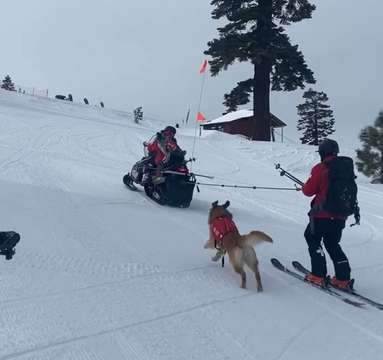
Ryan McPartland is the Ski Patrol Assistant Director at Heavenly Ski Resort. He has been on the ski patrol team for 25 seasons. For the last seven years, he’s had Yuba, his seven year old rescue dog by his side. Before that, McPartland also raised Yuba’s dad.

The legacy of patrol pups is nothing knew for the resort, which started the Heavenly Avalanche Rescue Dog or HARD team back in the late 1980’s. Today, Yuba is one of seven rescue dogs at Heavenly.

Avalanche dogs can search up to two football fields in 30 minutes, while it might take a human about 4 hours to conduct the same search. Making the role of an avalanche dog at a big resort like Heavenly that much more invaluable. McPartland explained,

People get excited by the above average Sierra snowpack, and they should. But they also need to know the risks.

The risk of an avalanche go up significantly once you exit the ski area boundary. McPartland warns. There is no ski patrol there to help you, so it’s very important that you have the training that you’re exposing yourself to a higher level of risk — and you know how to deal with it.

If you do decide to leave the ski area boundary, and ski in the backcountry, there are three things you are going to need:

  • An avalanche transceiver
  • An avalanche probe
  • A shovel

An avalanche transceiver can locate you from an isolated location underneath the snow. The avalanche probe will help with finding how deep under the snow you are, and the shovel that allows the rescuer to chop the snow up, and find you.

Above average Sierra snowpack prompts avalanche awareness

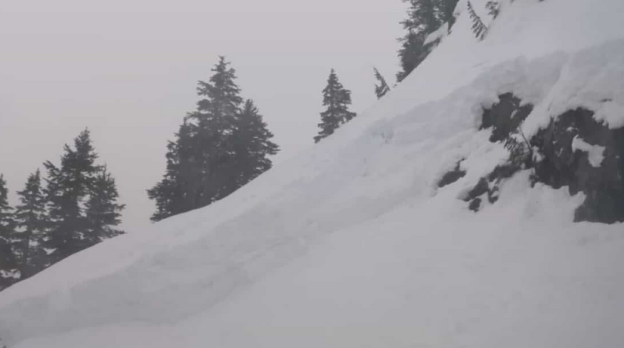
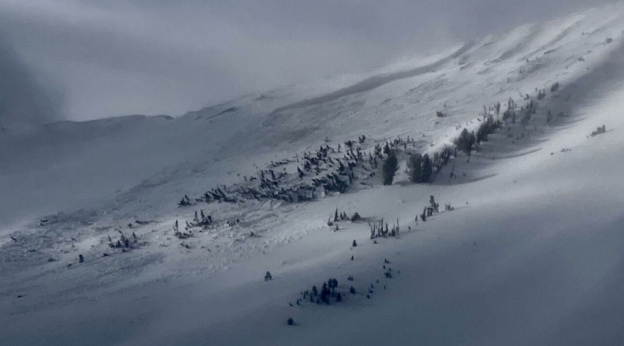
Inbounds Avalanche – Search Finds Nobody

Eaglecrest Ski Area, AK, confirmed a large inbounds avalanche in a closed area of the resort. Crews using beacons, probes, dogs, and RECCO equipment searched the scene but found nobody trapped. The resort had received 25″ of fresh snow in the previous five days. The slide, in the East Bowl Chutes, was seven feet deep and ran for 100 yards.

“At 10:10 am on January 26th, Eaglecrest Ski Patrol received a report of an avalanche in closed terrain in the East Bowl Chutes. Upon investigation, ski patrol found a large avalanche approximately 6 to 7 feet deep and approximately 75 yards wide and approximately 100 yards long. A preliminary avalanche transceiver search was immediately launched, which was followed by a secondary transceiver search. Our RECCO detection equipment was then dispatched for the search. Alaska SEADOGS, Juneau Mountain Rescue, and the Alaska State Troopers were notified and called on scene. SEADOGS performed a search with two dogs. The Ski Patrol staff probed through debris and catchment spots in an abundance of caution to be sure that no one was entrapped despite this portion of the mountain being closed for the day. Eaglecrest has just gone through a very active week of weather, with inches of rain and snow-water equivalent moisture over the last 7 days. The mountain had extremely limited terrain open today off the top of the mountain as we were allowing the snowpack to adjust to all of the additional weight and drain.”

– Eaglecrest report

Eaglecrest has seen 211″ of snow this season and has a 136″ base. Much of the upper mountain was closed at the time of the slide to protect the fragile snowpack.

Inbounds Avalanche at Eaglecrest
Inbounds Avalanche at Eaglecrest Ski Area, AK. Credit: Resort

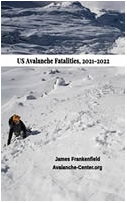
New Essential Reading for Winter Recreation: Fatal Avalanches in the US, 2021-2022

Press Release via Google News and PR*Urgent

Description: Every year a multitude of people venture out into the snow to go snowshoeing, skiing, snowboarding, snowmobiling or climbing. Many are not fully informed of the dangers and the necessary risk management practices. This book sheds light on the fatalities that occurred last year and what went wrong in order to help others learn and improve their own margin of safety.

FOR IMMEDIATE RELEASE
On sale now
ISBN: 979-8371006769
<a href="https://<a href='http://www.avalanche-center.org/book/' rel='nofollow'>www.avalanche-center.org/book/https://www.avalanche-center.org/book/

Fatal Avalanches in the US: 2021-2022 reviews in detail all of the fatal snow avalanches of the season. They are summarized collectively, each is described, and noteworthy factors are discussed. Finally, the common factors and problems behind these tragic events are discussed. This information is invaluable for helping skiers, snowboarders, snowmobilers, climbers, and others avoid such incidents in the future.

This 1st edition reviews the 17 avalanche fatalities between October 1, 2021 and September 30, 2022 in clear terms with simple and clear snowpack diagrams and no technical obfuscation. The focus is on understanding what went wrong and how risk management could have been improved.

“While it remains our right to venture forth into avalanche terrain it also remains our responsibility to manage our own risk, to our own acceptable level. Hopefully these experiences of others will contribute in some way to that. “ – James Frankenfield, Author

Fatal Avalanches in the US: 2021-2022: A Review of the Season’s Fatal Avalanches is a must-have book for anyone recreating outdoors in winter. It can be found both in Paperback and Kindle form on Amazon at <a href="https://<a href='http://www.amazon.com/dp/B0BQY4RNZV' rel='nofollow'>www.amazon.com/dp/B0BQY4RNZVhttps://www.amazon.com/dp/B0BQY4RNZV

ABOUT THE AUTHOR – James Frankenfield is a snow and avalanche professional with decades of experience as a skier/climber, snow scientist and engineer and mountain safety educator. He earned his M.Sc. in Physics in 1990 by studying seasonal snow and avalanches and has done scientific work in the field. In 1993 he started Avalanche-Center.org on USENET and a university gopher server and manages this project on the web to this day. He has climbed, soloed and guided alpine climbs throughout the western US, soloed a section of the Northville-Placid trail in winter in 1984, and has soloed multi-day glacier ski tours in the Alps. His website is snowman-jim.org

###

CONTACT: The Avalanche Center (Avalanche-Center.org)
877-604-0166
snowavalanche-center.org

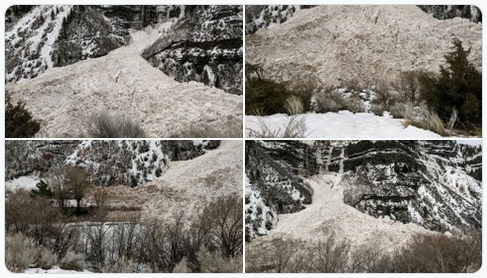
A Provo Canyon Avalanche creates ‘dangerous conditions’

A Provo Canyon avalanche ran into the Provo River at Bridal Veil Falls. It left an enormous pile of snow and debris in the Provo River.

UDOT’s traffic camera in the area showed just how massive the pile was. People could be seen walking along the river’s border.

The canyon had been closed in the morning for avalanche mitigation. US 189 was reopened at approximately 11 a.m.

Though the roadway was opened and not obstructed, authorities shared concerns about drivers slowing down or stopping to get a better view of the incident. The Utah Highway Patrol issued a statement telling “motorist(s) not to stop on the shoulder of the roadway. It has caused some dangerous conditions.”

The Provo Canyon Avalanche apparently happened sometime in the morning hours ahead of the planned avalanche mitigation.

It didn’t become clear how massive the slide was until after it was fully lit by sunlight.

Authorities with UDOT didn’t express a high level of concern over the event. In a statement UDOT noted that “there was a pretty big slide that went right down Bridal Veil Falls, but didn’t affect the road. We’ve set off a few additional avalanches, but nothing too major just yet.”

A Provo Canyon avalanche
A Provo Canyon avalanche ran into the Provo River at Bridal Veil Falls.

January 10th 2023

Sidecountry vs. backcountry, dispelling misconceptions

Sidecountry vs. backcountry. In both areas accidents can happen. Skiing and snowboarding, even at a ski resort, is never without risk. Understanding avalanche safety, having the proper gear, and knowing how to use it matter. If recent avalanches have taught us anything it’s that not all areas are safe. There are no universal truths to avalanches. Even areas that traditionally are safe can quickly become deadly in the right conditions.

There are several common misconceptions about avalanches and what areas are typically safe from them. The belief that the sidecountry is safer than the backcountry is certainly one of them. These out-of-bounds areas are often easily accessible from a resort. A person can use a lift to go up the mountain, leave the boundary of the resort, and skiing down adjacent to it. Ski patrol will go into these areas, but they don’t have the same jurisdiction as they do within the resort.

Sidecountry vs. backcountry “As soon as you leave a resort gate, you are leaving the controlled environment of the ski resort,” Chad Brackelsberg of the Forest Service said. “Therefore, you are responsible for your own safety, meaning you have to be able to assess the avalanche risk, and you have to be prepared to be your own rescue party. Ski Patrol does not have jurisdiction to do a rescue there. Generally, suppose you are in an accident, avalanche accident, or just an injury in the side country. In that case, ski patrol must first get permission from the sheriff’s department to function as search and rescue. Just because you can access that terrain from a ski lift or you can see it from a ski lift does not mean that it is the same as in the resort. It is the same as hiking to a slope in the backcountry.”

Problems can arise when skiers go into the sidecountry or backcountry without avalanche safety knowledge, rescue gear, or training, and are completely unprepared in the case of an emergency. It would be easy to put a pack together with a beacon, shovel, and probe, and think you have all the essential avalanche gear, but preparedness goes well beyond that.

Do you have a first aid kit means to provide first aid and to provide a rescue? Do you have a way to evacuate a person? Do you have extra water, food, and gear? You have to have enough gear to keep you warm and comfortable and not get hypothermia for an extended period of time. Then consider the emergency gear you might need. Such as a bivy sack, a way to start a fire, a hot drink, additional clothing layers, and other things.”

Checking avalanche reports for current conditions before you head out is also important. This year’s conditions in Utaj have been unique. Avalanches are occurring in forested areas, lower elevations, and all compass aspects of a slope.

Some believe that the presence of trees can deter an avalanche but this isn’t always the case.

Trees can sometimes act as anchors but any slope that has trees that are wide enough facing to ski has enough spacing for an avalanche. So the presence of trees does not necessarily indicate a safe slope.

Squaretop sidecountry vs backcountry in Utah
Sidecountry vs. backcountry – Squaretop sidecountry in Utah

Avalanche forecasters trigger an avalanche

COOKE CITY — Avalanche forecasters trigger an avalanche: Even if you’re an expert, you can never be too safe in the backcountry. It’s something two avalanche forecasters learned firsthand last week after they triggered a slide near Cooke City.

Last Friday two Forest Service avalanche forecasters from the Gallatin National Forest Avalanche Center had a close call on Fisher Mountain.

“It’s incredibly terrifying,” said the director of the Gallatin National Forest Avalanche Center, Doug Chabot, on Wednesday.

The two forecasters had snowmobiled to an area on the mountain to dig some snow pits. “One of them rode and then the second person came, and when the second person was coming, he triggered the avalanche from below,” said Chabot.

The second rider was below the slope. “And he was able to propagate this fracture up the hill, which then caught him. Luckily the other guy, the first guy, he was safe,” Chabot said.

The first rider called for help on the radio and then rushed down to his colleague.

“And luckily he wasn’t buried. He had snow up to his thighs, but it was a really close call because it was a big avalanche,” said Chabot.

They were able to dig out the rider and his snowmobile, and thankfully no one was hurt but it’s a reminder that there are no rules when it comes to Mother Nature.

“December and January can be quite bad for avalanches in Montana. And the reason for that is, is we’re forming many weak layers in the snowpack right now,” Chabot said.

Chabot said the snowpack is relatively thin, usually only two to three feet thick in most places. Thin snowpacks can change really fast. At some point, the weak layer may break and that’s what triggers avalanches.

“But the ones that kill people in the United States are overwhelmingly, either the victim or someone in their party triggered the avalanche,” said Chabot. Like these guys.

Dec 15, 2022

Avalanche forecasters trigger an avalanche

Avalanche Backpack Will Increase A Victim’s Survival Window

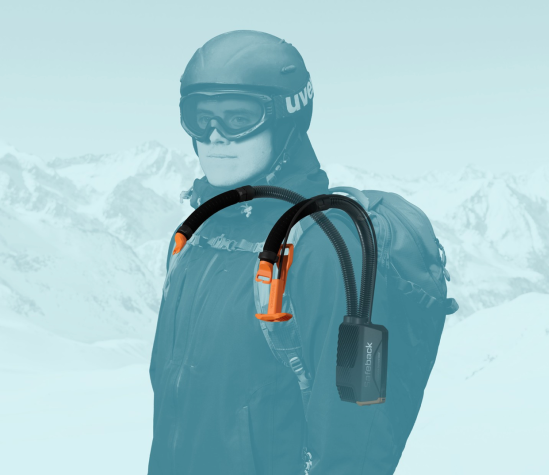
A new avalanche backpack will increase a victim’s survival window from 15 To 90 minutes.

A Dangerous Experience

Skiing in the backcountry is potentially a rather dangerous experience. If you injure yourself or have an emergency rescue parties take a lot longer than they would at a resort. And there’s always the risk of avalanches. Fortunately, there are ways to limit that danger. Individuals can take courses to learn about mitigating the danger of an avalanche. Beacons, probes, and shovels make it easier for parties to rescue avalanche victims in shorter periods of time, and avalanche airbags give those caught in an avalanche a decent chance of staying above the snow.

With classes and devices the risk is limited but not completely removed. A Norwegian company has set out to increase chances of survival through the Safeback SBX avalanche backpack.

Avalanche Deaths – Cause and Prevention

Avalanche caused deaths don’t result from a lack of oxygen. Dense avalanche debris sits at around 60-70% air. Victims succumb to carbon dioxide poisoning as gas builds up in the snow around them. The SBX seeks to limit that carbon dioxide buildup by pumping oxygen into the snow surrounding one’s mouth while pushing away the built up carbon dioxide. In an avalanche a victims pull the t-shaped handle located on the shoulder strap. This activates a fan located in the SBX Clean Air Intake placed on one’s back. That fan pumps oxygen from an area lacking CO2 buildup to the Clean Air Outlets on the wearer’s shoulders.

One major advantage is that it doesn’t require a mouthpiece. When you’re stuck under avalanche debris there’s a very good chance you won’t be able to move your arms very much. Meaning a mouthpiece just isn’t very reliable.

The company claims that the device can extend the survival window from 15 minutes to 90 minutes, increasing the chance of a successful rescue.

Coming Soon

The Safeback SBX avalanche backpack is set to release during the 2023/24 ski season, and once it’s out, I’m sure we’ll be seeing a lot more information relating to its capabilities.

Safeback SBX avalanche backpack

An explosive business – Avalanche control

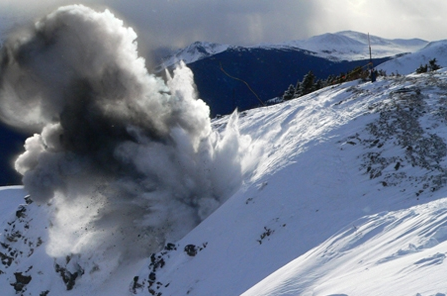
The explosive business of avalanche control keeps the ski area slopes safe for guests.

On many winter days explosions can be heard echoing across many ski areas. These are the sounds of avalanche mitigation.

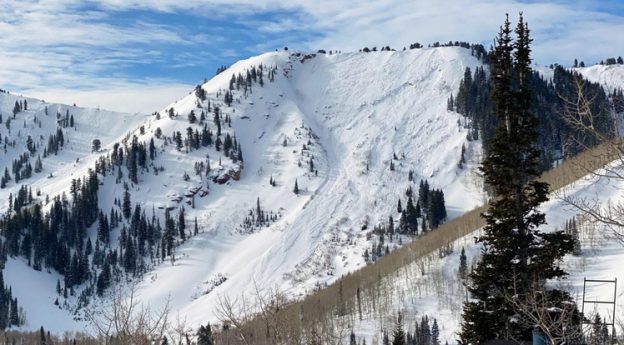
Dutch Draw Avalanche

Last week an avalanche was reported in the Dutch Draw area of Park City, Utah between the lifts Peak Five and Ninety-Nine 90. According to Andy Van Houten, snow safety director of Park City Mountain, the avalanche occurred in the back country. “We worked with the Department of Public Safety helicopter,” he said. “It was established that nobody was involved. We had all of our witnesses accounted for, all is good.”

“There is no mitigation outside of the resort and so it’s 100% on the on the user, on themselves; we do worry about it from a rescue perspective but we do not do anything to mitigate that hazard,” Van Houten said.

Mitigation Methods

There are a few ways the ski patrol can mitigate avalanche risks. While the explosive business is the most dramatic two other methods are used as well. Ski cutting and compaction.

Ski cutting is where a patroller will ski intentionally across the top of a slope. This may trigger an avalanche as the slope is traversed. This method is used on smaller slides.

Another form of mitigation is called skier compaction.

“The best thing we can do is get this terrain open to public and get it skied,” Van Houten said. “That’s why we push so hard to get this terrain open, you know, in a timely fashion is that so we can get our guests up there to ski it and that’s what helps us, that kind of skis all the snow and it breaks up the layers that build up.”

Explosives

For bigger slopes there is the explosive business. There is a typically team of patrollers who go out in groups of two or three and carry explosives in their backpacks.

“It’s a cast booster, it’s about the size of a large can of soup and it’s a pentolite TNT combination,” Van Houten said. “It’s got 120-second fuse strain on it. It’s basically like a little cardboard tube and that’s it’s got a sparker in it. When we pull that, that’s what ignites the end of the fuse train. We either rope them, or we just throw them. And it’s like throwing a can of soup into the snowpack. It’s a good-sized shot. But we are usually pretty far away when it detonates and we kind of plug our ears and kind of turn our backs to it a little bit. So we’re not we’re not close to it by any means.”

Avalanche Control - An Explosive Business
Avalanche Control – An Explosive Business

Avalanche Mitigation Spaceships

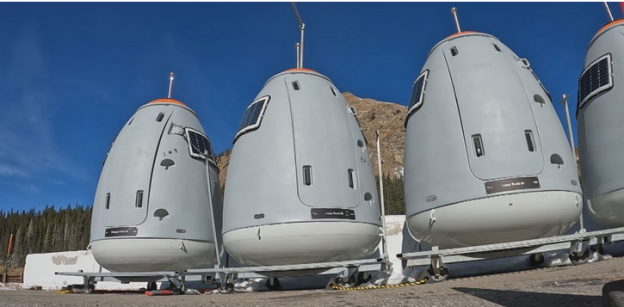
Avalanche mitigation spaceships will be used on Colorado mountain highways.

The egg-shaped devices lined in a row in the parking lot at the Eisenhower-Johnson Tunnels loom like spaceships getting ready for liftoff.

“Looks a little like the CDOT space force this side of the road,” said winter operations manager Jamie Yont. “These are our Gazex exploders, we have them for avalanche control around the west side of the Eisenhower Tunnel.”

The avalanche mitigation spaceships actually have no propulsion, they are taken up to mountain ridge tops by helicopter. There they are connected to towers from which a mixture of hydrogen and oxygen fill a chamber. The mixture can be remotely sparked to cause an explosion that triggers avalanches to keep roads safe.

CDOT has 16 spaceships: 12 at the Eisenhower-Johnson Tunnels, two on Berthoud Pass and two on Wolf Creek Pass.

They have been using the relatively new technology for a few years. They putting them in place in November and then bring them back down in May.

“It’s relatively new technology,” said Yont. “… we have had them for four or five winter seasons.”

November 8, 2022

Avalanche mitigation spaceships in Colorado