On winter mornings, the Forest Service Avalanche Center for the Sierra publishes the avalanche forecast for the day. This is useful information for anyone traveling in the backcountry.
Often a draft of the forecast is started the afternoon before after a day of skiing. It may be updated early in the morning with the benefit of that day’s weather forecast and any late arriving snow or avalanche observations. The snow and avalanche data is built on observations from Sierra Avalanche Center field staff who spend their days skiing. It is augmented with observations, photos and videos shared to the Sierra Avalanche Center website by the public.
The Forest Service Avalanche Center would not exist without community donations, despite being a government operation. Northstar, Heavenly, and Kirkwood have consistently directed significant support to the Sierra Avalanche Center through their donation of lift tickets to the Forest Service.
Northstar, Heavenly, and Kirkwood resorts have been the avalanche center’s largest business supporters for multiple years. This money goes back into supporting the Avalanche Center field staff, paying for skiing and observing, equipment, the website, and our ongoing efforts to increase avalanche awareness by promoting the center.
The Sierra Avalanche Center staff and volunteer board thanks to Northstar, Heavenly, Kirkwood and the Vail Resorts EpicPromise Team for their continued support.
(*) It should be noted that these large ski operations depend on Forest Service permits for their use of public lands.
Above average Sierra snowpack for the month of February continues, with California at 190% of normal snowpack for this time of year. With all this snow, the ski patrol team at Heavenly Ski Resort in South Lake Tahoe is urging skiers to be extremely cautious of avalanche danger.
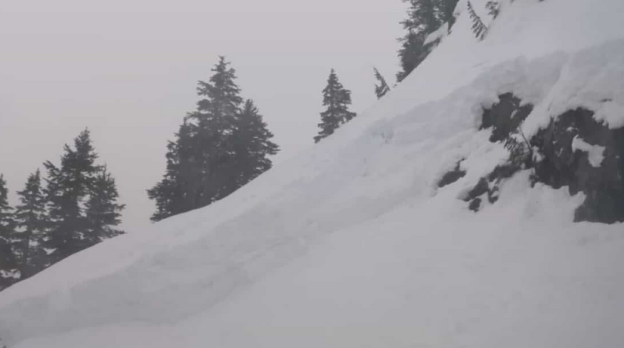
In 2023, the Sierra Avalanche Center has reported two avalanches where a person was either caught, buried, or injured in an avalanche. One of the two incidents took place outside the ski area boundary at Heavenly. Avalanches that take place inbounds are rare.
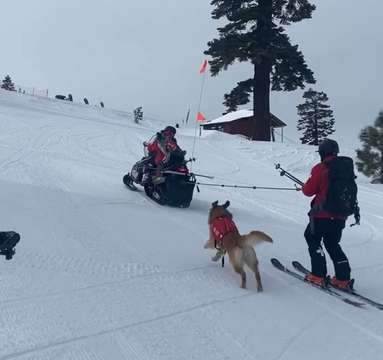
Ryan McPartland is the Ski Patrol Assistant Director at Heavenly Ski Resort. He has been on the ski patrol team for 25 seasons. For the last seven years, he’s had Yuba, his seven year old rescue dog by his side. Before that, McPartland also raised Yuba’s dad.
The legacy of patrol pups is nothing knew for the resort, which started the Heavenly Avalanche Rescue Dog or HARD team back in the late 1980’s. Today, Yuba is one of seven rescue dogs at Heavenly.
Avalanche dogs can search up to two football fields in 30 minutes, while it might take a human about 4 hours to conduct the same search. Making the role of an avalanche dog at a big resort like Heavenly that much more invaluable. McPartland explained,
People get excited by the above average Sierra snowpack, and they should. But they also need to know the risks.
The risk of an avalanche go up significantly once you exit the ski area boundary. McPartland warns. There is no ski patrol there to help you, so it’s very important that you have the training that you’re exposing yourself to a higher level of risk — and you know how to deal with it.
If you do decide to leave the ski area boundary, and ski in the backcountry, there are three things you are going to need:
An avalanche transceiver
An avalanche probe
A shovel
An avalanche transceiver can locate you from an isolated location underneath the snow. The avalanche probe will help with finding how deep under the snow you are, and the shovel that allows the rescuer to chop the snow up, and find you.
Above average Sierra snowpack prompts avalanche awareness
Eaglecrest Ski Area, AK, confirmed a large inbounds avalanche in a closed area of the resort. Crews using beacons, probes, dogs, and RECCO equipment searched the scene but found nobody trapped. The resort had received 25″ of fresh snow in the previous five days. The slide, in the East Bowl Chutes, was seven feet deep and ran for 100 yards.
“At 10:10 am on January 26th, Eaglecrest Ski Patrol received a report of an avalanche in closed terrain in the East Bowl Chutes. Upon investigation, ski patrol found a large avalanche approximately 6 to 7 feet deep and approximately 75 yards wide and approximately 100 yards long. A preliminary avalanche transceiver search was immediately launched, which was followed by a secondary transceiver search. Our RECCO detection equipment was then dispatched for the search. Alaska SEADOGS, Juneau Mountain Rescue, and the Alaska State Troopers were notified and called on scene. SEADOGS performed a search with two dogs. The Ski Patrol staff probed through debris and catchment spots in an abundance of caution to be sure that no one was entrapped despite this portion of the mountain being closed for the day. Eaglecrest has just gone through a very active week of weather, with inches of rain and snow-water equivalent moisture over the last 7 days. The mountain had extremely limited terrain open today off the top of the mountain as we were allowing the snowpack to adjust to all of the additional weight and drain.”
– Eaglecrest report
Eaglecrest has seen 211″ of snow this season and has a 136″ base. Much of the upper mountain was closed at the time of the slide to protect the fragile snowpack.
Inbounds Avalanche at Eaglecrest Ski Area, AK. Credit: Resort
Sidecountry vs. backcountry. In both areas accidents can happen. Skiing and snowboarding, even at a ski resort, is never without risk. Understanding avalanche safety, having the proper gear, and knowing how to use it matter. If recent avalanches have taught us anything it’s that not all areas are safe. There are no universal truths to avalanches. Even areas that traditionally are safe can quickly become deadly in the right conditions.
There are several common misconceptions about avalanches and what areas are typically safe from them. The belief that the sidecountry is safer than the backcountry is certainly one of them. These out-of-bounds areas are often easily accessible from a resort. A person can use a lift to go up the mountain, leave the boundary of the resort, and skiing down adjacent to it. Ski patrol will go into these areas, but they don’t have the same jurisdiction as they do within the resort.
Sidecountry vs. backcountry “As soon as you leave a resort gate, you are leaving the controlled environment of the ski resort,” Chad Brackelsberg of the Forest Service said. “Therefore, you are responsible for your own safety, meaning you have to be able to assess the avalanche risk, and you have to be prepared to be your own rescue party. Ski Patrol does not have jurisdiction to do a rescue there. Generally, suppose you are in an accident, avalanche accident, or just an injury in the side country. In that case, ski patrol must first get permission from the sheriff’s department to function as search and rescue. Just because you can access that terrain from a ski lift or you can see it from a ski lift does not mean that it is the same as in the resort. It is the same as hiking to a slope in the backcountry.”
Problems can arise when skiers go into the sidecountry or backcountry without avalanche safety knowledge, rescue gear, or training, and are completely unprepared in the case of an emergency. It would be easy to put a pack together with a beacon, shovel, and probe, and think you have all the essential avalanche gear, but preparedness goes well beyond that.
Do you have a first aid kit means to provide first aid and to provide a rescue? Do you have a way to evacuate a person? Do you have extra water, food, and gear? You have to have enough gear to keep you warm and comfortable and not get hypothermia for an extended period of time. Then consider the emergency gear you might need. Such as a bivy sack, a way to start a fire, a hot drink, additional clothing layers, and other things.”
Checking avalanche reports for current conditions before you head out is also important. This year’s conditions in Utaj have been unique. Avalanches are occurring in forested areas, lower elevations, and all compass aspects of a slope.
Some believe that the presence of trees can deter an avalanche but this isn’t always the case.
Trees can sometimes act as anchors but any slope that has trees that are wide enough facing to ski has enough spacing for an avalanche. So the presence of trees does not necessarily indicate a safe slope.
Sidecountry vs. backcountry – Squaretop sidecountry in Utah
The explosive business of avalanche control keeps the ski area slopes safe for guests.
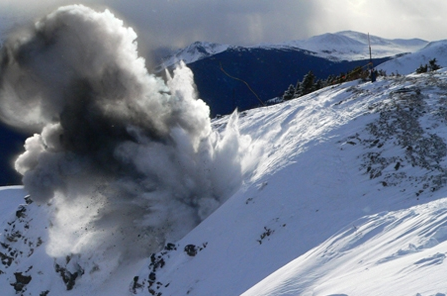
On many winter days explosions can be heard echoing across many ski areas. These are the sounds of avalanche mitigation.
Dutch Draw Avalanche
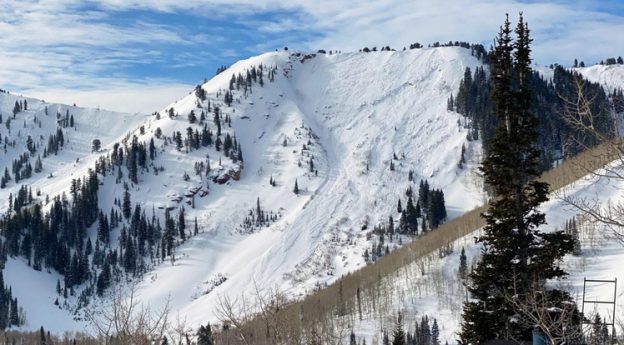
Last week an avalanche was reported in the Dutch Draw area of Park City, Utah between the lifts Peak Five and Ninety-Nine 90. According to Andy Van Houten, snow safety director of Park City Mountain, the avalanche occurred in the back country. “We worked with the Department of Public Safety helicopter,” he said. “It was established that nobody was involved. We had all of our witnesses accounted for, all is good.”
“There is no mitigation outside of the resort and so it’s 100% on the on the user, on themselves; we do worry about it from a rescue perspective but we do not do anything to mitigate that hazard,” Van Houten said.
Mitigation Methods
There are a few ways the ski patrol can mitigate avalanche risks. While the explosive business is the most dramatic two other methods are used as well. Ski cutting and compaction.
Ski cutting is where a patroller will ski intentionally across the top of a slope. This may trigger an avalanche as the slope is traversed. This method is used on smaller slides.
Another form of mitigation is called skier compaction.
“The best thing we can do is get this terrain open to public and get it skied,” Van Houten said. “That’s why we push so hard to get this terrain open, you know, in a timely fashion is that so we can get our guests up there to ski it and that’s what helps us, that kind of skis all the snow and it breaks up the layers that build up.”
Explosives
For bigger slopes there is the explosive business. There is a typically team of patrollers who go out in groups of two or three and carry explosives in their backpacks.
“It’s a cast booster, it’s about the size of a large can of soup and it’s a pentolite TNT combination,” Van Houten said. “It’s got 120-second fuse strain on it. It’s basically like a little cardboard tube and that’s it’s got a sparker in it. When we pull that, that’s what ignites the end of the fuse train. We either rope them, or we just throw them. And it’s like throwing a can of soup into the snowpack. It’s a good-sized shot. But we are usually pretty far away when it detonates and we kind of plug our ears and kind of turn our backs to it a little bit. So we’re not we’re not close to it by any means.”
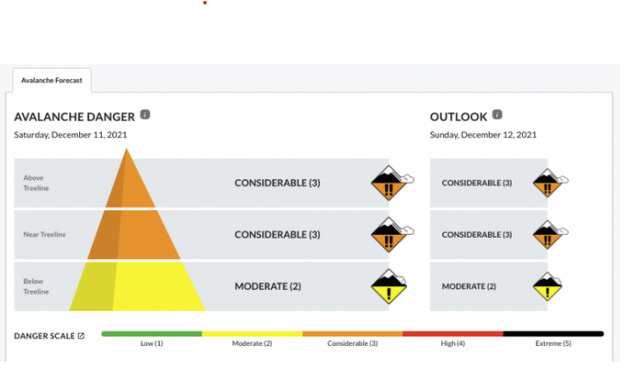
According to the US Forest Service, a skier was killed in an avalanche Saturday, December 11, in Silver Basin, a closed area of Crystal Mountain, Washington, that ski patrol had not mitigated for avalanche hazard. Six skiers from the same party were caught in the slide. The Pierce County Medical Examiner’s Office has identified the deceased as Robert “Bob” Weisel, 66, of Issaquah, Washington. This is the U.S.’s first avalanche fatality of the 2021/22 season.
After a long dry spell that has plagued much of the continental United States this winter, Crystal Mountain reported receiving 12 inches of snow in 24 hours with winds up to 100 mph at the summit Saturday. The Friday evening advisory rated the avalanche hazard as considerable near and above tree line. “Look for storm slabs to develop on Saturday at all elevation bands as the West South is targeted by a potent winter storm,” it warned. It reported of the newly forming storm slab, which was resting atop another recent storm layer and a crust from late November. They advised those entering the backcountry to “choose conservative terrain and realize that early season conditions still exist.”
Silver Basin, where the fatality occurred, is a north- through east-facing slope at approximately 6,500 feet that is marked as a black diamond when open. According to a preliminary report, the six individuals were traveling uphill when they triggered a large avalanche. Another party of two in the area that witnessed the avalanche reported it to Crystal Mountain Ski Patrol at 10:50 a.m. and assisted in the rescue. Four skiers were partially or fully buried, three of whom were successfully recovered. The fourth skier was found unconscious and did not respond to resuscitation efforts. All skiers involved were carrying avalanche equipment and several had taken a recent avalanche course.
A statement from Crystal Mountain following the fatality read, “As snow continues to fall, Crystal Mountain Ski Patrol reminds backcountry skiers to research uphill travel policies and check the avalanche forecasts before heading into the backcountry.”
Avalanche fences are being installed in Park City, Utah despite a petition to halt the construction. However, the petition appears to be to irrelevant now, since the construction of the avalanche barriers are underway.
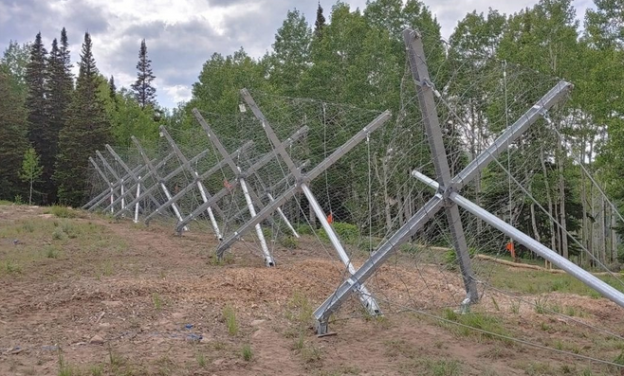
Iron Mountain Associates plans to install 214 avalanche fences. The avalanche fences are three to four meters tall and under construction in The Colony neighborhood. The avalanche barriers aim to prevent an avalanche from hitting the driveway of two specific homes.
An out-pour of community outrage has ensued since the county approved the project in 2020. Despite the community opposition, the construction of the fences is now underway.
While avalanche fences are effective, professionals feel there are better options. Alternatives exist which do not cause as much harm to wildlife and do not create extreme visual degradation.
Jake Hutchinson formerly managed the ski patrol avalanche mitigation program at The Canyons Resort (now Canyons Village at Park City) for over ten years. Hutchinson created the avalanche atlas currently used as a model for Canyons Village at Park City and The Colony. He claims that the avalanche modeling for the fences is based on insufficient data…. just what came from him and a couple of years of doing some measurements.
The Colony has long been concerned about avalanche mitigation. “Originally they proposed Gazex exploders up there, which are still a big nuisance and eyesore, but far less of an impact than permanent fences.”
Concerned citizens looked for a public comment period as an opportunity to express their concerns. The project’s approval under a Specially Planned Area (SPA) agreement surprised some residents. Hutchinson says, “We were watching for public comment period… and they slipped it through under the SPA agreement… The SPA doesn’t specifically have anything about avalanche fences or mitigation.”
The SPA agreement contains lengthy regulations for preserving sensitive lands and open spaces, wilderness protection, ordinances to minimize the visual impact of developments, and recreational access regulations.
Summit County resident and opponent to the avalanche fences, Seth Dromgoole, sent an email to the County Council to outline several conflicts found in the SPA agreement. Dromgoole states, “My interpretation of the Amended SPA (dated 1999) reveals multiple areas where this project may conflict with the agreement. Potential conflicts arise in the language surrounding viewshed, open space designation, and wildlife.”
Dromgoole also raised the concern, “The LIP [Low Impact Permit] for this project should not have been approved without public comment…The Dream Peak Avalanche Control Mitigation Fencing certainly creates unsightly conditions.”
Both Hutchinson and Dromgoole assert that there are more appropriate alternatives to avalanche mitigation than the installation of over 200 fences.
“Avalanche fencing is not industry standard for this use. The industry standard for fencing is to protect permanently inhabited structures and major roadways, not driveways. Avalanche fencing is excessive for what is essentially a shared driveway for two houses,” Dromgoole says.
Hutchinson is adamant that using Remote Avalanche Control Systems (RACS) such as Gazex is an adequate solution to potential avalanche activity in the area. “If they fire the RACS at 3 am, and then the road is cleared and opened, no one ever knows.”
Hutchinson believes that avalanche fences were proposed as an ultimate convenience for high-dollar property owners. “The reason for the fences is that they didn’t want a single moment of inconvenience for the homeowners,” he explains.
The main objection is that residents and visitors will suffer from visual impairment, restricted access to wilderness, and loss of wildlife through animal deaths.
Dyer Corp owner Russ Dyer has said that studies have shown that installing the barriers with 3 feet of space between each one allows for wildlife to pass through them and coexist safely.
But Hutchinson elaborates on the adverse effects of avalanche fences on wildlife. “They put fences near the Tombstone lifts in the early 2000s….. The first couple of years after they put those fences in… we were up there pulling dead animals out of those fences in the summertime, fairly consistently… big bull elk, deer, and other animals…. These [fences] will have a similar impact on wildlife, especially because these are about ten times the extent of what is near Tombstone right now,” he explains.
Dromgoole states, “The avalanche fencing will create a permanent scar on the landscape, will result in the destruction of viewshed for thousands of Summit County residents.”
The 200 plus fences will be visible across long distances. “If you are out riding your bike in Round Valley and look up there, it will look like rows and rows of fences,” says Hutchinson. He warns the community. “This is one of those things that people are going to look up there one day and wonder, ‘oh, how did that happen?’… Once they put the fences in, they will permanently impact the landscape.”
Neither Iron Mountain Associates nor Dyer Corp have responded to press inquiries.
A petition to halt the construction of the avalanche fences continues, but it appears to be to irrelevant now since the construction of the avalanche barriers are underway.
AP – Two Alpine Meadows avalanche lawsuits have been filed by the widow and a friend of a dead skier. They accuse the resort of negligently rushing to open the unsafe slopes for a busy holiday weekend.
Cole Comstock, 34, of Blairsden, California, was killed. His close friend Kaley Bloom was seriously injured. They were caught in an avalanche on an Alpine Meadows ski run on Jan. 17, 2020. Nobody else was seriously hurt.
Two Alpine Meadows avalanche lawsuits filed
The two Alpine meadows avalanche lawsuits were filed in Placer County Superior Court by Bloom and by Cole’s widow. They seek unspecified damages from Alpine Meadows. The allegations include negligence, gross negligence and breach of contract. Raymond’s lawsuit also alleged the resort was to blame for her late husband’s death.
The resort had closed the previous day following several days of heavy snow and high winds that dramatically increased avalanche risks, the lawsuits claimed. The National Weather Service in Reno reported wind gusts up to 116 mph the night before the avalanche.
Alpine Meadows “premature opening” that Friday “was in response to public and economic pressure to open that particular lift and callous disregard for the dangerous combination of conditions,” according to Bloom’s lawsuit. He says he suffered severe and ongoing injuries.
Avalanche Control work done
The avalanche happened after avalanche control work was performed, the resort said in a statement. Such work involves the use of explosive detonations. They intentionally trigger avalanches while guests are not in the area.
“While we cannot comment on ongoing litigation, January 17, 2020 was a devastating day for our team at Squaw Valley Alpine Meadows, and we continue to share our deepest sympathies with the family and friends of those affected,” Alex Spychalsky, a spokeswoman for both of the neighboring resorts, said in an emailed statement.
Raymond’s lawsuit says Alpine Meadows “should not have opened the ski run under the circumstances.”
Most skiers who buy ski resort passes must sign release forms. Those warn that winter activities “can be dangerous and involve the risk of injury or death.”
But Raymond’s lawsuit said the resort increased the risks beyond those normally assumed by skiers. Cole and Bloom believed they were skiing on a run that was safe because avalanche control had been performed.
Reopening the runs after they’d been closed the day before “created a false and reckless illusion of safety,” the lawsuit said. “Inadequate and/or incomplete mitigation measures did not decrease or mitigate the risks, but instead further increased the risk and turned a dangerous area into a deadly one.”
Raymond’s lawsuit notes that most ski fatalities occur outside of ski resorts. In-bounds avalanche deaths are rare.
Experienced Skier
Comstock was an experienced skier. He grew up in the Sierra Nevada and skied both in-bounds and out-of-bounds. Depending on the conditions of the day and information from the resort and the ski patrol, his widow said in the lawsuit.
Raymond was on the other side of the mountain when she got a phone call from friends. Telling her there had been an avalanche. She went to wait for her husband beneath a chairlift.
That’s when she saw the ski patrol pulling a stretcher with someone covered with snow and blood. They stopped and began administering CPR to the victim. Then she recognized her husband’s maroon ski boots and realized it was him.
She said blood spewed from his mouth with each push on his chest as the ski patrol team took turns at CPR for 45 minutes.
“Eventually they stopped as she watched them pull the white sheet over him. Her last image of her husband was a broken and already dead body,” the lawsuit said.
Seven people were killed in an avalanche at Alpine Meadows in 1982.
Two Alpine Meadows lawsuits were filed after a guest died in an avalanche.
PARK CITY, Utah — The Park City Mountain Canyons Ski Patrol closed off its access to the backcountry adjacent to the resort. The unusual step was taken after a couple of recent deadly slides amid high avalanche danger. Prior to a couple of recent fatal avalanches there had been numerous others in past years as well.
According to Utah.gov, “avalanches pose a significant hazard in Utah’s mountains between the months of January and April. These are seasons of heavy snow accumulation and unstable snowpack conditions.”
“An avalanche is a mass of snow, ice, and debris that slides rapidly down steep mountain slopes at speeds up to 80 mph when triggered by ground shaking, sound, or movement,” the official website stated.
Avalanches in Utah have claimed over 100 lives between 1958 and 2021. The snowpack this year is unusually thin, which contributes to the danger.
Park City Mountain responds to avalanche danger
Ski resorts around Utah are taking action to protect local winter enthusiasts.
Park City Mountain announced that resort management had directed the Canyons Ski Patrol to close off access to its adjacent backcountry areas. Skiers and snowboarders frequently access these areas from the resort.
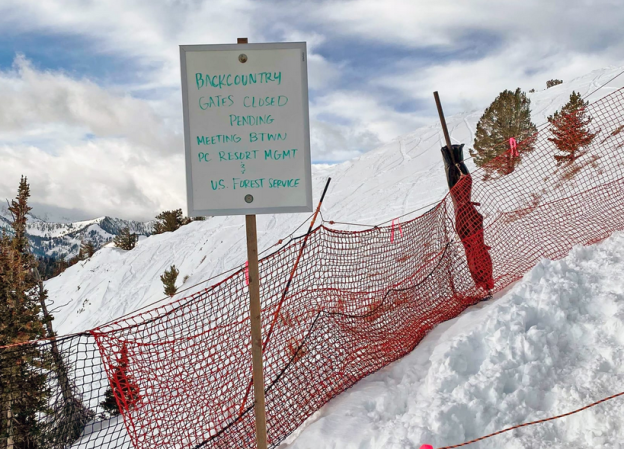
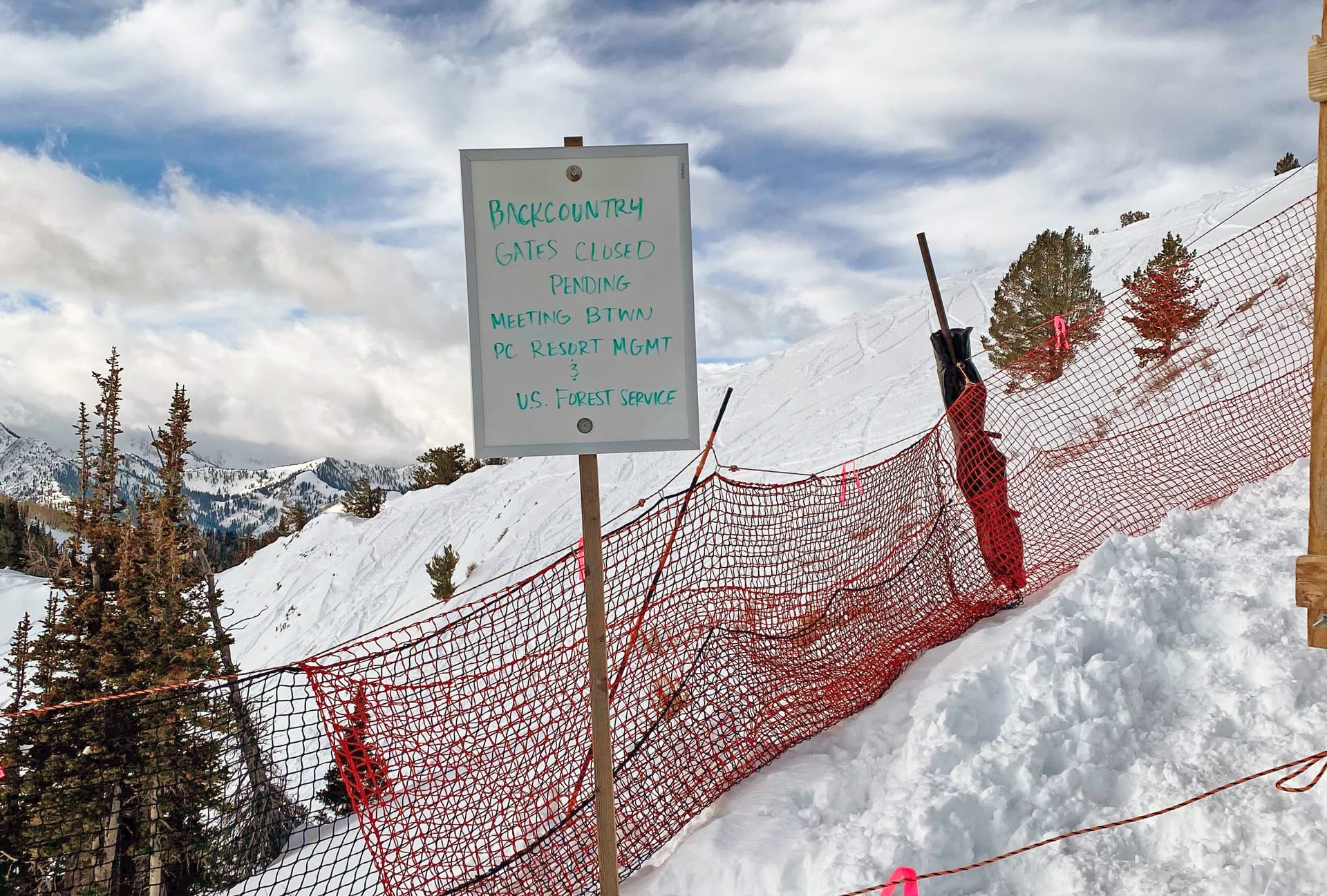
The resort posted signs at backcountry access points, restricting access. The sign reads, “Backcountry gates closed pending meeting between PC resort management and U.S. Forest Service.”
Due to the two deaths in January, the resort closed access to the backcountry from inbounds “until further notice.” Resort officials plan to meet with the U.S. Forest Service Thursday.
A North Caucasus avalanche struck a skiing area in the region of Karachai-Cherkessia. Russian authorities say as many as 12 people may have been buried under snow.
Russia’s Emergency Ministry said on January 18 that the avalanche hit the area around the resort town of Dombai. On Mussa-Achitara mountain at around 1:30 p.m. local time.
Rescue work to locate and extract those trapped by the avalanche is under way.
The wall of snow buried two ski equipment rental stands and damaged a cafe.
Dombai is a popular skiing resort in the North Caucasus.
On the scene at an avalanche in the North Caucasus