The explosive business of avalanche control keeps the ski area slopes safe for guests.
On many winter days explosions can be heard echoing across many ski areas. These are the sounds of avalanche mitigation.
Dutch Draw Avalanche
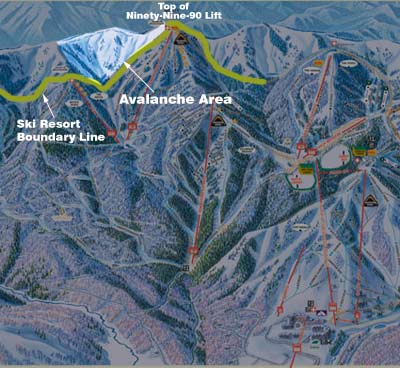
Last week an avalanche was reported in the Dutch Draw area of Park City, Utah between the lifts Peak Five and Ninety-Nine 90. According to Andy Van Houten, snow safety director of Park City Mountain, the avalanche occurred in the back country. “We worked with the Department of Public Safety helicopter,” he said. “It was established that nobody was involved. We had all of our witnesses accounted for, all is good.”
“There is no mitigation outside of the resort and so it’s 100% on the on the user, on themselves; we do worry about it from a rescue perspective but we do not do anything to mitigate that hazard,” Van Houten said.
Mitigation Methods
There are a few ways the ski patrol can mitigate avalanche risks. While the explosive business is the most dramatic two other methods are used as well. Ski cutting and compaction.
Ski cutting is where a patroller will ski intentionally across the top of a slope. This may trigger an avalanche as the slope is traversed. This method is used on smaller slides.
Another form of mitigation is called skier compaction.
“The best thing we can do is get this terrain open to public and get it skied,” Van Houten said. “That’s why we push so hard to get this terrain open, you know, in a timely fashion is that so we can get our guests up there to ski it and that’s what helps us, that kind of skis all the snow and it breaks up the layers that build up.”
Explosives
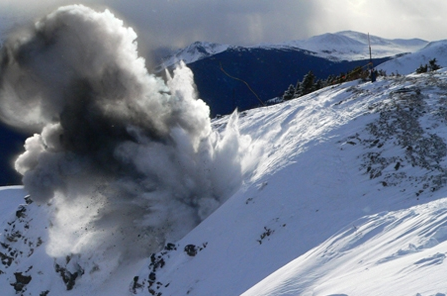
For bigger slopes there is the explosive business. There is a typically team of patrollers who go out in groups of two or three and carry explosives in their backpacks.
“It’s a cast booster, it’s about the size of a large can of soup and it’s a pentolite TNT combination,” Van Houten said. “It’s got 120-second fuse strain on it. It’s basically like a little cardboard tube and that’s it’s got a sparker in it. When we pull that, that’s what ignites the end of the fuse train. We either rope them, or we just throw them. And it’s like throwing a can of soup into the snowpack. It’s a good-sized shot. But we are usually pretty far away when it detonates and we kind of plug our ears and kind of turn our backs to it a little bit. So we’re not we’re not close to it by any means.”
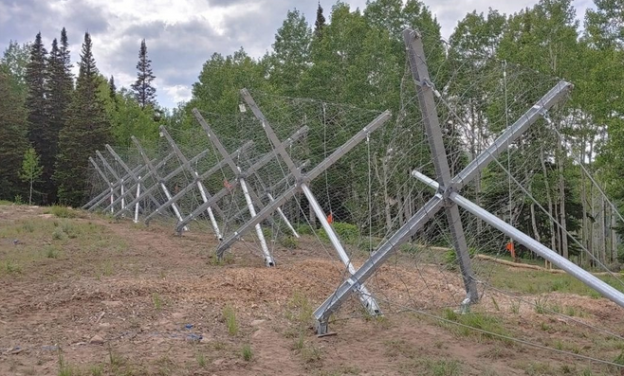
Avalanche fences are being installed in Park City, Utah despite a petition to halt the construction. However, the petition appears to be to irrelevant now, since the construction of the avalanche barriers are underway.
Iron Mountain Associates plans to install 214 avalanche fences. The avalanche fences are three to four meters tall and under construction in The Colony neighborhood. The avalanche barriers aim to prevent an avalanche from hitting the driveway of two specific homes.
An out-pour of community outrage has ensued since the county approved the project in 2020. Despite the community opposition, the construction of the fences is now underway.
While avalanche fences are effective, professionals feel there are better options. Alternatives exist which do not cause as much harm to wildlife and do not create extreme visual degradation.
Jake Hutchinson formerly managed the ski patrol avalanche mitigation program at The Canyons Resort (now Canyons Village at Park City) for over ten years. Hutchinson created the avalanche atlas currently used as a model for Canyons Village at Park City and The Colony. He claims that the avalanche modeling for the fences is based on insufficient data…. just what came from him and a couple of years of doing some measurements.
The Colony has long been concerned about avalanche mitigation. “Originally they proposed Gazex exploders up there, which are still a big nuisance and eyesore, but far less of an impact than permanent fences.”
Concerned citizens looked for a public comment period as an opportunity to express their concerns. The project’s approval under a Specially Planned Area (SPA) agreement surprised some residents. Hutchinson says, “We were watching for public comment period… and they slipped it through under the SPA agreement… The SPA doesn’t specifically have anything about avalanche fences or mitigation.”
The SPA agreement contains lengthy regulations for preserving sensitive lands and open spaces, wilderness protection, ordinances to minimize the visual impact of developments, and recreational access regulations.
Summit County resident and opponent to the avalanche fences, Seth Dromgoole, sent an email to the County Council to outline several conflicts found in the SPA agreement. Dromgoole states, “My interpretation of the Amended SPA (dated 1999) reveals multiple areas where this project may conflict with the agreement. Potential conflicts arise in the language surrounding viewshed, open space designation, and wildlife.”
Dromgoole also raised the concern, “The LIP [Low Impact Permit] for this project should not have been approved without public comment…The Dream Peak Avalanche Control Mitigation Fencing certainly creates unsightly conditions.”
Both Hutchinson and Dromgoole assert that there are more appropriate alternatives to avalanche mitigation than the installation of over 200 fences.
“Avalanche fencing is not industry standard for this use. The industry standard for fencing is to protect permanently inhabited structures and major roadways, not driveways. Avalanche fencing is excessive for what is essentially a shared driveway for two houses,” Dromgoole says.
Hutchinson is adamant that using Remote Avalanche Control Systems (RACS) such as Gazex is an adequate solution to potential avalanche activity in the area. “If they fire the RACS at 3 am, and then the road is cleared and opened, no one ever knows.”
Hutchinson believes that avalanche fences were proposed as an ultimate convenience for high-dollar property owners. “The reason for the fences is that they didn’t want a single moment of inconvenience for the homeowners,” he explains.
The main objection is that residents and visitors will suffer from visual impairment, restricted access to wilderness, and loss of wildlife through animal deaths.
Dyer Corp owner Russ Dyer has said that studies have shown that installing the barriers with 3 feet of space between each one allows for wildlife to pass through them and coexist safely.
But Hutchinson elaborates on the adverse effects of avalanche fences on wildlife. “They put fences near the Tombstone lifts in the early 2000s….. The first couple of years after they put those fences in… we were up there pulling dead animals out of those fences in the summertime, fairly consistently… big bull elk, deer, and other animals…. These [fences] will have a similar impact on wildlife, especially because these are about ten times the extent of what is near Tombstone right now,” he explains.
Dromgoole states, “The avalanche fencing will create a permanent scar on the landscape, will result in the destruction of viewshed for thousands of Summit County residents.”
The 200 plus fences will be visible across long distances. “If you are out riding your bike in Round Valley and look up there, it will look like rows and rows of fences,” says Hutchinson. He warns the community. “This is one of those things that people are going to look up there one day and wonder, ‘oh, how did that happen?’… Once they put the fences in, they will permanently impact the landscape.”
Neither Iron Mountain Associates nor Dyer Corp have responded to press inquiries.
A petition to halt the construction of the avalanche fences continues, but it appears to be to irrelevant now since the construction of the avalanche barriers are underway.
SUMMIT COUNTY, Utah — Avalanche bombing experts work to ensure the safety of rescuers working on the ground. And on Sunday search and rescue crews worked on an avalanche recovery mission in Summit County.
The Utah Avalanche Center, Sheriff’s Office and Park City Mountain Resort Ski Patrol worked with Utah Department of Public Safety. Together they conducted avalanche mitigation. This was to help rescuers recover the skier who was buried the day before.
“We arrive and we serve the search and rescue or the sheriff’s office in that area. So if they say we’re going to mitigate, then we just follow their lead.” So said Sgt. Wyatt Weber, a tactical flight officer with the Utah Department of Public Safety Aero Bureau. “Obviously, the snow safety experts that know these avalanches from front to back. Whatever they suggest we just try to help them and assist them and do it as safely as possible with the tool.”
Utah DPS used explosive charges from Park City Ski Patrol for avalanche bombing the unstable snow above the area. The avalanche mitigation allowed rescuers to access the area with minimized risk of further avalanches.
“You talk to the Park City Ski Patrol and they’ll tell you [Square Top is] one of their scariest areas up there for avalanche potential. It always gives them sleepless nights,” said Utah DPS Aero Bureau pilot Bret Hutchings.
Hutchings piloted the helicopter on Sunday as members of the team deployed the explosives.
“Avalanche bombing requires the pilot and a crew of three comprised out of the various ski resort areas. You have a controller and a bomber and a prepper,” he said.
Two Avalanches by lift skiers at Park City Mountain Resort
There have been two deadly avalanches in Utah this winter. Both have taken place just outside of Park City Mountain Resort boundaries. In both cases the avalanche victims accessed the backcountry from the resort boundary area.
“Park City Mountain places the highest value on the safety of our guests and employees. Within the ski area boundaries, Ski Patrol performs avalanche mitigation work and provides emergency response. Park City Mountain does not prohibit public access to U.S. Forest Service lands outside the ski area boundary. Guests that access the backcountry from Park City Mountain must do so from designated backcountry gates that provide warnings and information about the inherent risks of backcountry travel. Park City Mountain does not manage the lands or the inherent hazards that exist outside its ski area boundary. Guests who access backcountry terrain do so at their own risk and are responsible for their safety. Guests leaving the Resort boundaries should be experienced and knowledgeable about backcountry travel, and be prepared with the appropriate gear and safety equipment.” – Jessica Miller, Park City Mountain Resort
PARK CITY — A Clinton, Utah man killed in a Dutch Draw avalanche in a popular backcountry area has been identified.
Kevin Jack Steuterman, 31, died Friday, while snowboarding in the Dutch Draw area. Which is just off the 9990 chairlift in the Canyons area of Park City Ski Resort.
“Our hearts break for the Steuterman family and friends. Hug your loved ones often and tell them you love them.” Summit County Sheriff Justin Martinez tweeted Monday while releasing Steuterman’s name.
No Rescue Gear
Steuterman was with his girlfriend around 10 a.m. when the avalanche occurred. According to the Utah Avalanche Center, Steuterman was buried under 2 feet of snow in a slide that was 150 feet wide and 400 feet long.
Steuterman was on a snowboard and his girlfriend was on skis. Neither was carrying avalanche rescue gear.
“At the top of Silver Peak the rider began a descent of a slope called Conehead. When the snowboarder was halfway down the slope, the skier started her descent. After making two turns, the avalanche broke at her feet. The snowboarder was still midway down the slope where he was caught, carried, and buried in the avalanche. The skier was not caught in the avalanche,” the center stated.
Search and Recovery
The Park City Mountain Ski Patrol, Utah Department of Public Safety helicopter, Park City Fire District and University of Utah AirMed helicopter all assisted the sheriff’s office in the search and recovery effort. Explosives were dropped from the DPS helicopter to trigger a second slide near the first one. In order to make sure the area was safe before rescuers got onto the mountain, according to the center.
Steuterman’s body was found about 2:30 p.m.
“His snowboard was still attached to one foot while his other foot had been pulled out of his boot,” the avalanche center stated.
Popular Area with a bad history
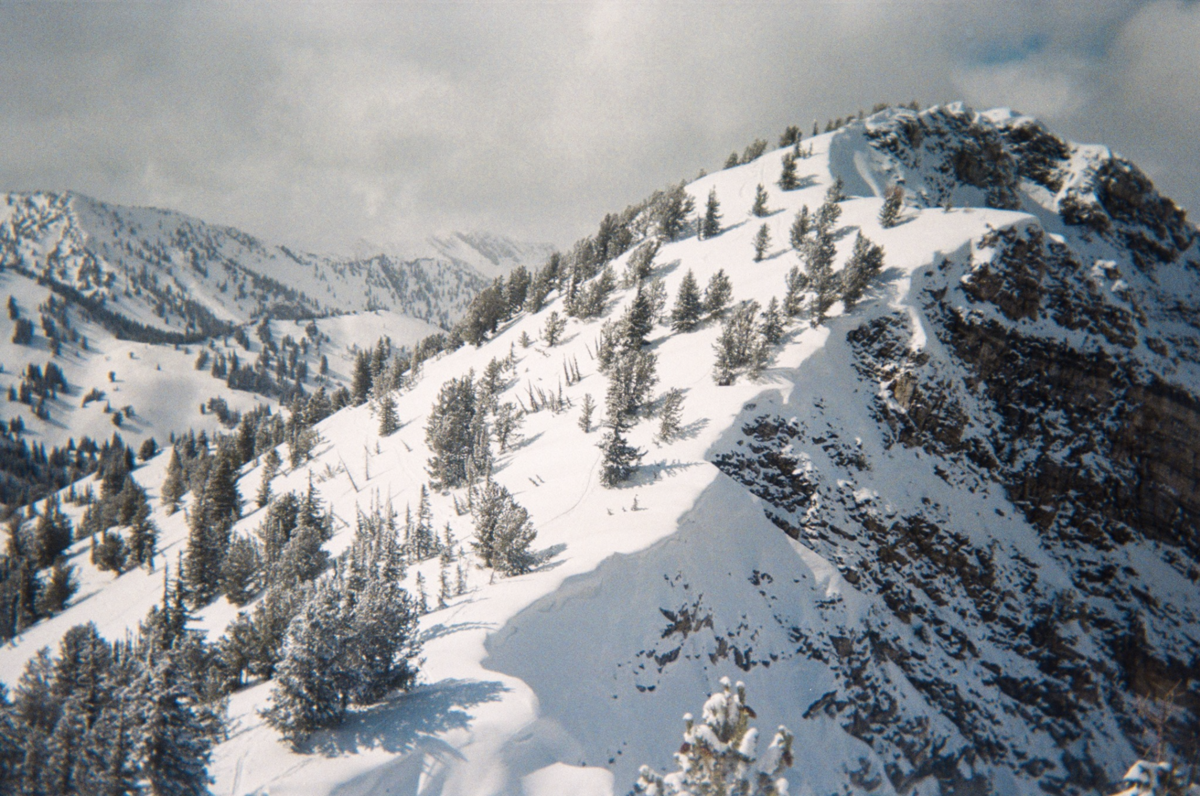
Dutch Draw is a popular area for snowboarders and skiers, but has also been the scene of several fatal avalanches, including December 15 2019, February 23, 2012, and January 15, 2005.
The high pressure over Utah is finally breaking down and snow showers are expected this weekend. While that’s good news for the ski resorts, the conditions in the backcountry will become dangerous – even deadly conditions could exist.
Since the first snow of the season has fallen, there have been a lot of sunny days and a lot of clear, cold nights. What that’s done to the snowpack, according to Utah Avalanche Forecaster Trent Meisenheimer, is created the first condition for avalanche.
“We have generally shallow snow throughout the mountains,” says Meisenheimer. “What that creates is a very strong temperature difference in our snowpack right, so the ground stays relatively warm about 32 Fahrenheit and with that shallow snow the surface of the snow can be very cold like in the single digits cold. And that creates that big temperature difference across a very shallow layer of snow. And what that does is it makes our snow weak, or a term that gets thrown around a lot is faceted. Now what faceted snow is, is it takes that you know beautiful snowflake that falls out of the air and over a few days, it’ll actually become more square and angular, the shape of the crystal – and it’s just like rock salt or sand -if you could think about it that way. So, anywhere you look right now, and you see white snow on those hills it’s generally faceted snow. It’s become loose and sugary and weak.”
Avalanches are created when snow is faceted, and a slab of new snow drops on top of the old, rotten snow.
“And a slab can just be anything that’s a little bit more dense than the snow underneath it,” he explains. “And as you heard, we’re expecting storms starting Friday morning and then lasting it looks pretty good all the way through Christmas with snow stacking up in the mountains. Now, what this is going to do is it’s just going to raise our avalanche danger so because of that new snowfall, we’re gonna add a slab and now we’ve got avalanches throughout the mountains.”
No problem today – but this weekend things will change.
“Coming into the weekend, we’re gonna start building a slab on top of that weak layer and avalanches will become more likely,” he says. “So, what this means for us and what we need to do, is moving into the weekend, we need to be aware that this week snow exists and when we do get that stronger snow on top – we need to tone it down. So, that means sticking to slopes under 30 degrees in steepness. And really important, especially with weak layers, is that we don’t want to be under big slopes either because even if we’re standing on flat terrain and there’s that big, steep, hill above us, we can actually trigger the avalanche from below and have that avalanche come down on top of us.”
No one should be in the backcountry without a transceiver, probe, a shovel – and a partner.