Category Archives: legal

Silverton Avalanche School dropped from lawsuit

It appears that Silverton Avalanche School was dropped from the lawsuit by the Marshall family, along with their guide. Neither party has commented so a settlement amount was most likely agreed on.

The family of Peter Marshall, who died in an avalanche during an AIARE advanced avalanche safety class with the Silverton Avalanche School, has dropped the school and teacher from their lawsuit. It appears that a settlement was reached. A complaint remains open against Backcountry Access, their owner K2 Sports, and K2 owner Kohlberg & Company.

Settlement Reached with Silverton Avalanche School?

Two years after the death Marshall’s wife and daughter sued San Juan Search and Rescue, the Silverton Avalanche School and the school’s guide, Zachary Lovell, in a wrongful death lawsuit. Last month the family dropped its claims against the county, school and guide. Attorneys for the Marshall family have not returned calls or responded to emails and representatives from the county and school declined to comment, indicating a settlement amount was most likely agreed upon.

The Fatal Avalanche Accident and the Allegations

The family had argued that the school and guide had misled Marshall into taking the class by “falsely presenting” that school staff “possessed deep operational experience in avalanche terrain.” The family also claimed the school and guide displayed gross negligence.

Marshall had been participating in the Silverton Avalanche School Level 2 American Institute for Avalanche Research and Education (AIARE) class on Jan. 5, 2019. He was swept down a slope in an avalanche that caught five other skiers. Four were not buried. Another was buried but was able to extricate himself. When the skiers freed Marshall from the debris, he was not breathing.

The Colorado Avalanche Information Center (CAIC) report pointed to several mistakes during the advanced class, including a group of skiers gathered on a slope steep enough to slide, those skiers misjudging the steepness of that slope and a failure to recognize clear avalanche hazards. The guide triggered the first avalanche, which swept the whole group down the slope. A second avalanche buried Marshall under several feet of snow.

Remaining Complaint Against Backcountry Access and K2 Sports

The family of the 40-year-old Longmont skier is still suing K2 Sports and its subsidiary Backcountry Access, which makes an air bag backpack that was not deployed when rescuers found Marshall buried in more than 8 feet of avalanche debris. “Peter Marshall attempted to trigger his Float 32 avalanche air bag system but it did not fully deploy or inflate,” according to the complaint filed in Boulder District Court.

Marshall’s Backcountry Access Float 32 pack was not inflated. Colorado Avalanche Information Center investigators said in their report that the air bag backpack “was functioning properly,” with “the trigger out of the pack strap, but the bag was not deployed.”

K2 Sports, owned by private equity firm Kohlberg & Company, denied the allegations in a response filed this month. The K2 lawyers cited 16 facts they believe eliminate liability in their motion to dismiss the case. 

Previous Float Pack Problems

The complaint notes that Backcountry Access recalled “substantially similar” Float packs due to a problem that could lead to a failure to deploy. The U.S. Consumer Products Safety Commission reported the recall of 8,200 Float 18 packs on Nov. 26, 2013. They warned that the trigger assembly can fail “resulting in the air bag not deploying, posing a risk of death and injury in the event of an avalanche.”

The complaint by the Marshall family argues Backcountry Access “should have known insufficient changes were made to the design of avalanche air bags manufactured after the recall to prevent such failures.” The lawsuit argues that Backcountry Access should have been aware of “safer alternative designs,” such as a remote or automatic triggering or inflation system.

Another skier in the group was wearing an avalanche air bag and attempted to use it when he was swept off his feet. It also failed to inflate. “Later, he determined that he assembled the trigger mechanism incorrectly,” reads the CAIC report. It did not identify the brand of air bag used by that skier.

A 2014 study showed 60% of avalanche accidents involving skiers with un-inflated air bags were because the skier never pulled the trigger. That study also showed 12% of so-called non-inflation incidents were due to user error, including assembling the trigger mechanism incorrectly.

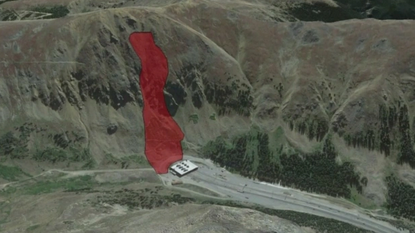
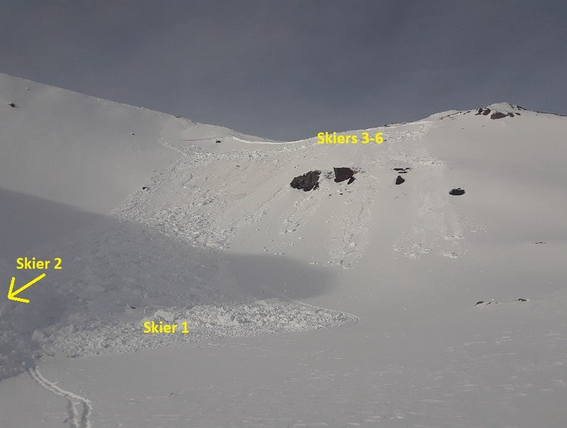
Site of fatal avalanche. During a Level 2 AIARE course held by Silverton Avalanche School.
Site of the fatal avalanche during a Level 2 AIARE course behind the lawsuit against Silverton Avalanche School (settled) and Backcountry Access.

Avalanche fences at the Canyons are being installed despite opposition

Avalanche fences are being installed in Park City, Utah despite a petition to halt the construction. However, the petition appears to be to irrelevant now, since the construction of the avalanche barriers are underway.

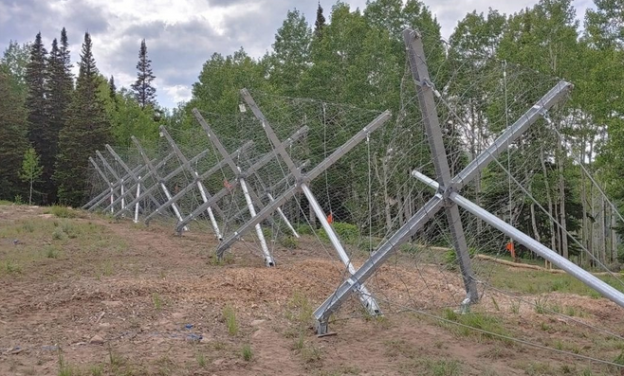
Iron Mountain Associates plans to install 214 avalanche fences. The avalanche fences are three to four meters tall and under construction in The Colony neighborhood. The avalanche barriers aim to prevent an avalanche from hitting the driveway of two specific homes.

An out-pour of community outrage has ensued since the county approved the project in 2020. Despite the community opposition, the construction of the fences is now underway.

While avalanche fences are effective, professionals feel there are better options. Alternatives exist which do not cause as much harm to wildlife and do not create extreme visual degradation.

Jake Hutchinson formerly managed the ski patrol avalanche mitigation program at The Canyons Resort (now Canyons Village at Park City) for over ten years. Hutchinson created the avalanche atlas currently used as a model for Canyons Village at Park City and The Colony. He claims that the avalanche modeling for the fences is based on insufficient data…. just what came from him and a couple of years of doing some measurements.

The Colony has long been concerned about avalanche mitigation. “Originally they proposed Gazex exploders up there, which are still a big nuisance and eyesore, but far less of an impact than permanent fences.”

Concerned citizens looked for a public comment period as an opportunity to express their concerns. The project’s approval under a Specially Planned Area (SPA) agreement surprised some residents. Hutchinson says, “We were watching for public comment period… and they slipped it through under the SPA agreement… The SPA doesn’t specifically have anything about avalanche fences or mitigation.”

The SPA agreement contains lengthy regulations for preserving sensitive lands and open spaces, wilderness protection, ordinances to minimize the visual impact of developments, and recreational access regulations.

Summit County resident and opponent to the avalanche fences, Seth Dromgoole, sent an email to the County Council to outline several conflicts found in the SPA agreement. Dromgoole states, “My interpretation of the Amended SPA (dated 1999) reveals multiple areas where this project may conflict with the agreement. Potential conflicts arise in the language surrounding viewshed, open space designation, and wildlife.”

Dromgoole also raised the concern, “The LIP [Low Impact Permit] for this project should not have been approved without public comment…The Dream Peak Avalanche Control Mitigation Fencing certainly creates unsightly conditions.”

Both Hutchinson and Dromgoole assert that there are more appropriate alternatives to avalanche mitigation than the installation of over 200 fences.

“Avalanche fencing is not industry standard for this use. The industry standard for fencing is to protect permanently inhabited structures and major roadways, not driveways. Avalanche fencing is excessive for what is essentially a shared driveway for two houses,” Dromgoole says.

Hutchinson is adamant that using Remote Avalanche Control Systems (RACS) such as Gazex is an adequate solution to potential avalanche activity in the area. “If they fire the RACS at 3 am, and then the road is cleared and opened, no one ever knows.”

Hutchinson believes that avalanche fences were proposed as an ultimate convenience for high-dollar property owners. “The reason for the fences is that they didn’t want a single moment of inconvenience for the homeowners,” he explains.

The main objection is that residents and visitors will suffer from visual impairment, restricted access to wilderness, and loss of wildlife through animal deaths.

Dyer Corp owner Russ Dyer has said that studies have shown that installing the barriers with 3 feet of space between each one allows for wildlife to pass through them and coexist safely.

But Hutchinson elaborates on the adverse effects of avalanche fences on wildlife. “They put fences near the Tombstone lifts in the early 2000s….. The first couple of years after they put those fences in… we were up there pulling dead animals out of those fences in the summertime, fairly consistently… big bull elk, deer, and other animals…. These [fences] will have a similar impact on wildlife, especially because these are about ten times the extent of what is near Tombstone right now,” he explains.

Dromgoole states, “The avalanche fencing will create a permanent scar on the landscape, will result in the destruction of viewshed for thousands of Summit County residents.”

The 200 plus fences will be visible across long distances. “If you are out riding your bike in Round Valley and look up there, it will look like rows and rows of fences,” says Hutchinson. He warns the community. “This is one of those things that people are going to look up there one day and wonder, ‘oh, how did that happen?’… Once they put the fences in, they will permanently impact the landscape.”

Neither Iron Mountain Associates nor Dyer Corp have responded to press inquiries.

A petition to halt the construction of the avalanche fences continues, but it appears to be to irrelevant now since the construction of the avalanche barriers are underway.

Avalanche fences
Avalanche fences

Mistrial in Colorado Avalanche Case against snowboarders

A mistrial in the Colorado Avalanche case against two snowboarders has been declared.

The two snowboarders are facing charges in Summit County for an avalanche they triggered last spring. Evan Hannibal, 26, and Tyler DeWitt, 38, appeared in Summit County District Court Thursday for what was supposed to be day one of their trial, but only half of those summoned for jury duty appeared.

Now they will have to wait until June for their day in court. The judge had to declare mistrial in the colorado avalanche case.

“I’m disappointed for a lot of reasons,” said Judge Edward Casias. “I’m disappointed for the parties not being able to address this the way they should have today. Both the People and Mr. Hannible and Mr. Dewitt were entitled to a jury trial of 6.”

Jason Flores-Williams, attorney for the defendants said about half of the 40 summoned showed up.

“…and when we started questioning jurors about what they knew about the case, if they had any biases, it became pretty clear that we weren’t going to be able to get 6 impartial jurors,” said Flores-Williams.

Judge Casias thanked those who did show up and had some words for those who didn’t.

“It’s an important case. Every case is important,” he said. “There are very few civic responsibilities we ask of you. Jury service and voting really are the two that we ask you to be engaged in with your community and some of the people that were summonsed chose not to and I will address that with them and probably the community at large.”

Eisenhower Tunnel Avalanche and Damage

Hannibal and DeWitt were snowboarding on March 25 when they triggered an avalanche just above the Eisenhower Tunnel.

“The avalanche put debris on the road that was over 400 feet wide and 20 feet deep,” said Ethan Greene, Director of the Colorado Avalanche Information Center.

The pair reported the slide to the CAIC and handed over GoPro video to go with the report. They never realized it would be used in a court case against them.

They now face a misdemeanor for reckless endangerment and may have to pay some restitution for damage caused.

The trial has been rescheduled for June 7, 8, and 9.

Mistrial in Colorado Avalanche Case
A Mistrial in Colorado Avalanche Case was declared.

Avalanche investigators must testify in Colorado criminal case

Avalanche investigators from the Colorado Avalanche Information Center (CAIC) must testify in the trial of Evan Hannibal and Tyler DeWitt according to Judge Casias. He dismissed a motion from the Attorney General’s Office to void subpoenas to keep them off the witness stand.

On March 25 DeWitt and Hannibal were snowboarding above the Loop Road at the Eisenhower/Johnson Memorial Tunnels. They triggered an avalanche. Nobody was injured but it covered more than 400 feet of the roadway up to 20 feet deep and damaged a remote avalanche-control installation.

The District Attorney charged both snowboarders with misdemeanor counts of reckless endangerment.

Much has been made of the avalanche center’s role. The center contacted the defendants after the avalanche to collect information to put together a report on the incident. The defendants voluntarily supplied information. Which was later shared with the Summit County Sheriff’s Office.

The defense attorney Jason Flores-Williams fought to suppress the report as evidence. He argued that it represented a violation of the defendants constitutional rights because they were never informed the information could be used against them. Judge Casias ruled there were no violations. The avalanche center employees weren’t acting as law enforcement agents in their investigation and there was no formal search or seizure.

The avalanche center was directly involved the case a few days later. Subpoenas for their avalanche investigators were issued. They required the center’s Director Ethan Greene and forecaster Jason Konigsberg to testify as expert witnesses. On Feb. 26 the Attorney General filed a motion to quash the subpoenas on the grounds that such testimony could have an “unintended adverse ‘chilling’ impact on the CAIC’s ability to gather important information from people involved in avalanches.”

On Tuesday Assistant Attorney General Jeff Fugate defended the office’s stance. He claimed that forcing the men to testify would harm future efforts to gather information following an avalanche. It could create a situation where backcountry users would no longer view the CAIC as impartial.

“The center is very aware of conversations taking place in the backcountry community. And advice being widely shared that people should no longer speak to the CAIC if they are involved in an avalanche,” Fugate said. “…That’s the exact opposite message the center has worked hard to implement in Colorado. People should be willing to share information with the center without hesitation or reservation because the more information the center has, the better it can educate the public about avalanche safety.”

“The agency has fulfilled their role by sharing this information. However, appearing as an expert for the prosecution takes them outside of this informational or educational role. It leaves the wrong impression or the misunderstanding that the CAIC is now ‘on a side.’ That’s something this agency just wants to avoid at all costs.”

Fugate said the fear wasn’t that community members would stop reporting avalanches altogether. But they may report an avalanche and refuse to provide any follow-up interviews, photos or videos.

Fugate continued to say that the subpoenas for the avalanche investigators were unnecessary. They say prosecutors could find other avalanche experts who weren’t working for the state to serve as witnesses.

In response Deputy District Attorney Stephanie Cava called the assertions speculative. She said her office often deals with situations like this. She compared the situation to someone getting in a car crash, calling the police and still potentially getting a ticket.

She also said that some fears were driven by inaccurate news reporting. She singled out a recent story from The Colorado Sun. Which mistakenly called the case the state’s first criminal case involving an avalanche. She claims there were three cases that went to trial in Summit County in 2014 after a fatal avalanche. While those cases did not receive the same news coverage Cava claimed it did not impact avalanche reporting. She noted that field reporting to the avalanche center nearly doubled from 2014 (1,392) to 2020 (2,771).

Cava also says that reports her office seeks a set amount of restitution in the case were false. Any restitution amounts will be decided if the men are convicted. She noted that the most recent plea offer her office made to the defendants was rejected. It involved the defendants pleading guilty to reckless endangerment, performing 120 hours of public service and paying $25,000 in restitution.

Cava also said that prosecutors are given wide latitude to call witnesses. Quashing them in this case could create a bad precedent in the district. She claims that witnesses from state agencies frequently testify without compromising their impartiality.

“When a (Colorado Bureau of Investigation) forensic scientist comes and testifies in a DUI case, they don’t get up there and speak on behalf of the people,” Cava said. “… (They) don’t get up there and say, ’That person was drunk.’ They say, ‘Well this is the test that I did, this is how I did it and, based on that information, you could see these sorts of signs.’ They don’t give a conclusory opinion.”

Casias noted that avalanche investigators Greene and Konigsberg would be reluctant witnesses and that the case potentially could have impacts on future avalanche reporting. But he said the district attorney’s office didn’t err in issuing the subpoenas.

As expert witnesses, Casias said the men would be asked only to share their objective findings from their investigation.

“They don’t get to sit here and say this person is guilty or not guilty of any criminal conduct,” Casias said. “… Their expertise and their knowledge is providing an objective determination of what caused the avalanche to go.”

The trial is set for March 25-26.

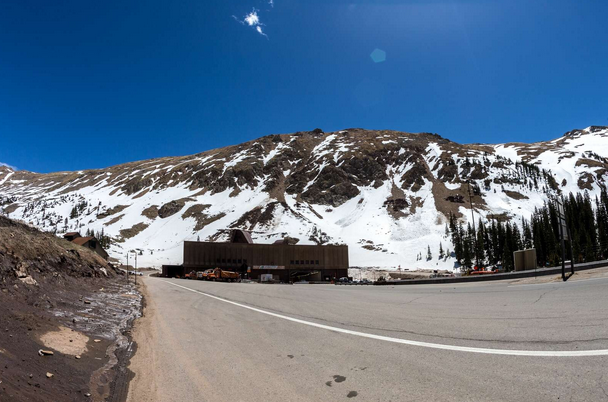
The scene of the crime in a Colorado avalanche court case.
The scene of the crime
Avalanche

Avalanche testimony in criminal case could have “chilling effect”

Avalanche testimony by Colorado Avalanche Information Center boss Ethan Green in a criminal case could hinder the function of the agency, according to the state Attorney General.

Defendant Provided his video

Evan Hannibal provided his helmet video of the avalanche he triggered above Interstate 70 last March. The avalanche buried a service road and destroyed an avalanche mitigation installation protecting I-70. He thought the Colorado Avalanche Information Center (CAIC) would use his submission to help educate others.

But Summit County prosecutors used the video for a criminal case. They seek restitution for the damaged avalanche mitigation device.

Hannibal and Tyler DeWitt are charged with reckless endangerment. Restitution of $168,000 is sought for the destroyed avalanche mitigation device.

Adverse impact of video

Hannibal has argued that the charges could convince others to stop giving information to the CAIC. Colorado Attorney General Phil Weiser, as attorney for the state avalanche center, has agreed. He argues against the plan to call avalanche center director Ethan Greene as an expert witness. He states it “could have an unintended adverse impact on the CAIC’s ability to gather important information.”

Weiser’s office has filed motions to quash subpoenas requiring Greene and forecaster Jason Konisberg to testify as expert witnesses.

Novel Avalanche Case

It is a novel case in several ways.

Backcountry travelers have never before faced criminal charges over an avalanche in Colorado. Summit County Court Judge Ed Casias recently rejected the pair’s argument that their rights were violated when the helmet video was provided to police as evidence of a crime.

Now Weiser has stepped in, asking Judge Casias to reject having state employees testify.

“There is genuine concern that if CAIC employees appear as an expert witness it could adversely impact their ability to gather information from persons involved in an avalanche,” the motion filed by Weiser’s office reads. “The more involved CAIC is, the more it looks like they are working with law enforcement, resulting in a chilling effect on CAIC’s mission.”

Too busy for avalanche testimony in court

Weiser also argued that the subpoenas are “unduly burdensome, unreasonable and oppressive.” Because it takes them away from avalanche investigations and forecasting.

James Moss is an attorney with over 30 years experience in recreation law. Moss thinks the loss of avalanche testimony by Greene and Konisberg could hinder the case. Moss thinks that without them the district attorney will have a hard time explaining the CAIC report. Or to explain why the avalanche mitigation device was placed in that particular location.

But more important, Moss says, is the threat to the CAIC mission. Which includes educating the public on avalanche risks.

“The motion states clearly that this is going to screw up avalanche research and reporting in Colorado forever,” said Moss. He has no role in the case but urges backcountry travelers to avoid talking with the CAIC. “You never report to CAIC from here on out, period,” Moss said.

Avalanche in Colorado
The avalanche in question in the case with avalanche testimony

Alpine Meadows avalanche lawsuits over dead and injured guests

AP – Two Alpine Meadows avalanche lawsuits have been filed by the widow and a friend of a dead skier. They accuse the resort of negligently rushing to open the unsafe slopes for a busy holiday weekend.

Cole Comstock, 34, of Blairsden, California, was killed. His close friend Kaley Bloom was seriously injured. They were caught in an avalanche on an Alpine Meadows ski run on Jan. 17, 2020. Nobody else was seriously hurt.

Two Alpine Meadows avalanche lawsuits filed

The two Alpine meadows avalanche lawsuits were filed in Placer County Superior Court by Bloom and by Cole’s widow. They seek unspecified damages from Alpine Meadows. The allegations include negligence, gross negligence and breach of contract. Raymond’s lawsuit also alleged the resort was to blame for her late husband’s death.

The resort had closed the previous day following several days of heavy snow and high winds that dramatically increased avalanche risks, the lawsuits claimed. The National Weather Service in Reno reported wind gusts up to 116 mph the night before the avalanche.

Alpine Meadows “premature opening” that Friday “was in response to public and economic pressure to open that particular lift and callous disregard for the dangerous combination of conditions,” according to Bloom’s lawsuit. He says he suffered severe and ongoing injuries.

Avalanche Control work done

The avalanche happened after avalanche control work was performed, the resort said in a statement. Such work involves the use of explosive detonations. They intentionally trigger avalanches while guests are not in the area.

“While we cannot comment on ongoing litigation, January 17, 2020 was a devastating day for our team at Squaw Valley Alpine Meadows, and we continue to share our deepest sympathies with the family and friends of those affected,” Alex Spychalsky, a spokeswoman for both of the neighboring resorts, said in an emailed statement.

Raymond’s lawsuit says Alpine Meadows “should not have opened the ski run under the circumstances.”

Most skiers who buy ski resort passes must sign release forms. Those warn that winter activities “can be dangerous and involve the risk of injury or death.”

But Raymond’s lawsuit said the resort increased the risks beyond those normally assumed by skiers. Cole and Bloom believed they were skiing on a run that was safe because avalanche control had been performed.

Reopening the runs after they’d been closed the day before “created a false and reckless illusion of safety,” the lawsuit said. “Inadequate and/or incomplete mitigation measures did not decrease or mitigate the risks, but instead further increased the risk and turned a dangerous area into a deadly one.”

Raymond’s lawsuit notes that most ski fatalities occur outside of ski resorts. In-bounds avalanche deaths are rare.

Experienced Skier

Comstock was an experienced skier. He grew up in the Sierra Nevada and skied both in-bounds and out-of-bounds. Depending on the conditions of the day and information from the resort and the ski patrol, his widow said in the lawsuit.

Raymond was on the other side of the mountain when she got a phone call from friends. Telling her there had been an avalanche. She went to wait for her husband beneath a chairlift.

That’s when she saw the ski patrol pulling a stretcher with someone covered with snow and blood. They stopped and began administering CPR to the victim. Then she recognized her husband’s maroon ski boots and realized it was him.

She said blood spewed from his mouth with each push on his chest as the ski patrol team took turns at CPR for 45 minutes.

“Eventually they stopped as she watched them pull the white sheet over him. Her last image of her husband was a broken and already dead body,” the lawsuit said.

Seven people were killed in an avalanche at Alpine Meadows in 1982.

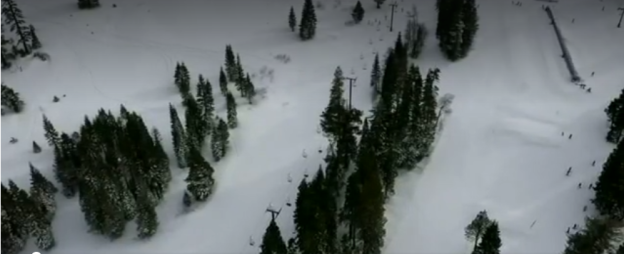
Two Alpine Meadows lawsuits were filed after a guest died in an avalanche.
Avalanche

Avalanche defendants suffer motion dismissal in court

Two avalanche defendants, snowboarders, are facing charges and a $168,000 fine for an avalanche that threatened I-70. A judge just dismissed their motion to dismiss video of the avalanche they gave to Colorado Avalanche Information Center.

Motion to Dismiss

A Summit County Court judge dismissed a motion to suppress a GoPro video of the avalanche. Evan Hannibal and Tyler DeWitt had given the video to the Colorado Avalanche Information Center (CAIC).

The video is evidence in the Summit County District Attorney’s case against Hannibal and DeWitt. They are charged with reckless endangerment and could face a $168,000 fine. These are the first criminal charges ever filed against skiers involved in an avalanche in Colorado.

The prosecution argues that the avalanche defendants endangered drivers near the west portal of the Eisenhower-Johnson Memorial Tunnels. They want $168,000 to replace an avalanche control system destroyed they destroyed. The CAIC said they triggered the avalanche.

The snowboarders argued that prosecutors conducted an unlawful search and seizure when they based the allegations on the helmet-cam video. The men gave the video to the CAIC voluntarily. They hoped it could be useful so others might avoid a similar slide.

CAIC is a State Agency

“This is a state agency, a constitutional actor, not informing citizens that what they are voluntarily disclosing in good faith to that that state agency could, and in this case was, turned over to law enforcement for purposes of prosecution,” Jason Flores-Williams, the attorney for DeWitt and Hannibal, said during the motions hearing on Tuesday. “This is extraordinarily problematic. There was a duty to inform Mr. Hannibal that what he was providing to the CAIC could be turned over to law enforcement.”

CAIC director Ethan Greene and avalanche forecaster Jason Konigsberg testified that the avalanche defendants voluntarily provided information and video about the avalanche. The CAIC report said the snowboarders triggered the avalanche. And also that the two “assumed that the avalanche mitigation to protect the tunnel infrastructure decreased the avalanche hazard on the slope.”

Greene said it is common for law enforcement to request information. The CAIC shares its reports. The state agency offers all reports for public review. “Our role is to facilitate people understanding avalanches, and we do that by sharing information,” Greene said. “If the public requests information from us, we provide it.”

The CAIC did not include the video in its public report, although they often do publishes videos. “It was my judgment that the content of the video did not add to the educational messages we were trying to get across in the report,” Greene said.

Video Provided Voluntarily

Konigsberg agreed with Flores-William in saying the sharing of the video was “voluntary and collegial.”

Flores-William asked Konigsberg if he thought the video could be handed over to law enforcement. “Can I think about that for a second?” Konigsberg asked. “Honestly, it’s not something I thought about. I kind of had a one-track mind to collect information for avalanche education and safety, like I always do.”

The prosecution argued that Hannibal and DeWitt, experienced with CAIC reports, should have known that CAIC publishes information. “I understand there is a concern about the public policy side of this, but we have to focus on the law,” McCollum said. “And none of the law supports the … argument that this video or the photos that were obtained should be suppressed.”

Judge Ed Casias found there was not any violation of constitutional protections from unlawful search and seizure because there was no search and nothing was seized. “It wasn’t a search of any kind. Mr. Hannibal was asked if he would provide it and he did,” Casias said.

Casias said he wouldn’t expect Konigsberg to tell Hannibal the video could be used by law enforcement. “Frankly, he didn’t know that was going to happen. That was not the reason he was collecting information,” Casias said.

Miranda Rights don’t apply

Casias also denied the argument that the collection of the video violated the men’s Miranda rights, which only applies to people in custody when they are advised that what they say can be used against them in court. “There is information here that was provided voluntarily. It was provided to CAIC, not law enforcement,” Casias said.

The courts should ensure police don’t circumvent constitutional protections against unlawful search and seizure, Casias said. Still, he could not connect a skier providing information to an avalanche center with a constitutional violation. 

“If there are things that you, as a backcountry traveler do that cause new concern that law enforcement may be involved and someone reaches out and asks for information, you don’t have to give it,” Casias said. “I can’t make you disclose and I can’t make you withhold. But if your common goal is to make it safer for other people … it’s your decision.”

The avalanche started by the defendants
The two avalanche defendants started an avalanche that created a threat to I-70.
Silverton Avalanche School Avalanche

Avalanche Lawsuit names Silverton Avalanche School, guide and BCA

Peter Marshall died in an avalanche during an avalanche safety class near Red Mountain Pass in 2019. In an avalanche lawsuit his family names the school, the guide, and Backcountry Access.

The slide swept six skiers down a slope. All of them were part of a Level 2 American Institute for Avalanche Research and Education (AIARE) class. Which was offered by the Silverton Avalanche School.

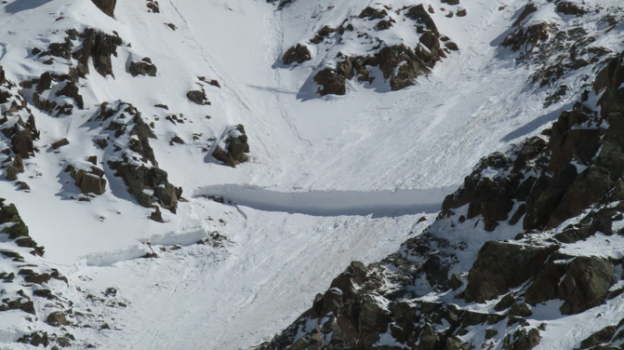
Site of a fatal avalanche during an AIARE Level 2 avalanche class.
Site of the 2019 avalanche which caught six participants in an AIARE Level 2 avalanche class taught by Silverton Avalanche School.

 The family is suing the guide, school and local rescue group. And also the maker of an avalanche airbag and its private equity firm owner. This lawsuit marks the second recent legal action involving avalanches based on reports by the Colorado Avalanche Information Center (CAIC). 

Lawsuit defendants

The wrongful death lawsuit names Silverton Avalanche School, San Juan County Search and Rescue and guide Zachary Lovell. It alleges a litany of failures, fraud, misrepresentation, negligence and consumer protection law violations. 

The lawsuit also charges Boulder-based Backcountry Access (BCA) with making a defective Float 32 avalanche airbag. It says the airbag did not inflate after Marshall “attempted to trigger” the balloon-like backpack. The lawsuit also names Kohlberg & Company, the private equity firm that acquired BCA and parent company K2 Sports. 

“The defendants, each of them, acted willfully, wantonly, and recklessly, without regard for the consequences or the rights and safety of Peter Marshall or of others,” reads the lawsuit. It argues the school, guide and airbag maker “created substantial and unreasonable risks of serious injury and death to participants” in the avalanche class. “Defendants were grossly negligent and that gross negligence was a cause of the injuries, damages, and losses suffered by plaintiffs and the heirs of Peter Marshall.” The CAIC  report noted several mistakes that led to the avalanche. The group was skiing together on a slope that was steep enough to avalanche. They misjudged the steepness, aspect and avalanche danger on the slope they skied. And they failed to recognize the potential for triggering avalanches on nearby slopes. 

Allegations against the school and guide

The avalanche was triggered by the guide. It also caught Marshall and carried him to the bottom of the slope. A second avalanche on an adjacent slope buried Marshall in several feet of snow. Lovell and the students searched for Marshall. He was uncovered after 50 minutes. 

Avalanche death in a Level 2 avalanche class
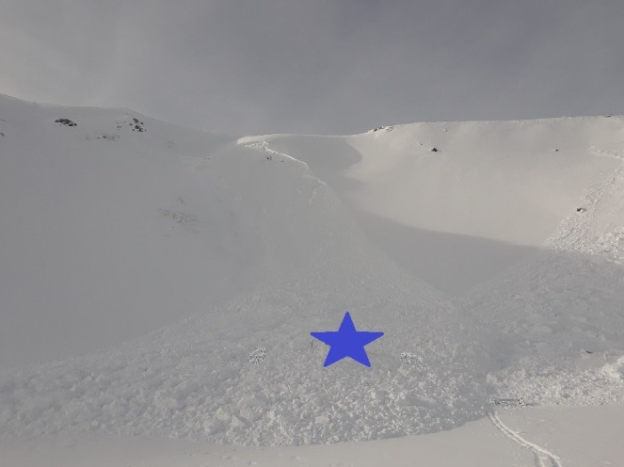
The 2019 avalanche which caught six participants in an AIARE Level 2 avalanche class taught by Silverton Avalanche School. The original snow slide is off the edge on the right, the debris and star are where the second avalanche buried and killed a student.

In the 12 days before the slide, the avalanche center logged 72 avalanches in the North San Juans and noted “considerable” danger. The lawsuit says Silverton Avalanche School staff and instructors agreed not to travel in avalanche terrain that weekend with students. 

During those discussions, school staff “expressed concern that defendant Lovell seemed inclined to travel in more complex and bigger terrain. Despite the fragile snowpack and concerning avalanche conditions,” reads the lawsuit. 

The lawsuit cites several dozen failures by both the school and Lovell. Those include charges of negligence. Like failing to communicate the day’s avalanche forecast. And allowing instructors to lead students “into, through and below” avalanche terrain. The lawsuit also says the school and Lovell “falsely represented” training and qualifications.  The lawsuit notes that BCA in October 2013 recalled some of Float airbags.

Second Lawsuit to rely on CAIC reports

The lawsuit marks a second recent case where a CAIC report supports legal action. In October Summit County prosecutor Bruce Brown levied a $168,000 fine against two snowboarders who triggered an avalanche above the Eisenhower-Johnson Memorial Tunnels in March. The slide buried a service road and destroyed remote avalanche mitigation devices. The two snowboarders gave video to CAIC avalanche investigators. They thought their interviews and perspective would help others avoid future avalanche accidents.  A motion filed by the snowboarders’ attorney in November to suppress the video argued the criminal charges stemming from an avalanche could pose a slippery slope for backcountry skiers who traditionally have worked cooperatively with the avalanche center in detailing avalanche accidents. 

“The backcountry community needs to know if CAIC is not an ally in their efforts to improve best avalanche practices, but (operates) merely as an extension of law enforcement,” the motion reads. “This is a posture that needs to be clarified for all parties, because if CAIC is seen as a revolving door to police and prosecutor there will be a chilling effect.”

I-70 Avalanche – Snowboarders say 4th, 5th Amendment rights were violated

Dec 2, 2020

SUMMIT COUNTY, Colo. (KDVR) — Two backcountry snowboarders who allegedly triggered a snow avalanche near the Eisenhower Tunnel last March are now responding with a first-of-its-kind court motion.

Evan Hannibal and Tyler DeWitt are being charged with a single misdemeanor count of reckless endangerment and are being ordered to pay $168,000 in restitution.

However, the pair is claiming the Colorado Avalanche Information Center (CAIC) violated their Fourth and Fifth Amendment rights.

In a motion filed Wednesday attorney Jason Flores-Williams alleges the Go-Pro video being used by prosecutors as evidence should never have been handed over to Summit County prosecutors.

The attorney says his clients gave the video to the CAIC in good faith, not knowing it was going to be used against them as evidence.

“He (Hannibal) believed he was contributing to overall knowledge of snow avalanches. It’s now being used to prosecute. You need to tell them, ‘What we’re using could be used against you,’” Flores-Williams explained.

Flores-Williams believes what happens in the case could have implications that extend far beyond Colorado. He believes his clients are being made an example.

“This is absolutely ridiculous. We’re fighting this message being sent that going forward skiing and backcountry life might be criminalized. What we’re doing here is defending the backcountry and this has implications throughout the entire Mountain West,” he explained.

Nobody was injured in the avalanche. However, a service road used primarily by transportation workers was buried under about 20 feet of snow. Expensive avalanche mitigation equipment was also destroyed.

District Attorney Bruce Brown plans to respond to the motion in court. He released this statement to FOX31:

“Information voluntarily surrendered without coercion enables prosecutors to use that information in court. I am unaware of any express or implied limitation that was placed on information obtained during the law enforcement investigation that would undermine that principal. It is important that every person charged with a crime have an opportunity to fully litigate all legal issues before a judge and have their guilt determined by an impartial jury of their peers.”

A trial is scheduled for late March.

avalanche
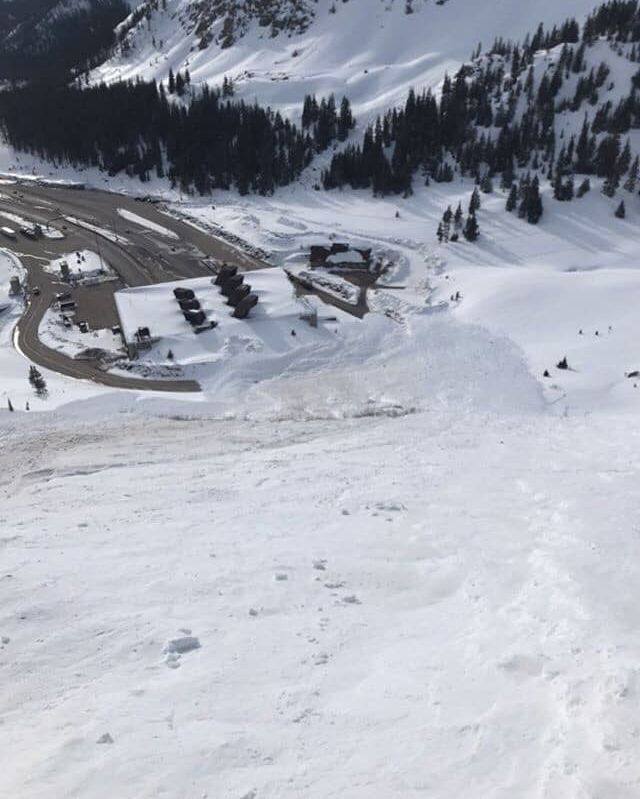
Snow avalanche on I-70 which buried the service road