It appears that Silverton Avalanche School was dropped from the lawsuit by the Marshall family, along with their guide. Neither party has commented so a settlement amount was most likely agreed on.
The family of Peter Marshall, who died in an avalanche during an AIARE advanced avalanche safety class with the Silverton Avalanche School, has dropped the school and teacher from their lawsuit. It appears that a settlement was reached. A complaint remains open against Backcountry Access, their owner K2 Sports, and K2 owner Kohlberg & Company.
Settlement Reached with Silverton Avalanche School?
Two years after the death Marshall’s wife and daughter sued San Juan Search and Rescue, the Silverton Avalanche School and the school’s guide, Zachary Lovell, in a wrongful death lawsuit. Last month the family dropped its claims against the county, school and guide. Attorneys for the Marshall family have not returned calls or responded to emails and representatives from the county and school declined to comment, indicating a settlement amount was most likely agreed upon.
The Fatal Avalanche Accident and the Allegations
The family had argued that the school and guide had misled Marshall into taking the class by “falsely presenting” that school staff “possessed deep operational experience in avalanche terrain.” The family also claimed the school and guide displayed gross negligence.
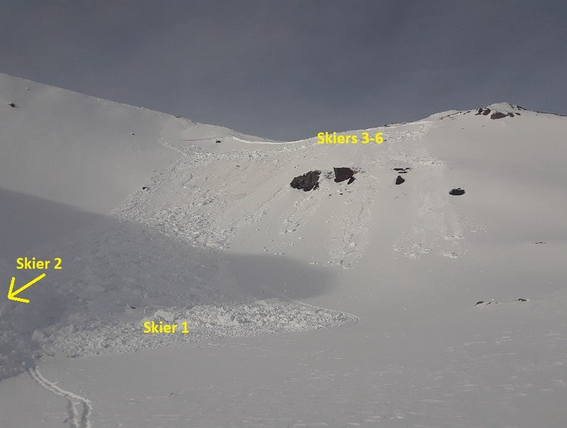
Marshall had been participating in the Silverton Avalanche School Level 2 American Institute for Avalanche Research and Education (AIARE) class on Jan. 5, 2019. He was swept down a slope in an avalanche that caught five other skiers. Four were not buried. Another was buried but was able to extricate himself. When the skiers freed Marshall from the debris, he was not breathing.
The Colorado Avalanche Information Center (CAIC) report pointed to several mistakes during the advanced class, including a group of skiers gathered on a slope steep enough to slide, those skiers misjudging the steepness of that slope and a failure to recognize clear avalanche hazards. The guide triggered the first avalanche, which swept the whole group down the slope. A second avalanche buried Marshall under several feet of snow.
Remaining Complaint Against Backcountry Access and K2 Sports
The family of the 40-year-old Longmont skier is still suing K2 Sports and its subsidiary Backcountry Access, which makes an air bag backpack that was not deployed when rescuers found Marshall buried in more than 8 feet of avalanche debris. “Peter Marshall attempted to trigger his Float 32 avalanche air bag system but it did not fully deploy or inflate,” according to the complaint filed in Boulder District Court.
Marshall’s Backcountry Access Float 32 pack was not inflated. Colorado Avalanche Information Center investigators said in their report that the air bag backpack “was functioning properly,” with “the trigger out of the pack strap, but the bag was not deployed.”
K2 Sports, owned by private equity firm Kohlberg & Company, denied the allegations in a response filed this month. The K2 lawyers cited 16 facts they believe eliminate liability in their motion to dismiss the case.
Previous Float Pack Problems
The complaint notes that Backcountry Access recalled “substantially similar” Float packs due to a problem that could lead to a failure to deploy. The U.S. Consumer Products Safety Commission reported the recall of 8,200 Float 18 packs on Nov. 26, 2013. They warned that the trigger assembly can fail “resulting in the air bag not deploying, posing a risk of death and injury in the event of an avalanche.”
The complaint by the Marshall family argues Backcountry Access “should have known insufficient changes were made to the design of avalanche air bags manufactured after the recall to prevent such failures.” The lawsuit argues that Backcountry Access should have been aware of “safer alternative designs,” such as a remote or automatic triggering or inflation system.
Another skier in the group was wearing an avalanche air bag and attempted to use it when he was swept off his feet. It also failed to inflate. “Later, he determined that he assembled the trigger mechanism incorrectly,” reads the CAIC report. It did not identify the brand of air bag used by that skier.
A 2014 study showed 60% of avalanche accidents involving skiers with un-inflated air bags were because the skier never pulled the trigger. That study also showed 12% of so-called non-inflation incidents were due to user error, including assembling the trigger mechanism incorrectly.