Tag Archives: forest service

Avalanche forecasters trigger an avalanche

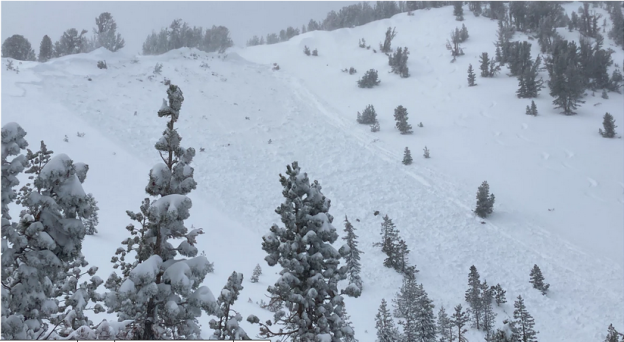
COOKE CITY — Avalanche forecasters trigger an avalanche: Even if you’re an expert, you can never be too safe in the backcountry. It’s something two avalanche forecasters learned firsthand last week after they triggered a slide near Cooke City.

Last Friday two Forest Service avalanche forecasters from the Gallatin National Forest Avalanche Center had a close call on Fisher Mountain.

“It’s incredibly terrifying,” said the director of the Gallatin National Forest Avalanche Center, Doug Chabot, on Wednesday.

The two forecasters had snowmobiled to an area on the mountain to dig some snow pits. “One of them rode and then the second person came, and when the second person was coming, he triggered the avalanche from below,” said Chabot.

The second rider was below the slope. “And he was able to propagate this fracture up the hill, which then caught him. Luckily the other guy, the first guy, he was safe,” Chabot said.

The first rider called for help on the radio and then rushed down to his colleague.

“And luckily he wasn’t buried. He had snow up to his thighs, but it was a really close call because it was a big avalanche,” said Chabot.

They were able to dig out the rider and his snowmobile, and thankfully no one was hurt but it’s a reminder that there are no rules when it comes to Mother Nature.

“December and January can be quite bad for avalanches in Montana. And the reason for that is, is we’re forming many weak layers in the snowpack right now,” Chabot said.

Chabot said the snowpack is relatively thin, usually only two to three feet thick in most places. Thin snowpacks can change really fast. At some point, the weak layer may break and that’s what triggers avalanches.

“But the ones that kill people in the United States are overwhelmingly, either the victim or someone in their party triggered the avalanche,” said Chabot. Like these guys.

Dec 15, 2022

Avalanche forecasters trigger an avalanche

Sierra Avalanche forecasters triggered an avalanche on Tamarack Peak but escaped any consequences according to the Forest Service run center.

Sierra Avalanche forecasters trigger an Avalanche, Escape

Sierra Avalanche forecasters triggered an avalanche on Tamarack Peak but escape any consequences according to the Forest Service run center.

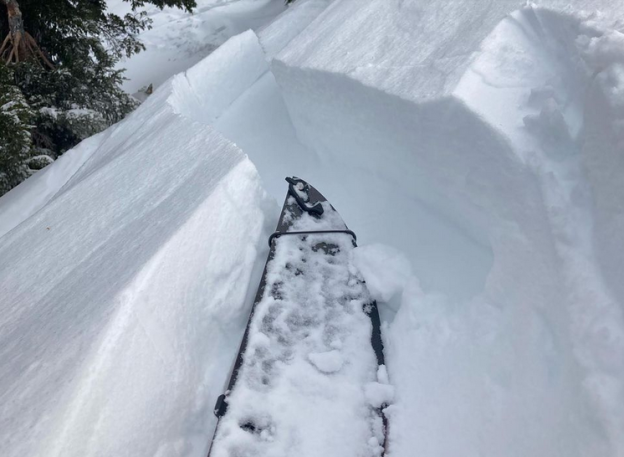
An avalanche was triggered over the weekend, on Sunday, on Tamarack Peak by two Sierra Avalanche Center forecasters, the Forest Service center says.

The avalanche happened on the south end of Proletariat Face in the Mount Rose area on Sunday around 1:00 p.m.

They were conducting field operations when they collapsed the snowpack, unintentionally triggering the avalanche.

It was a D2, meaning that it could bury, injure, or kill a person.

There were ski tracks in the area prior to the avalanche, so it’s a reminder to use caution in the back country.

Forest Service avalanche center at work

Avalanche Nonprofit Merger will Support Forest Service Avalanche Center

New avalanche nonprofit will provide financial aid for Forest Service

NH (Nov. 15, 2022) – Friends of Tuckerman Ravine and White Mountain Avalanche Education Foundation, both longtime nonprofits of Mt. Washington Valley, have merged. The merger will support and promote the Mount Washington Avalanche Center, a Forest Service operation.

Both groups have previously been critical to the success of the Forest Service center, bestowing financial support. This combined entity will enhance the ability to raise money.

“We are very excited about these organizations finally coming together after so many years. Both have the same goals, and now together, we can streamline our efforts to fund the Avalanche Center,” said Jake Risch, president of the new Avalanche Nonprofit – the Mount Washington Avalanche Center Foundation.

This fall, MWAC will host various events in support of the Forest Service :

The 12th annual Eastern Snow and Avalanche Workshop takes place on Nov. 17–18

Winter Backcountry Kickoff Party took place on Nov. 19, in Intervale, NH.

Forest Service avalanche center at work

Tahoe Avalanches: “Stupid Mistakes?” as people trigger slides

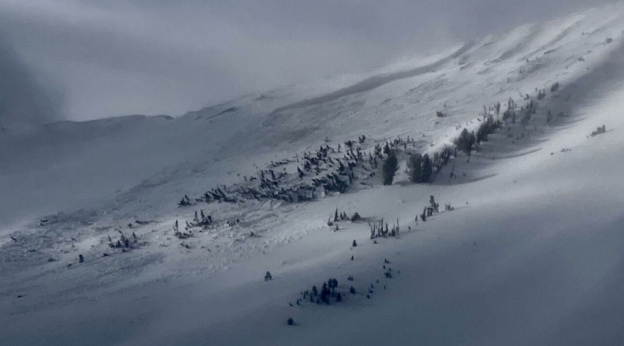
By the end of Friday the Sierra Avalanche Center had received numerous reports of Tahoe avalanches.

“Perfect Day” leads to many avalanches

Friday started as a perfect winter day. About a foot of new snow fell overnight. In the morning the sky cleared. Then by the end of the day the Sierra Avalanche Center had received many avalanche reports. Some happened naturally but many were caused by skiers and snowboarders.

In the morning the Sierra Avalanche Center posted its forecast. The center stated the obvious – that storm slabs in the new snow were a big concern. They rated the avalanche danger as “considerable,” meaning that skiers and snowboarders were likely to trigger avalanches.

Reports of Tahoe avalanches continued through the weekend. There were no fatalities but multiple people were buried in avalanches. At least one person was seriously injured.

New storm snow problem, different from Utah and Colorado

In the United States avalanches have killed 25 people so far this season, including 18 just in February. The snowpack across the mountain west has been riddled with inherent dangers since the beginning of the winter. In Colorado and Utah those persistent dangers are still playing a role in avalanches. The Sierra Nevada’s snowpack is generally faster to resolve those weaknesses. The avalanches on the holiday weekend were simply from new snow. According to the Sierra Avalanche Center the main issues are things like storm slabs and wind slabs.

Slew of Tahoe Avalanches

At Castle Peak, atop Donner Summit, a snowboarder jumped off a rock and was engulfed in snow.

Another skier-triggered avalanche near Carson Pass buried a person for about five minutes. The victim survived but had severe injuries.

At Mount Tallac the El Dorado County Sheriff’s Office dispatched a search and rescue team in a helicopter to respond to an avalanche triggered by a group of backcountry skiers. The response ended when authorities confirmed that no one had been caught in the avalanche.

“I would say any time you’re caught in a slide and you walk away, it’s lucky,” said Andrew Oesterreicher, a volunteer and board member with Tahoe Nordic Search and Rescue (TNSAR). “You don’t ever want to rely on that luck.”

An anonymous skier reported an avalanche on Flagpole Peak. After their first run they decided the snowpack was “bomber” and solid. So they skied a more aggressive line next.

“Clearly, it was a stupid mistake getting caught up with powder fever,” the skier reported. A few turns down the line a storm slab of new snow slid down the mountain, along with the skier.

TNSAR didn’t get any calls to respond to incidents over the weekend, Oesterreicher said. If they are dispatched it usually means the situation is tragic.

“The brutal reality is, typically, by the time we’re responding to an avalanche situation, it’s pretty much a recovery at that point,” Oesterreicher said. “Just because it takes our team so long to get to the scene.”

U.S. Forest Service, Sierra Avalanche Center

The Sierra Avalanche Center works to prevent accidents by issuing daily forecasts. The U.S. Forest Service hires three full-time avalanche forecasters who backcountry ski and then write reports. The Sierra Avalanche Center fundraises on behalf of the U.S. Forest Service to cover much of the payroll and related expenses. There are also three part-time paid observers who go skiing to check on conditions.

Due to the pandemic the center lost two fundraising sources they rely on to fund the Forest Service. The loss adds up to about $100,000, which is about a quarter of their annual budget.

Tahoe avalanches triggered by people after a big storm.
Tahoe avalanche center, US Forest Service

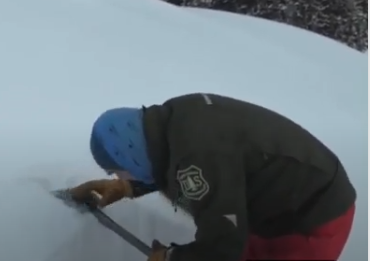
Avalanche testing before skiing encouraged by Forest Service

Skiers activities that often lead them to backcountry locations with limited services. Monday morning (12/28) Forest Service avalanche experts warned of possible avalanche activity when visiting these areas. They recommend doing some avalanche testing before using steep slopes.

“We have a block of harder snow over a section of weak sugary facets of the ground, so we have something over nothing,” said Dave Zinn, avalanche expert. “This is the recipe for an avalanche, all you need now is a steep slope and a trigger.”

Triggers can be caused either by nature — rain, snow, sun, wind — or by human activity.

“The danger is moderate, but it’s sort of that scary moderate because human triggered avalanches remain possible,” said Zinn. “If we trigger them, they could be large — and definitely big enough to injure, bury or kill an individual.”

“Really watch out for those signs of instability — like shooting cracks. Do some avalanche testing – dig stability tests, do an extended column test, see if you get stable results,” said Zinn. “And if you don’t see (stable results), find a different slope.”

Previous reports from 2017 to 2019 showed six-of-ten accidents occurred in January and February. Five of which, resulted in a death. It is not listed what caused these avalanches were deaths occurred but leads experts to continue to urge people to test they go.

Avalanche Testing - forest service
Testing the snow

NBC Montana