New avalanche nonprofit will provide financial aid for Forest Service
NH (Nov. 15, 2022) – Friends of Tuckerman Ravine and White Mountain Avalanche Education Foundation, both longtime nonprofits of Mt. Washington Valley, have merged. The merger will support and promote the Mount Washington Avalanche Center, a Forest Service operation.
Both groups have previously been critical to the success of the Forest Service center, bestowing financial support. This combined entity will enhance the ability to raise money.
“We are very excited about these organizations finally coming together after so many years. Both have the same goals, and now together, we can streamline our efforts to fund the Avalanche Center,” said Jake Risch, president of the new Avalanche Nonprofit – the Mount Washington Avalanche Center Foundation.
This fall, MWAC will host various events in support of the Forest Service :
The 12th annual Eastern Snow and Avalanche Workshop takes place on Nov. 17–18
Winter Backcountry Kickoff Party took place on Nov. 19, in Intervale, NH.
An Aleutian avalanche woke three climbers on Easter morning. They found they were tumbling down the Neacola Mountains in Southwest Alaska. Their tents were propelled down Mount Neacola in Lake Clark National Park and Preserve by an air blast from an avalanche above them.
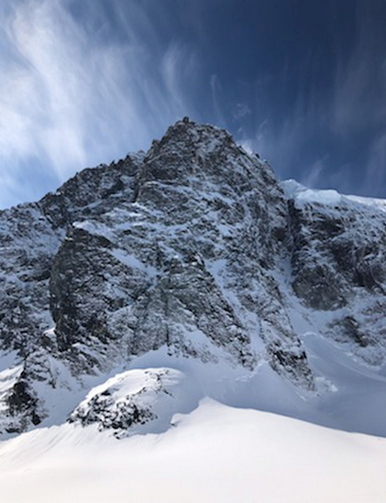
The climbers had set up camp several days earlier. They were waiting for the weather to improve. The group planned to attempt to climb the roughly 9,350-foot Neacoloa peak via the north face. A route that has never been successfully climbed, according to the American Alpine Club. It has stymied mountaineers like the legendary Fred Beckey.
The climbers received a grant from the American Alpine Club to fund the north face attempt. The three have more than a decade of experience. Two work as avalanche instructors. They work together as climbing guides in New Hampshire. The team had traveled to Alaska planning to spend about 3 1/2 weeks on the mountain. They returned home to New Hampshire on Thursday but are keeping an eye on Alaska weather in hopes that conditions in the Neacola Mountains will improve enough in the next few weeks that they can return.
Amplified Aleutian Avalanche Risk
Heavy snowfall and high winds in recent weeks had amplified avalanche risk in areas of Lake Clark National Park that are normally not affected.
⚠️Safety alert! ⚠️ Field staff are reporting significant avalanche activity in the park. Please remain observant,...Posted by Lake Clark National Park & Preserve on Friday, April 2, 2021
Caught in Their Sleep
Just before 4:30 a.m. one of them woke up pressed against the front wall of his tent as it started to flip. “The immediate first thought was, oh no, I’m getting buried in an avalanche,” he said.
When the tents came to a rest roughly 300 feet away they were on top of the debris.
The men called out to one another and realized they were all safe.
One climber hit his head during the fall but the men were otherwise uninjured.
The three managed to prop one of their tents back up and sheltered until dawn.
Salvaged Food Supplies
When daylight broke, they worked their way around the glacier, hunting for the remainder of their food. They didn’t know how long they might be waiting, but it was clear that the weather was not going to improve enough for a plane to fly in that day.
The climbers estimated it would take six days total to climb the 4,500-foot north face. They managed to find enough food to feed them comfortably for a week.
Lucky Conditions for Flying Out
They messaged Doug Brewer, the pilot who had flown them into the range, on their InReach devices. He agreed to pick them up as soon as it was safe.
Brewer has been flying in the Neacola Mountains for decades and described the range as breathtaking but requiring a technically challenging flight through a narrow canyon around the incredibly steep Mount Neacola. He said there’s a limited window of time each day with enough light on the glacier to safely navigate, and only during low winds.
The Neacola Mountains are visited infrequently, even by climbers, said a spokeswoman for Lake Clark National Park. That’s partly because tackling the rugged terrain requires extreme skill, but also because the mountains — located in the northern portion of the national park — are in such a remote area.
This mountain range is relatively newly named. The first recorded climbers explored the area in the 1960s but it took several more decades for another set of climbers to publish findings.
The climbers were nervous staying in the aleutian avalanche area, but there didn’t seem be safer options. So they waited.
Blizzard conditions continued for much of Monday, but by Tuesday the skies were clearer.
The climbers attempted to stomp out a runway and Brewer and his son flew in, making an uphill landing on the glacier in their ski-equipped planes. The landing was rough because avalanche debris had obscured the runway area, Brewer said.
“It was still cold, probably zero, and it was a down-glacier wind about 15-20, so this was right on the edge of being able to get them out safely,” he said.
The climbers helped stomp out additional chunks of debris on the makeshift runway and turn the planes around.
A Mt Washington avalanche on Friday buried a skier who was successfully rescued.
The skier was swept into and under the moving debris and lost skis and poles. It happened near the left gully of Tuckerman Ravine around 3 p.m. on Friday.
When the snow stopped he was buried face down. Fortunately his head was very near the surface. But the rest of his body was buried by two feet or more of debris. He was unable to move but could raise his head for a breath.
Another skier who was with the man did not see him get buried and skied away. That second skier eventually alerted others. Hermit Lake and Harvard Cabin caretakers, along with snow rangers, helped dig him out safely.
The man who was buried and the friend he was skiing with did not have avalanche beacons, probes or shovels. Experts say this gear is highly recommended for anyone skiing or hiking in the area.
An avalanche warning was expected to remain in place on Mt. Washington until Sunday.