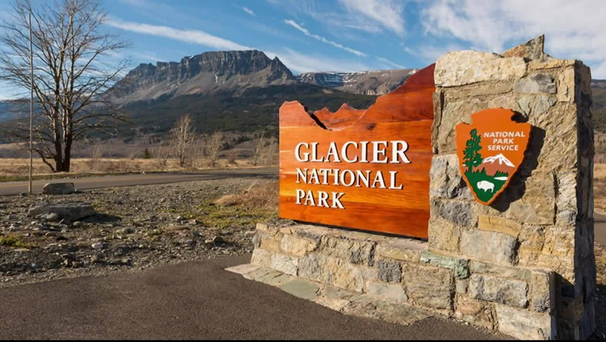
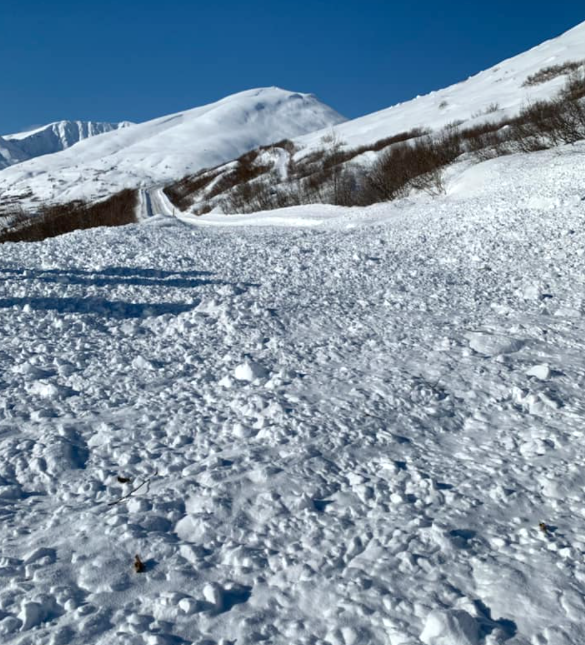
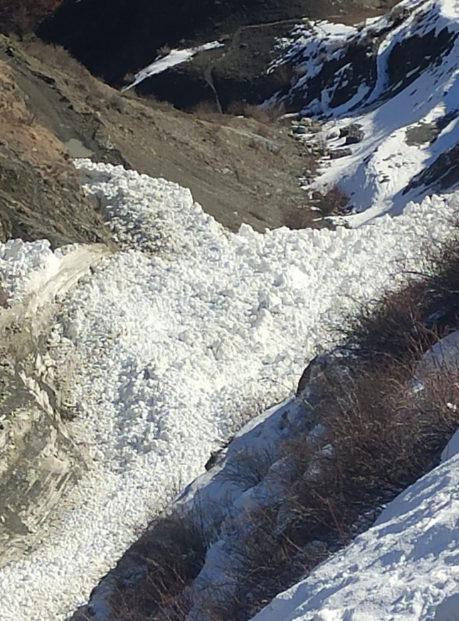
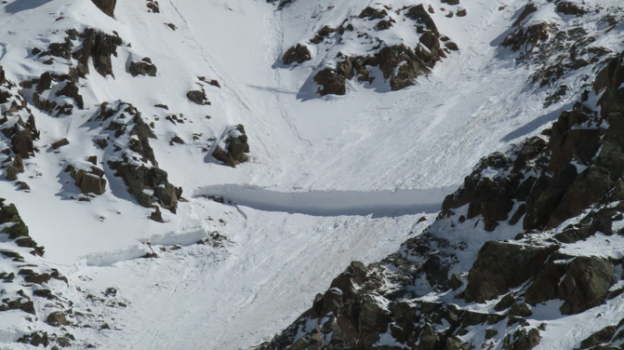
An avalanche trapped bikers on Thursday, May 13. At about 6:30 pm Glacier National Park rangers responded to a report of three bikers who were trapped behind an avalanche near Triple Arches on Going-to-the-Sun Road.
Three bikers – a husband and wife along with a friend – traveling up the road encountered an avalanche across the road, turned around, and started back down. Soon after, they encountered a second avalanche in progress. The wife was ahead of her husband and friend and heard the avalanche. She warned her husband and friend to stop. The avalanche came down between them. So the avalanche trapped bikers – the woman’s husband and friend – on the uphill side.
The wife biked down to call for help. A ranger arrived at the site of the avalanche around 7:30 pm.
Afternoon sun and warming were to blame
“The sudden onset of sunny and warm weather on Thursday afternoon, combined with recent new snow from the previous weekend, created unstable surface snow conditions,” said USGS scientist Erich Peitzsch. “These conditions resulted in a wet, loose avalanche originating above the road in Triple Arches that deposited debris on the road.”
Park officials determined that they would wait until the sun was off the slope above, decreasing the chances for further slides, before starting rescue attempts.
Rescue began around 9:30 pm. Rangers belayed across the avalanche chute and belayed the bikers individually back across the chute. No injuries were sustained by the bikers; all three are from Bigfork.
Going-to-the-Sun Road is currently closed to vehicles at Avalanche Creek until the road opens to Logan Pass for the season. Due to continued avalanche conditions, hiker/biker access is currently not permitted past the Loop. Check the park website for updates.
Park officials remind visitors that snow can avalanche above Going-to-the-Sun Road in active avalanche terrain that often cannot be seen from the road. Avalanches are more likely to occur before or after sunny/warm weather, rainstorms, or snowstorms. Visitors are encouraged to start and finish their trip before the warmest part of the day. Do not stop under gullies or snowfields and turn around if there is a rapid increase in temperature.
An avalanche trapped bikers on Going-to-Sun Road in Glacier Park
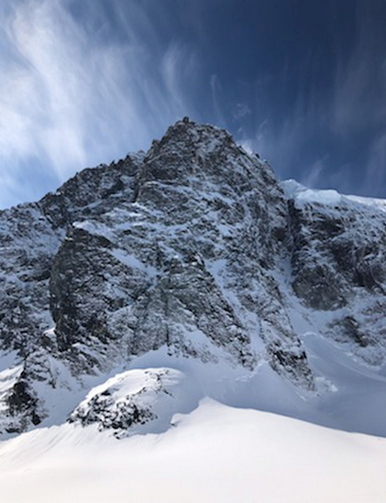
An Aleutian avalanche woke three climbers on Easter morning. They found they were tumbling down the Neacola Mountains in Southwest Alaska. Their tents were propelled down Mount Neacola in Lake Clark National Park and Preserve by an air blast from an avalanche above them.
The climbers had set up camp several days earlier. They were waiting for the weather to improve. The group planned to attempt to climb the roughly 9,350-foot Neacoloa peak via the north face. A route that has never been successfully climbed, according to the American Alpine Club. It has stymied mountaineers like the legendary Fred Beckey.
The climbers received a grant from the American Alpine Club to fund the north face attempt. The three have more than a decade of experience. Two work as avalanche instructors. They work together as climbing guides in New Hampshire. The team had traveled to Alaska planning to spend about 3 1/2 weeks on the mountain. They returned home to New Hampshire on Thursday but are keeping an eye on Alaska weather in hopes that conditions in the Neacola Mountains will improve enough in the next few weeks that they can return.
Amplified Aleutian Avalanche Risk
Heavy snowfall and high winds in recent weeks had amplified avalanche risk in areas of Lake Clark National Park that are normally not affected.
⚠️Safety alert! ⚠️ Field staff are reporting significant avalanche activity in the park. Please remain observant,...Posted by Lake Clark National Park & Preserve on Friday, April 2, 2021
Caught in Their Sleep
Just before 4:30 a.m. one of them woke up pressed against the front wall of his tent as it started to flip. “The immediate first thought was, oh no, I’m getting buried in an avalanche,” he said.
When the tents came to a rest roughly 300 feet away they were on top of the debris.
The men called out to one another and realized they were all safe.
One climber hit his head during the fall but the men were otherwise uninjured.
The three managed to prop one of their tents back up and sheltered until dawn.
Salvaged Food Supplies
When daylight broke, they worked their way around the glacier, hunting for the remainder of their food. They didn’t know how long they might be waiting, but it was clear that the weather was not going to improve enough for a plane to fly in that day.
The climbers estimated it would take six days total to climb the 4,500-foot north face. They managed to find enough food to feed them comfortably for a week.
Lucky Conditions for Flying Out
They messaged Doug Brewer, the pilot who had flown them into the range, on their InReach devices. He agreed to pick them up as soon as it was safe.
Brewer has been flying in the Neacola Mountains for decades and described the range as breathtaking but requiring a technically challenging flight through a narrow canyon around the incredibly steep Mount Neacola. He said there’s a limited window of time each day with enough light on the glacier to safely navigate, and only during low winds.
The Neacola Mountains are visited infrequently, even by climbers, said a spokeswoman for Lake Clark National Park. That’s partly because tackling the rugged terrain requires extreme skill, but also because the mountains — located in the northern portion of the national park — are in such a remote area.
This mountain range is relatively newly named. The first recorded climbers explored the area in the 1960s but it took several more decades for another set of climbers to publish findings.
The climbers were nervous staying in the aleutian avalanche area, but there didn’t seem be safer options. So they waited.
Blizzard conditions continued for much of Monday, but by Tuesday the skies were clearer.
The climbers attempted to stomp out a runway and Brewer and his son flew in, making an uphill landing on the glacier in their ski-equipped planes. The landing was rough because avalanche debris had obscured the runway area, Brewer said.
“It was still cold, probably zero, and it was a down-glacier wind about 15-20, so this was right on the edge of being able to get them out safely,” he said.
The climbers helped stomp out additional chunks of debris on the makeshift runway and turn the planes around.
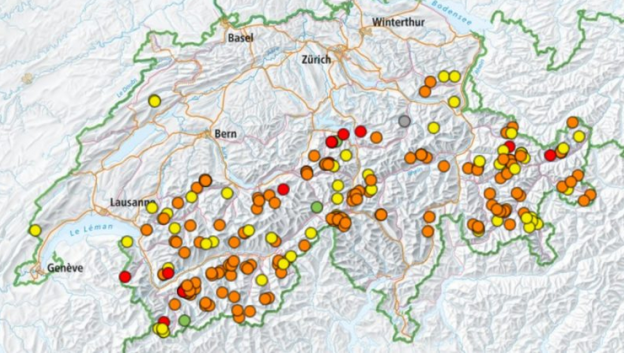
Swiss avalanche deaths are up this season. Significantly more people have been killed than the latest 20-year average. The majority of victims were off-piste skiers or snowboarders. The grim statistics come in a report by the Swiss Institute for Snow & Avalanche Research (SLF) and cover the period from 1st October 2020 to 30th March 2021.
27 people have died in avalanches and one person is still missing. The 20 year average is 18 Swiss avalanche deaths to the end of March. This shows an increase of 50%.
“All of the victims were winter sports enthusiasts in unsecured terrain,” the report states. 11 were backcountry ski touring or hiking and 16 were off-piste skiing or snowboarding.
Two people died in one accident, but for all other accidents, one person died.
The 4 Valleys area, which includes Verbier, was the worst hit with seven (26%) of the season’s avalanche deaths recorded there. One fatal accident was recorded in the Swiss Jura, where such incidents are very rare, with the last one dating back to 1991.
Overall 318 avalanches causing damage – material and bodily injury – were reported to the SLF Institute. Of these, 215 were triggered by people, rather than spontaneous slides, with 296 people being caught in them. The 20-year average for triggered avalanches is 113.
The 20-year average for the number of people caught is 177, meaning this winter roughly two-thirds more people were involved in some way.
There were also spontaneous slides, most of them in mid-December and late January.
Possible Reasons
Fragile old snow
Layers of metamorphosed snow close to the ground and weak layers in the centre of the snowpack. Most serious accidents had this cause, including the eight fatal avalanches from 15th to 18th January.
Abundant fresh snow
From December until the beginning of February and again in mid-March, the situation was critical for weeks because of a several episodes of snowfall. Constant snow and the formation of layers of windblown snow added to the problem of the old snow layer.
Large avalanches
The slides triggered in old snow were often large and sometimes very large.
Increase in off-piste accidents
More than half the fatal accidents were in the off-piste area. In multi-year statistics, there are more fatalities among backcountry tourers or hikers.
Five of the fatal avalanches happened when the avalanche risk was at level 4 (on a scale of 1 to 5).
The report also says there were slightly more accidents than average at the weekend, especially Saturdays, when more people are usually on the mountains.
“It is not known whether the coronavirus pandemic has an influence on mountain attendance date and the risky behavior of winter sports enthusiasts,” it says.
A heli-ski avalanche near Matanuska Glacier killed a Fairbanks woman who was heli-skiing on Saturday. It was witnessed by four others in the group.
Erin Lee, 40, was rescued and taken to Mat-Su Regional Hospital and pronounced dead.
She was part of a group heli-skiing about 7½ miles from the Glenn Highway east of the Matanuska Glacier, said Austin McDaniel, a spokesman for the Alaska state troopers. It wasn’t immediately clear which mountain the avalanche occurred on. Troopers have not visited the exact site. McDaniel also noted that another group was heli-skiing in the same area Saturday.
Group was from Majestic Heli Ski
Lee was one of four guests in the Majestic Heli Ski group led by one guide that afternoon.
Majestic Heli Ski is based near Mile 115 of the Glenn Highway. Which is about halfway between Palmer and Glennallen. Majestic Heli Ski offers packages that include heli-skiing in the Chugach and Talkeetna mountains. Majestic Heli Ski has not made any statements about the heli-ski avalanche near Matanuska Glacier.
Two clients and a guide were at the bottom after finishing a run. Lee began skiing and an avalanche was triggered. One other skier was still at the top. All four watched the slide bury Lee. No other skiers were caught in the avalanche and there were no other injuries, according to McDaniel.
Group had safety gear
Lee was equipped with avalanche safety gear. Including an avalanche beacon, rescue probe, shovel, harness and avalanche airbag system. She did not deploy the avalanche airbag system during the avalanche.
The other skiers in the group were also equipped with safety gear, and the guide had communication equipment. According to the company’s website, Majestic Heli Ski clients receive training about hazards and also how to use the safety gear.
“It sounds like the witnesses, including the guide, were able to see what happened and they were able to go right to the area and use the beacon technology,” McDaniel said.
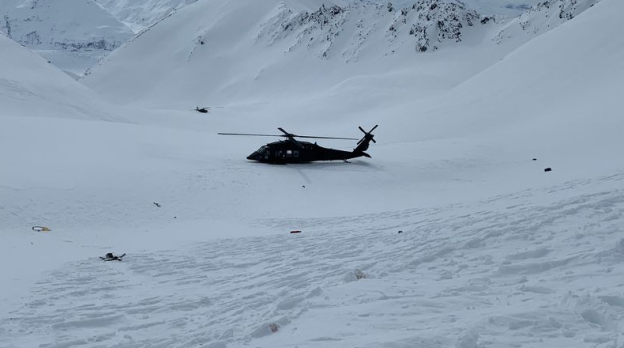
Lee was recovered from the heli-ski avalanche near Matanuska Glacier by the group. Then flown to the hospital in the Majestic Heli Ski helicopter. It was not clear exactly how long Lee may have been buried. McDaniel said about an hour passed from the time of the avalanche until the time Lee reached the hospital.
It’s not clear what triggered Saturday’s heli-ski avalanche near Matanuska Glacier. McDaniel said there is not currently a plan to investigate that.
“The availability of having witnesses see what happened is key in us making the decision on trying to track down an avalanche specialist to go out there and determine a little bit more closely what had happened,” McDaniel said.
Closest danger forecast was Considerable
The area where this happened is outside the direct forecast zones for the Hatcher Pass and Chugach National Forest avalanche centers. There was a forecast from the Hatcher Pass Avalanche Center, about 60 miles west. It rated the avalanche danger there on Saturday as considerable at all elevations.
New snow fell in much of the Matanuska-Susitna Borough last week. That caused some instability for avalanche conditions in the Hatcher Pass area. Numerous natural, human and remotely triggered avalanches were reported Friday. One crossed and closed a road, the avalanche center wrote.
Guides at Majestic Heli Ski “continuously gather data and evidence, take field observations, perform snowpack tests, monitor weather conditions and evaluate and forecast the snow stability and the avalanche hazard,” according to their website.
Avalanche deaths not a common occurrence, says State Trooper
All backcountry recreating has risks, McDaniel said But avalanche deaths are a less common occurrence. Lee was the fourth person in Alaska to die in an avalanche this season. In early February, three climbers died in an avalanche on a steep and challenging route of Bear Mountain near Chugiak.
Five men also died heli-skiing Saturday when their helicopter crashed above the Knik Glacier in the Chugach Mountains southeast of Palmer. One man who survived the crash remains in serious condition. That group consisted of the pilot, three guests and two guides from Tordrillo Mountain Lodge.
McDaniel said he and other officials with the state troopers could not recall any deaths other than the six Saturday that were related to heli-skiing in recent years. A Southeast Alaska Backcountry Skiing Adventures heli-ski guide was buried in an avalanche near Haines in 2014. He eventually died, following the death of another guide from the same company on a Haines-area heli-ski trip in 2013. An avalanche near Haines killed an Alaska Heliskiing company guide and a snowboarder in 2012.
A Heli-ski avalanche near Matanuska Glacier killed a skier from Fairbanks
A Hatcher Pass avalanche blocked the road but it reopened just before 4 p.m. Friday
A large, remotely triggered Hatcher Pass avalanche covered the road around 12 p.m. on Friday. Hatcher Pass Avalanche Center posted photos of the avalanche. They said that the road would likely be closed at the Gold Mint parking lot. The avalanche did not involve any people.
Increased Avalanche Danger had been predicted
On March 25, the HPAC warned of an increased avalanche danger due to nearly a foot of new snow. Persistent slabs and storm slabs were likely problems. Later that day three observations of small avalanches were reported.
“No one was caught or carried it was people skinning on the standard Marmot uptrack and triggered a smaller avalanche and then it stepped down to the deeper layers in the snowpack” said HPAC Board Chair Andy Dennis.
Road Cleared of Avalanche Debris
The Department of Transportation and State Parks were alerted to clear the road. It was closed at the turn near the Gold Mint parking lot. Throughout the winter numerous skiers have been caught in small avalanches. Nobody has been buried and there have been no fatalities in Hatcher Pass. Palmer Fire and Rescue did assist other agencies in a rescue in Hatcher Pass on March 21.
“As we come into spring I think we have a tricky snowpack, so any new load is potentially going to awaken the persistent slab problem. These cold temperatures have not allowed the snowpack to heal at all and really just trying to make sure people are heads up coming into the longer, warmer days. It’s going to be A little bit delayed in terms of kind of the snowpack stabilizing,” said Dennis. “We’ve got a couple crust layers that are going to, what we’re thinking is most likely going to prohibit fast healing.”
The avalanche occurred just after 12 p.m. and the road was cleared at around 6 p.m.
A mistrial in the Colorado Avalanche case against two snowboarders has been declared.
The two snowboarders are facing charges in Summit County for an avalanche they triggered last spring. Evan Hannibal, 26, and Tyler DeWitt, 38, appeared in Summit County District Court Thursday for what was supposed to be day one of their trial, but only half of those summoned for jury duty appeared.
Now they will have to wait until June for their day in court. The judge had to declare mistrial in the colorado avalanche case.
“I’m disappointed for a lot of reasons,” said Judge Edward Casias. “I’m disappointed for the parties not being able to address this the way they should have today. Both the People and Mr. Hannible and Mr. Dewitt were entitled to a jury trial of 6.”
Jason Flores-Williams, attorney for the defendants said about half of the 40 summoned showed up.
“…and when we started questioning jurors about what they knew about the case, if they had any biases, it became pretty clear that we weren’t going to be able to get 6 impartial jurors,” said Flores-Williams.
Judge Casias thanked those who did show up and had some words for those who didn’t.
“It’s an important case. Every case is important,” he said. “There are very few civic responsibilities we ask of you. Jury service and voting really are the two that we ask you to be engaged in with your community and some of the people that were summonsed chose not to and I will address that with them and probably the community at large.”
Eisenhower Tunnel Avalanche and Damage
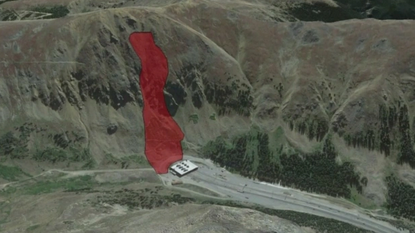
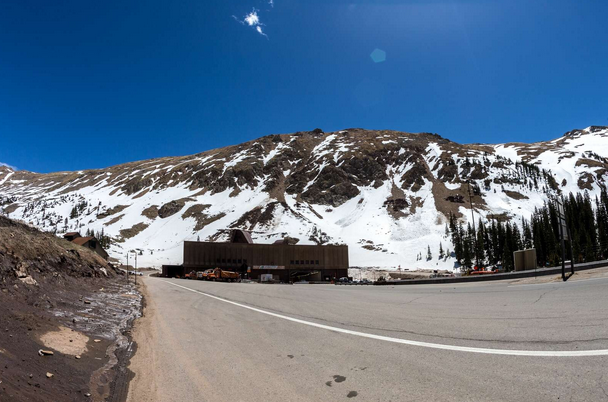
Hannibal and DeWitt were snowboarding on March 25 when they triggered an avalanche just above the Eisenhower Tunnel.
“The avalanche put debris on the road that was over 400 feet wide and 20 feet deep,” said Ethan Greene, Director of the Colorado Avalanche Information Center.
The pair reported the slide to the CAIC and handed over GoPro video to go with the report. They never realized it would be used in a court case against them.
They now face a misdemeanor for reckless endangerment and may have to pay some restitution for damage caused.
The trial has been rescheduled for June 7, 8, and 9.
A Mistrial in Colorado Avalanche Case was declared.
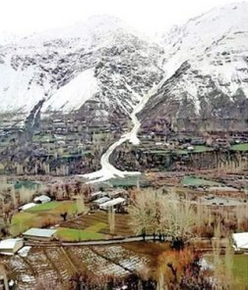
A snow avalanche hit Washich village in Torkhow valley of Upper Chitral the other night. Rain had lashed the pasture for three days and caused the huge mass of snow to come down. However, there was no casualty.
Qazi Inayat, a villager, reported by phone that the Chitral snow avalanche passed through the deep stream of Washich village. It was so intense that it crossed the Chitral River to Zang Lusht village on the other side.
He said it did not cause any damage to life or homes and agricultural lands. All of the debris drained through the stream.
Mr Inayat said the avalanche debris had filled the stream to its capacity. As a result the village faces a high risk of being overrun by another avalanche of even small mass. This is a concern during the current week as the melting process was very slow.
The village is highly prone to snow avalanches as steep mountains and ridges stand close to the upper belt of the village.
Avalanche investigators from the Colorado Avalanche Information Center (CAIC) must testify in the trial of Evan Hannibal and Tyler DeWitt according to Judge Casias. He dismissed a motion from the Attorney General’s Office to void subpoenas to keep them off the witness stand.
On March 25 DeWitt and Hannibal were snowboarding above the Loop Road at the Eisenhower/Johnson Memorial Tunnels. They triggered an avalanche. Nobody was injured but it covered more than 400 feet of the roadway up to 20 feet deep and damaged a remote avalanche-control installation.
The District Attorney charged both snowboarders with misdemeanor counts of reckless endangerment.
Much has been made of the avalanche center’s role. The center contacted the defendants after the avalanche to collect information to put together a report on the incident. The defendants voluntarily supplied information. Which was later shared with the Summit County Sheriff’s Office.
The defense attorney Jason Flores-Williams fought to suppress the report as evidence. He argued that it represented a violation of the defendants constitutional rights because they were never informed the information could be used against them. Judge Casias ruled there were no violations. The avalanche center employees weren’t acting as law enforcement agents in their investigation and there was no formal search or seizure.
The avalanche center was directly involved the case a few days later. Subpoenas for their avalanche investigators were issued. They required the center’s Director Ethan Greene and forecaster Jason Konigsberg to testify as expert witnesses. On Feb. 26 the Attorney General filed a motion to quash the subpoenas on the grounds that such testimony could have an “unintended adverse ‘chilling’ impact on the CAIC’s ability to gather important information from people involved in avalanches.”
On Tuesday Assistant Attorney General Jeff Fugate defended the office’s stance. He claimed that forcing the men to testify would harm future efforts to gather information following an avalanche. It could create a situation where backcountry users would no longer view the CAIC as impartial.
“The center is very aware of conversations taking place in the backcountry community. And advice being widely shared that people should no longer speak to the CAIC if they are involved in an avalanche,” Fugate said. “…That’s the exact opposite message the center has worked hard to implement in Colorado. People should be willing to share information with the center without hesitation or reservation because the more information the center has, the better it can educate the public about avalanche safety.”
“The agency has fulfilled their role by sharing this information. However, appearing as an expert for the prosecution takes them outside of this informational or educational role. It leaves the wrong impression or the misunderstanding that the CAIC is now ‘on a side.’ That’s something this agency just wants to avoid at all costs.”
Fugate said the fear wasn’t that community members would stop reporting avalanches altogether. But they may report an avalanche and refuse to provide any follow-up interviews, photos or videos.
Fugate continued to say that the subpoenas for the avalanche investigators were unnecessary. They say prosecutors could find other avalanche experts who weren’t working for the state to serve as witnesses.
In response Deputy District Attorney Stephanie Cava called the assertions speculative. She said her office often deals with situations like this. She compared the situation to someone getting in a car crash, calling the police and still potentially getting a ticket.
She also said that some fears were driven by inaccurate news reporting. She singled out a recent story from The Colorado Sun. Which mistakenly called the case the state’s first criminal case involving an avalanche. She claims there were three cases that went to trial in Summit County in 2014 after a fatal avalanche. While those cases did not receive the same news coverage Cava claimed it did not impact avalanche reporting. She noted that field reporting to the avalanche center nearly doubled from 2014 (1,392) to 2020 (2,771).
Cava also says that reports her office seeks a set amount of restitution in the case were false. Any restitution amounts will be decided if the men are convicted. She noted that the most recent plea offer her office made to the defendants was rejected. It involved the defendants pleading guilty to reckless endangerment, performing 120 hours of public service and paying $25,000 in restitution.
Cava also said that prosecutors are given wide latitude to call witnesses. Quashing them in this case could create a bad precedent in the district. She claims that witnesses from state agencies frequently testify without compromising their impartiality.
“When a (Colorado Bureau of Investigation) forensic scientist comes and testifies in a DUI case, they don’t get up there and speak on behalf of the people,” Cava said. “… (They) don’t get up there and say, ’That person was drunk.’ They say, ‘Well this is the test that I did, this is how I did it and, based on that information, you could see these sorts of signs.’ They don’t give a conclusory opinion.”
Casias noted that avalanche investigators Greene and Konigsberg would be reluctant witnesses and that the case potentially could have impacts on future avalanche reporting. But he said the district attorney’s office didn’t err in issuing the subpoenas.
As expert witnesses, Casias said the men would be asked only to share their objective findings from their investigation.
“They don’t get to sit here and say this person is guilty or not guilty of any criminal conduct,” Casias said. “… Their expertise and their knowledge is providing an objective determination of what caused the avalanche to go.”
Snow avalanche blocked the road Triloknath-Udaipur link near Shakoli village in tribal Lahaul-Spiti district today. The snow avalanche was triggered during the day, which brought the traffic movement on this road to a complete halt.
Heaps of snow covered the vast stretch of the road though no loss of life and property was reported.
Deputy Commissioner Lahaul Spiti Pankaj Rai said workforce and machinery have been deployed in the area to restore this link road for movement of vehicles.
As weather is getting warmer in the region, the incidents of snow avalanches were occurring frequently in Lahaul-Spiti. A few days ago snow avalanches were triggered at Karpat and Lobar under Udaipur sub division in the district.
A Snow avalanche blocked the road Triloknath-Udaipur link
Avalanche testimony by Colorado Avalanche Information Center boss Ethan Green in a criminal case could hinder the function of the agency, according to the state Attorney General.
Defendant Provided his video
Evan Hannibal provided his helmet video of the avalanche he triggered above Interstate 70 last March. The avalanche buried a service road and destroyed an avalanche mitigation installation protecting I-70. He thought the Colorado Avalanche Information Center (CAIC) would use his submission to help educate others.
But Summit County prosecutors used the video for a criminal case. They seek restitution for the damaged avalanche mitigation device.
Hannibal and Tyler DeWitt are charged with reckless endangerment. Restitution of $168,000 is sought for the destroyed avalanche mitigation device.
Adverse impact of video
Hannibal has argued that the charges could convince others to stop giving information to the CAIC. Colorado Attorney General Phil Weiser, as attorney for the state avalanche center, has agreed. He argues against the plan to call avalanche center director Ethan Greene as an expert witness. He states it “could have an unintended adverse impact on the CAIC’s ability to gather important information.”
Weiser’s office has filed motions to quash subpoenas requiring Greene and forecaster Jason Konisberg to testify as expert witnesses.
Novel Avalanche Case
It is a novel case in several ways.
Backcountry travelers have never before faced criminal charges over an avalanche in Colorado. Summit County Court Judge Ed Casias recently rejected the pair’s argument that their rights were violated when the helmet video was provided to police as evidence of a crime.
Now Weiser has stepped in, asking Judge Casias to reject having state employees testify.
“There is genuine concern that if CAIC employees appear as an expert witness it could adversely impact their ability to gather information from persons involved in an avalanche,” the motion filed by Weiser’s office reads. “The more involved CAIC is, the more it looks like they are working with law enforcement, resulting in a chilling effect on CAIC’s mission.”
Too busy for avalanche testimony in court
Weiser also argued that the subpoenas are “unduly burdensome, unreasonable and oppressive.” Because it takes them away from avalanche investigations and forecasting.
James Moss is an attorney with over 30 years experience in recreation law. Moss thinks the loss of avalanche testimony by Greene and Konisberg could hinder the case. Moss thinks that without them the district attorney will have a hard time explaining the CAIC report. Or to explain why the avalanche mitigation device was placed in that particular location.
But more important, Moss says, is the threat to the CAIC mission. Which includes educating the public on avalanche risks.
“The motion states clearly that this is going to screw up avalanche research and reporting in Colorado forever,” said Moss. He has no role in the case but urges backcountry travelers to avoid talking with the CAIC. “You never report to CAIC from here on out, period,” Moss said.
The avalanche in question in the case with avalanche testimony