Category Archives: Accidents

Avalanche bombing deployed from the sky help rescuers on the ground

SUMMIT COUNTY, Utah — Avalanche bombing experts work to ensure the safety of rescuers working on the ground. And on Sunday search and rescue crews worked on an avalanche recovery mission in Summit County.

The Utah Avalanche Center, Sheriff’s Office and Park City Mountain Resort Ski Patrol worked with Utah Department of Public Safety. Together they conducted avalanche mitigation. This was to help rescuers recover the skier who was buried the day before.

“We arrive and we serve the search and rescue or the sheriff’s office in that area. So if they say we’re going to mitigate, then we just follow their lead.” So said Sgt. Wyatt Weber, a tactical flight officer with the Utah Department of Public Safety Aero Bureau. “Obviously, the snow safety experts that know these avalanches from front to back. Whatever they suggest we just try to help them and assist them and do it as safely as possible with the tool.”

Utah DPS used explosive charges from Park City Ski Patrol for avalanche bombing the unstable snow above the area. The avalanche mitigation allowed rescuers to access the area with minimized risk of further avalanches.

“You talk to the Park City Ski Patrol and they’ll tell you [Square Top is] one of their scariest areas up there for avalanche potential. It always gives them sleepless nights,” said Utah DPS Aero Bureau pilot Bret Hutchings.

Hutchings piloted the helicopter on Sunday as members of the team deployed the explosives.

“Avalanche bombing requires the pilot and a crew of three comprised out of the various ski resort areas. You have a controller and a bomber and a prepper,” he said.

Two Avalanches by lift skiers at Park City Mountain Resort

There have been two deadly avalanches in Utah this winter. Both have taken place just outside of Park City Mountain Resort boundaries. In both cases the avalanche victims accessed the backcountry from the resort boundary area.

“Park City Mountain places the highest value on the safety of our guests and employees. Within the ski area boundaries, Ski Patrol performs avalanche mitigation work and provides emergency response. Park City Mountain does not prohibit public access to U.S. Forest Service lands outside the ski area boundary. Guests that access the backcountry from Park City Mountain must do so from designated backcountry gates that provide warnings and information about the inherent risks of backcountry travel. Park City Mountain does not manage the lands or the inherent hazards that exist outside its ski area boundary. Guests who access backcountry terrain do so at their own risk and are responsible for their safety. Guests leaving the Resort boundaries should be experienced and knowledgeable about backcountry travel, and be prepared with the appropriate gear and safety equipment.” – Jessica Miller, Park City Mountain Resort
Park City Mountain restricts backcountry access due to avalanche

PARK CITY, Utah — The Park City Mountain Canyons Ski Patrol closed off its access to the backcountry adjacent to the resort. The unusual step was taken after a couple of recent deadly slides amid high avalanche danger. Prior to a couple of recent fatal avalanches there had been numerous others in past years as well.

A 31-year-old man died after being buried in an avalanche while skiing in the adjacent backcountry. He accessed it via special gates at Park City Mountain. More recently, a U of U helicopter responded to rescue two skiers. One was buried in an avalanche and died. They also accessed the backcountry via Park City Mountain.

According to Utah.gov, “avalanches pose a significant hazard in Utah’s mountains between the months of January and April. These are seasons of heavy snow accumulation and unstable snowpack conditions.”

“An avalanche is a mass of snow, ice, and debris that slides rapidly down steep mountain slopes at speeds up to 80 mph when triggered by ground shaking, sound, or movement,” the official website stated. 

Avalanches in Utah have claimed over 100 lives between 1958 and 2021. The snowpack this year is unusually thin, which contributes to the danger.

Park City Mountain responds to avalanche danger

Ski resorts around Utah are taking action to protect local winter enthusiasts.

Park City Mountain announced that resort management had directed the Canyons Ski Patrol to close off access to its adjacent backcountry areas. Skiers and snowboarders frequently access these areas from the resort. 

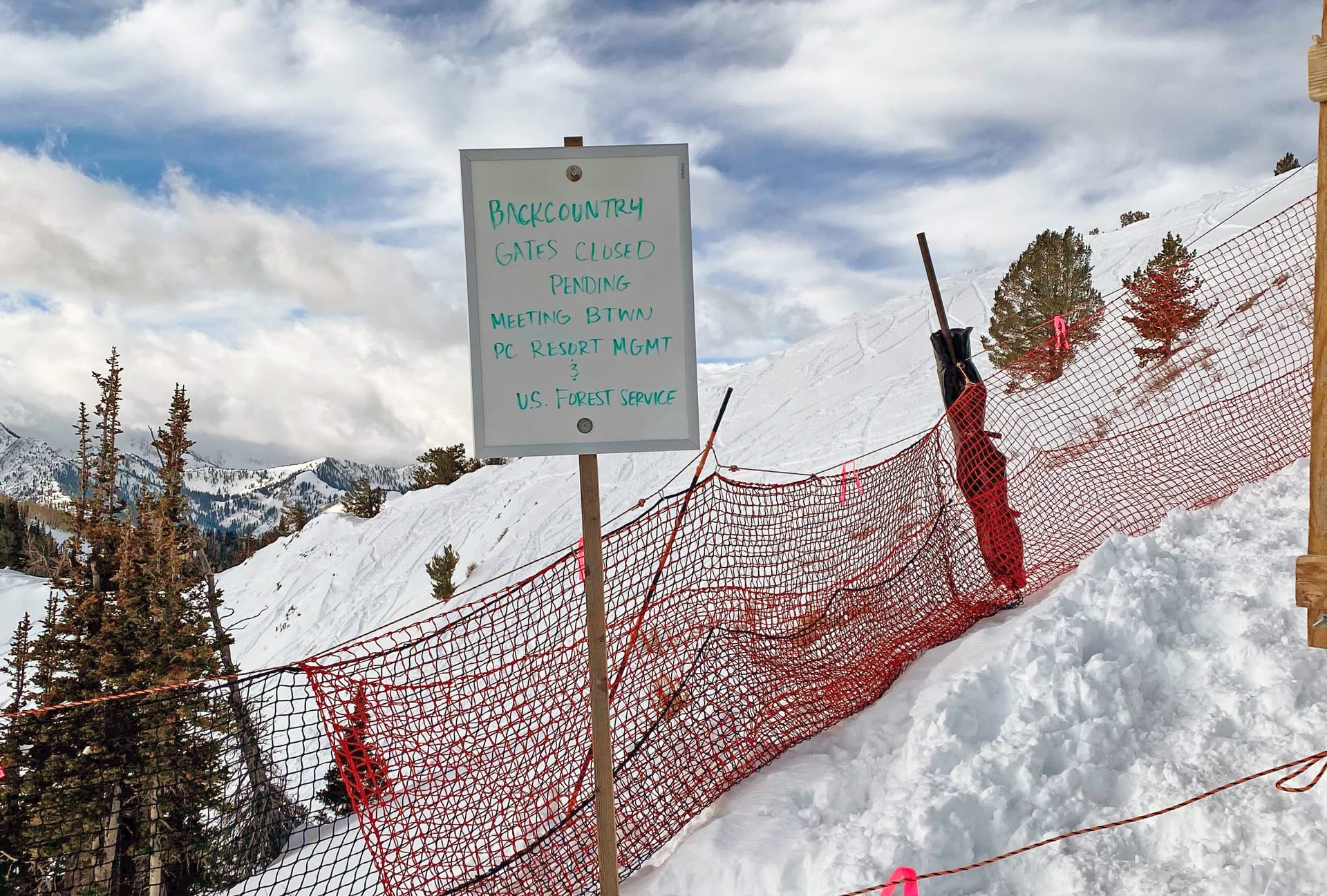
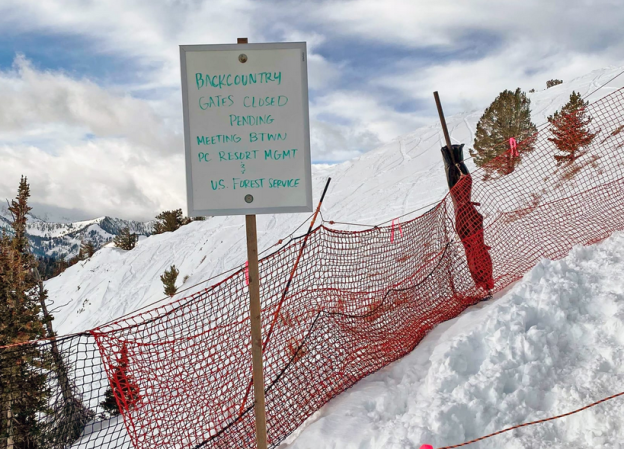
The resort posted signs at backcountry access points, restricting access. The sign reads, “Backcountry gates closed pending meeting between PC resort management and U.S. Forest Service.”

Due to the two deaths in January, the resort closed access to the backcountry from inbounds “until further notice.” Resort officials plan to meet with the U.S. Forest Service Thursday.

Park City Mountain sign
Sign at the backcountry access point

Swiss Avalanche victims rescued when their dogs bark for help

Two people caught in a Swiss avalanche were rescued after their dogs barked for help. The barking attracted the attention of nearby snowshoers who were able to dig them out.

The Swiss avalanche swept the pair off a hiking trail in the Avers Valley of south-western Switzerland. Near the Italian border and west of St Moritz. It occurred shortly after 3pm on Saturday.

“Their dogs, who were not buried by the masses of snow, drew attention to themselves by barking loudly,” a statement by REGA said.

“The dogs attracted the attention of a group of snowshoers who were some distance away in the same valley but had not witnessed the avalanche.”

About 15-20 minutes after the Swiss avalanche, the group was at the scene, where one of the avalanche victims’ hands was visible; the other person was buried entirely, Rega said. Both were dug out slightly injured and with mild hypothermia. Rega then flew them by helicopter to hospital.

Snowshoeing in Switzerland, file photo
Snowshoeing in Swizerland

Another “Miracle” Recovery as well

This occurred just two days after a man in France was recovered from under 2.5 meters of snow after more than 2 hours. Later that day (Thursday) in Tignes another man had an equally miraculous story.

A huge natural avalanche came down at 7.10pm. In darkness and poor weather the patrol carried out a search. The visibility was described as “very bad”.

Later that night at 11.45 the director of the patrol in Tignes, Frederic Bonnevie, returned. The weather had eased.

He heard a voice calling for help. A 35-year old local man had been caught in the slide, but his face was above the snow. He had been trapped in the snow and avalanche debris and unable to move. He had been buried for over four and a half hours.

Frederic Bonnevie and another pisteur dug him out and gave him first aid at the scene. The man was shaken but otherwise unharmed except for frostbite to his left ear.

That avalanche was 600m long and 200m wide. It had a vertical drop of 300m.

French Alps Avalanche – Snowshoer found alive after hours under snow

Snowshoer found alive after hours buried under snow in French Alps avalanche.

A snowshoer was found alive in the French Alps after being buried for several hours under 2.5 meters of snow. He had been hit by an avalanche during a family walk.

More than 100 rescuers were able to free the buried man, who was still alive, after 2 hours 40 of searching.

The 50 year old man was buried after a French Alps avalanche in Val d’Isère, a ski resort in Savoie, on January 28.

The family – a couple and their two children – had been on a snowshoe walk.

The man was buried by an unexpected avalanche that the family had not heard coming, with his wife and two children managing to escape. They immediately raised the alarm.

Police had to use vehicles to reach the area. The usual rescue helicopters could not take off due to the adverse weather conditions. Local rescuers also headed to the scene. They were joined later by more emergency services.

Alexandre Grether, deputy at mountain police service (PGHM) in Savoie, spoke to the local news. “We quickly had around 100 people [searching]. There were gendarmes, skiers, firefighters, but also mountain guides and ski teachers who were on the mountain.”

Despite the number of searchers, the rescue was not straightforward. The lost man was not wearing an avalanche victim transceiver. Even the rescue dogs could not find a scent due to the deep debris.

As a result, the PGHM police decided to use the “Wolfhound system”, which can detect mobile phone signals.

Mr Grether said: “Usually, we use it to find people who are lost in the forest. This was one of the first times we have used it for an avalanche.”

All people present were asked to turn off their mobile phones. The team then began patrolling the area using the Wolfhound device. It was then that they detected a signal, and were able to dig through the snow to rescue the man.

After 2 hours and 40 minutes of searching, the man was “miraculously” found alive, and taken care of by emergency teams.

Mr Grether said: “He was protected by a tree, that’s what prevented him from being crushed. The snow had surrounded him, but he had a pocket of air,” he explained. The victim is expected to make a full recovery after suffering a fracture to his hip.

Recovery of a 50 year old man from a French Alps avalanche.
Recovering the buried man in the French Alps avalanche in in Val d’Isère.

The Alps see Many Fatal Avalanches

There have been many fatal avalanches recently in the Alps. Some of the people caught were inexperienced, but professionals have also died.

The latest fatality was a massive slide in Verbier, Switzerland in which a local guide, out with clients, died. Verbier also had two other separate and fatal slides last week. One involved an experienced skier and the other an instructor, both locals.

On January 22nd a 23-year old Swedish skier died in the Savoleyres area of Verbier.

Last week there were five fatalities in France. Additional accidents occurred in France over the weekend.

There was at least one fatal avalanche in Italy.

Switzerland, where ski resorts are open, has had 16 avalanche deaths so far this winter.

Is this typical?

At the same period last season the total was 4. Last season saw seven total. But the season ended in mid-March due to coronavirus. In the 2018/19 season it was 21 total and in 2017/18 it was 27.

Weak Snow

The current deaths result from a highly unstable snowpack with weak layers at the bottom of the snowpack. It is not so much the amount of snow that has fallen, but rather its fragility.

“Underneath the wind slabs the bonding of the snowpack is unfavourable at high altitudes, in particular in the western part of the northern flank of the Alps, in Valais and in Grisons,” said a recent advisory from the Swiss Institute for Snow and Avalanche Studies.

Considerable Danger

There remains “considerable” (Level 3) danger across the whole of the Swiss Alps. This is the level which sees the most fatal avalanches.

“In these regions, distinct weak layers exist in the middle part and near the base of the snowpack in all aspects. Fatal avalanches can be triggered in these layers and release the entire snowpack, in particular in places where relatively little snow is lying. Remote triggering has been observed in central Valais and in Upper Engadine in particular. These weak layers are still to be found in the central and eastern parts of the northern flank of the Alps as well, but here they are mostly embedded deep and therefore unlikely to be released. On the southern flank of the Alps, the bonding of the snowpack is more favourable. Here, fractures are unlikely to occur deep in the snowpack.”

So it is quite dangerous in some areas.

Many areas affected

The fatalities in Switzerland have been across the country.

Map of swiss fatal avalanches
Fatal Avalanches in Switzerland

In France conditions are also highly unstable.

“While this is not unprecedented during the middle of a busy winter with a persistent unstable snowpack and moderate snowfalls coming down on top of the weak layer or layers, a lot of people are asking questions about why this is happening now, especially when there’s a lot less skiers out there…and many of the victims are experienced, or even professional,” said Henry Schniewind.

The latest snow is sitting on top of a very weak layer.

Some people claim that coronavirus is adding to the problem. In areas where the lifts are closed, like Italy and France, people are hiking up into the dangerous terrain.

No slopes have been kept safe by the resorts since lifts are closed.

Where resorts are open, Switzerland and Austria, there are not the numbers skiing off piste.

More snow is currently falling in the Alps on the already weak foundation.

Mt Washington Avalanche buries skier who survives

A Mt Washington avalanche on Friday buried a skier who was successfully rescued.

The skier was swept into and under the moving debris and lost skis and poles. It happened near the left gully of Tuckerman Ravine around 3 p.m. on Friday.

When the snow stopped he was buried face down. Fortunately his head was very near the surface. But the rest of his body was buried by two feet or more of debris. He was unable to move but could raise his head for a breath.

Another skier who was with the man did not see him get buried and skied away. That second skier eventually alerted others. Hermit Lake and Harvard Cabin caretakers, along with snow rangers, helped dig him out safely.

The man who was buried and the friend he was skiing with did not have avalanche beacons, probes or shovels. Experts say this gear is highly recommended for anyone skiing or hiking in the area.

An avalanche warning was expected to remain in place on Mt. Washington until Sunday.

Avalanche Rescue after a Mt Washington Avalanche. usfs
After an avalanche on Mt Washington.

North Caucasus Avalanche – Up To 12 People Feared Buried

A North Caucasus avalanche struck a skiing area in the region of Karachai-Cherkessia. Russian authorities say as many as 12 people may have been buried under snow.

Russia’s Emergency Ministry said on January 18 that the avalanche hit the area around the resort town of Dombai. On Mussa-Achitara mountain at around 1:30 p.m. local time.

Rescue work to locate and extract those trapped by the avalanche is under way.

The wall of snow buried two ski equipment rental stands and damaged a cafe.

Dombai is a popular skiing resort in the North Caucasus.

A North Caucasus avalanche struck a skiing area in the  region of Karachai-Cherkessia
On the scene at an avalanche in the North Caucasus

Avalanche Risk Discussion Spurred by Fatal Dutch Draw Accident

The second avalanche death in two years in the same location, and at least the fourth in total, has spurred an Avalanche Risk Discussion.

The Avalanche

On Friday, January 8, Clinton, Utah man was killed in an avalanche on the Park City ridgeline in Dutch Draw. It’s a popular backcountry skiing area that is easily accessible from a chairlift at Park City Mountain. It’s the fourth fatal accident in Dutch Draw in the past 15 years. And the second year in a row in which someone has been killed in an accident on the steep run known as Conehead. The tragic accident has raised concerns in the community about how prevent avalanche accidents among people who are not aware of the dangers.

The victim and his girlfriend exited the backcountry access gate atop the Ninety-Nine 90 Express. Then they hiked up the ridge before dropping in to snowboard down a run called Conehead. The victim went first, and when he was about halfway down his girlfriend followed. Then an avalanche occurred. The woman was not caught in the slide.

Rescue personnel responded to the accident when the woman called 911 immediately after the avalanche. But due to risks of additional avalanches they were unable to proceed until after 2:00 p.m. Both riders had some experience in the backcountry, but neither were carrying avalanche rescue equipment at the time of the accident.

A patroller said a self-rescue of the victim in this accident may have been possible with properly equipped and trained partners. They also said this accident was predictable due to recent avalanche activity in the area and the overall state of the snowpack. Which features a considerable avalanche risk on a persistent weak layer of snow.

The Avalanche Risk Discussion

This area is a readily accessible backcountry area. Because of this easy access the area in Dutch Draw and Square Top further north are very popular. And since these areas are visible from chairlifts they are also appealing to people who may not have the experience and equipment required to safely ski and snowboard there.

Park City Mountain, however, is not able to limit access based on a person’s qualifications due to liability concerns. The private property resort borders National Forest. And the forest service encourages, but does not require, access gates. The gate is marked with stern warnings about the dangers inherent to leaving the resort boundary. However, to many people this signage is just one more warning. Others mark inbounds dangers, closed terrain, and other hazards.

Some people have argued more should be done to warn skiers who may be unaware of the dangers posed by backcountry terrain. They could put resort personnel near the gate to inform people of the risk. Or require checking out with ski patrol and carrying an avalanche beacon, shovel and probe. A check-out procedure is used at some other resorts.

While the avalanche risk discussion is ongoing the Park City Mountain Resort has not indicated decisions to date.

fatal avalanche site - forest service
The Park City accident site which has spurred an avalanche risk discussion. Note all the other tracks which are visible in this popular area.

Snowboarder caught in avalanche carried 1,000 feet, deployed airbag

Maurice Kervin has spent 65 days snowboarding so far this season. Friday is a day he won’t forget. On that day the snowboarder was caught in an avalanche.

“Friday was beautiful. It was golden. We had actually been planning all week to ski this line,” he said.

Recent AIARE Course

Kervin had recently completed a Level 1 safety course through the American Institute for Avalanche Research and Education (AIARE).

All week he and his friends had been watching the avalanche forecast and felt conditions were improving.

“Everyone was actually really excited that the avalanche danger level had actually gone down,” said Kervin. He wasn’t as sure about the forecast, adding, “I was very concerned. I was like, ‘I don’t know guys.'”

Nervous about the day

Kervin and his riding partner hiked toward a spot called No Name near Loveland Pass. They continued to check conditions on their way. And they tested patches of snow for stability. Although the results didn’t show any signs of instability he felt nervous before dropping in.

“I remember telling my buddy ‘I don’t know man. I’m kind of nervous about this run, and if it goes it’s probably going to go big,'” said Kervin.

Kervin think he made it a third of the way down when everything changed. Then the snowboarder was caught in the avalanche.

Caught in an Avalanche

“I cut into a thin patch of snow in some cliff bands. At that point it released below me and the whole slab started to go underneath me. I looked up and around and I saw the snow start coming down from above,” said Kervin.

The avalanche happened quickly and swept him off his feet.

“I definitely wasn’t in control at all, the avalanche was in control. I never had a doubt in my mind that I was going to get buried. My biggest concern was that I was going to hurt myself in some way and make it difficult getting off the mountain,” said Kervin.

He deployed the avalanche airbag in his backpack.

“So I freed my hands, I pulled the bag and I started to do backstroke and kick my feet up to stay on top of the snow, basically just to make myself as big and less dense as possible,” said Kervin.

Kervin was carried about 1,000 feet before he came to a stop on the snow surface. In his video you can hear his air bag fill up. Then seconds later his board hits a large rock where he went over a cliff.

“I was very calm through the whole thing. I think that’s very important thing to be in such a situation. Often times when people panic they make poor decisions or don’t make any decisions at all,” said Kervin.

Role of Training and an Airbag

He made it out with only a dislocated finger. He’s been skiing and riding in the backcountry for about 10 years and completed a Level 1 safety course through AIARE. Despite that, he did not avoid the recognized risk. But Kervin believes the airbag and his training likely saved his life. “I knew what we were doing, and the possibilities that I had feared came true,” said Kervin. He called 911 to report the avalanche but did not require assistance from a rescue team.

He was skiing again the very next day but he wants his story to be an cautionary tale for others who might be venturing into the backcountry, some for the first time.

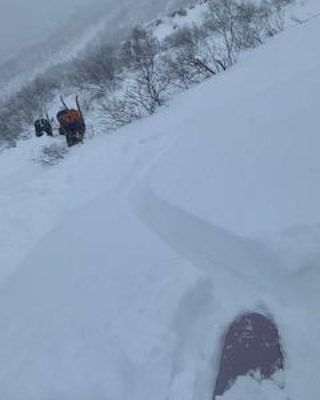
A snowboarder was caught in an avalanche.
Snowboarder caught in avalanche

Skiers injured in avalanche near Cooke City, Montana

An avalanche south of Cooke City carried three skiers down Republic Mountain, two were injured in the avalanche. One had to be evacuated by helicopter and another was temporarily unconscious and not breathing, according to a report.

“It’s super serious avalanche terrain,” said Doug Chabot, director of the Gallatin National Forest Avalanche Center.

In many ways, the skiers had done everything right. All six were carrying beacons and had rescue gear. They had radios to summons help.

Skiers checked with a 6 foot deep snowpit

However, they did not check the snowpack in the place they decided to ascend the mountain, Chabot said. They had dug a snowpit 2 meters deep to check the likelihood of an avalanche. “A hundred feet off to the side the snowpack changed,” he said, to an area with much less snow, only three feet.

“In terrain like that you have to be 100 percent sure” that the snowpack has no instabilities, Chabot added. All week long in its daily reports, the avalanche center had warned the snowpack was unstable and avalanches had been remotely triggered on even low-angle slopes. However, the Cooke City area had been standing out as a relatively more stable snowpack compared to other areas.

The avalanche broke about 1.5 to 2 feet deep approximately 250 feet above the skiers.

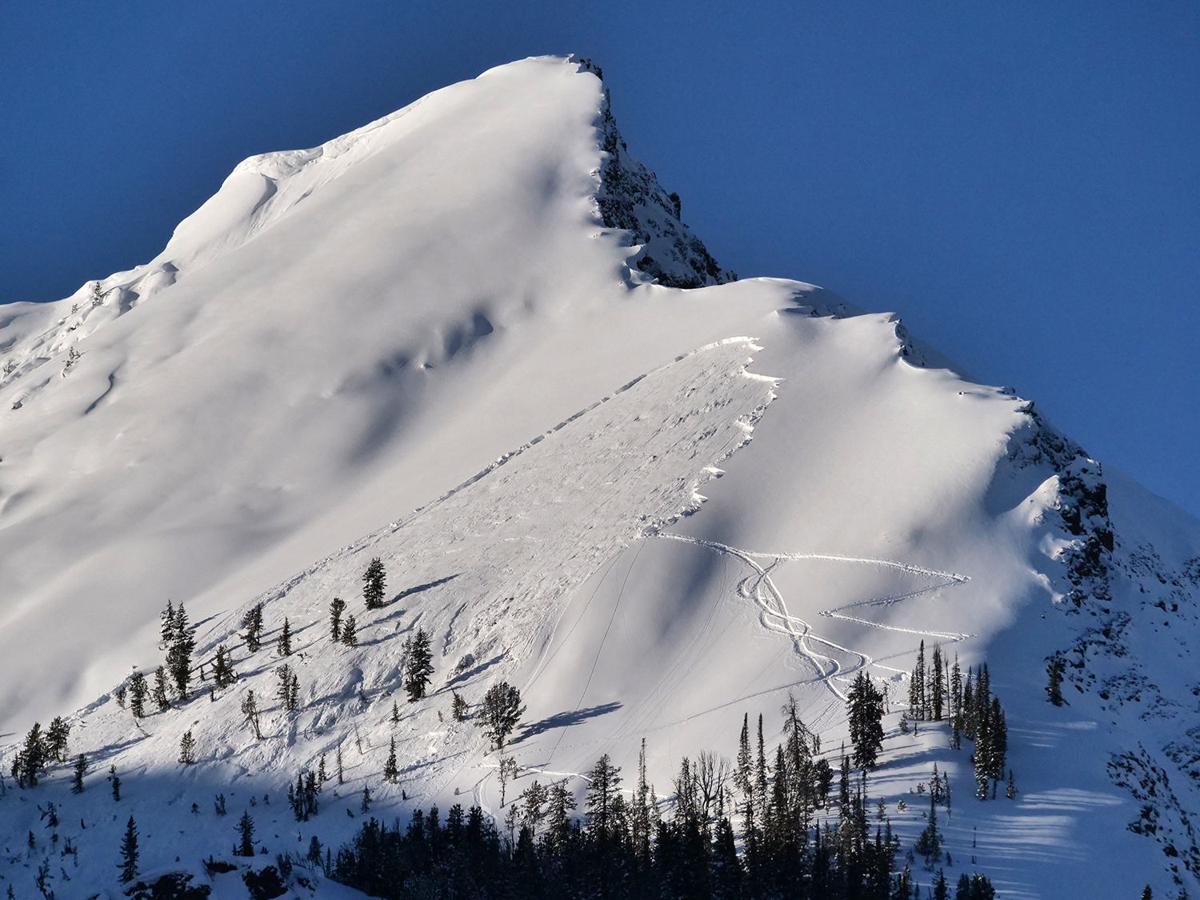
Photo of the avalanche which injured skiers. Forest Service.
The avalanche

Recovery of the two injured in the avalanche

Three of the skiers were swept downhill. The avalanche was 200 feet wide and ran 700 feet down the mountain. It was a large avalanche, and it went through some ugly terrain.

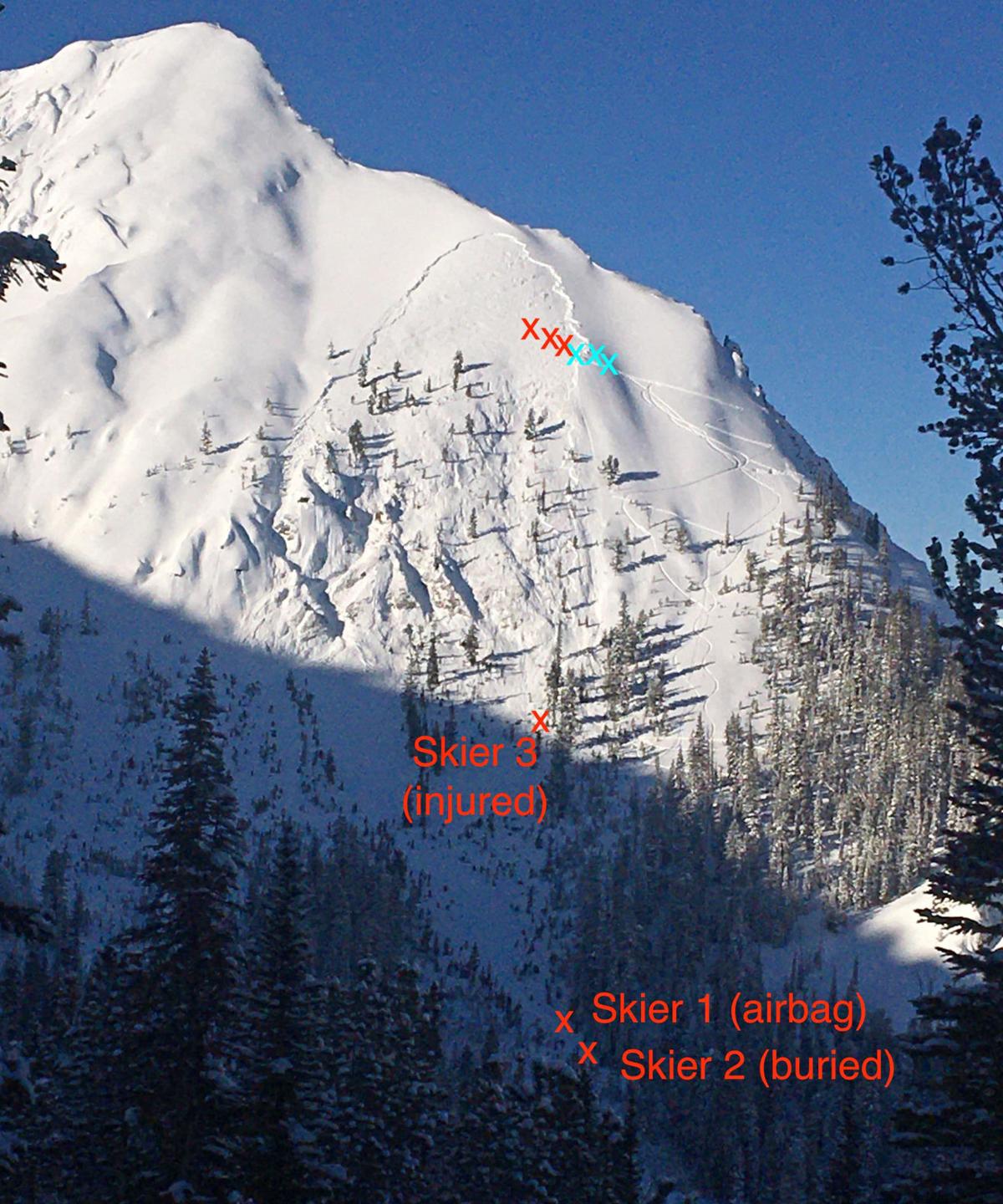
One skier deployed his airbag to keep from being buried. He was not injured in the avalanche. He quickly got up and began searching for his partners. One of the other skiers was found buried head down with his mouth packed full of snow. He freed that skier and cleared the airway so he was able to breathe on his own. That victim was able to ski out despite a leg injury.

Meanwhile, the three skiers who were not caught or injured in the avalanche found the third victim. He was buried higher on the mountain after being dragged across rocks. The trip caused injuries to his ribs and a collapsed lung.

location on the mountain of the skiers injured in the avalanche
Location of the skiers injured in the avalanche. Three were not caught despite being very close to the edge of it.

The Rescue

The skiers had two-way radios and were able to notify Park County Search and Rescue. Cellphones do not work in the remote area between Yellowstone National Park and the Absaroka-Beartooth Wilderness.

Two members of the search and rescue arrived and ascended 1200 feet then descended 400 to the avalanche zone. They brought medical and survival gear in case they had to spend the night.

The rescuers helped stabilize the injured skier and made a fire to stay warm while awaiting a helicopter to arrive from Jackson, Wyoming since Bozeman was too fogged in to fly.

The avalanche had occurred about noon. About 4 p.m. the helicopter arrived and long-lined the victim out. He was then flown to a regional hospital for care.

Snowpack is not improving

“It’s not going to get better anytime soon,” Chabot warned, because a weak layer of snow still sits underneath. As more snow falls that layer has a higher chance of failing under the increased weight.

“It’s different this year because it’s not taking a lot of snow”, Chabot said. “That makes it a little scarier.”

Monday is a holiday, Martin Luther King, Jr. Day. This might mean more people in the backcountry.

“Our fingers are crossed that people will continue to get lucky,” Chabot said. “But it’s a bit of a losing battle if you’re relying on luck.”

Chabot added that it will take time before the snowpack is stable, because right now even under moderate conditions people are triggering avalanches.

“You have to be really careful about where you’re headed,” Chabot said. “It’s a bit of a minefield.”