Category Archives: europe

Avalanche Warnings in Switzerland Modified

Avalanche Warnings in Switzerland to be modified starting this winter. The SLF is enhancing the precision by subdividing the danger levels. It will indicate whether the danger is towards the bottom end, in the middle or towards the top end of the reported level.

The SLF (Swiss Institute for Avalanche Research) says the new system will provide “users with more precise information for assessing the risk”.

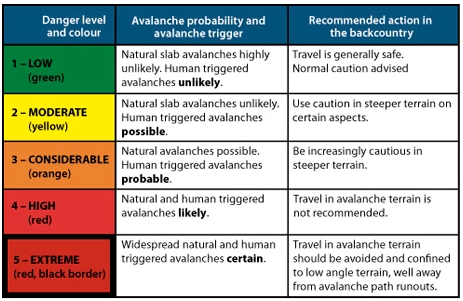
The five danger levels themselves remain unchanged.

The Avalanche Warnings in Switzerland will have subdivisions of the danger levels to indicate where the danger is in the level:

  • Towards the bottom end (-)
  • More or less in the middle (=)
  • Towards the top end (+)

This subdivision is only applied for dry avalanches, and only starting at Level 2.

The purpose is to make it easier for users to interpret the Avalanche Warnings in Switzerland correctly.

Other national avalanche forecasting bodies are watching the change closely.

Avalanche Warnings in Switzerland
Avalanche warning scale

The SLF explains the new situation in a series of questions and answers:

Why this change?

The SLF has been hearing calls for a more precise representation of the avalanche danger for several years.

For those who engage in snow sports, Level 3 in particular spans a very broad spectrum.

The avalanche forecasters likewise have been wanting to pinpoint the danger with greater precision for some time.

These wishes have now been satisfied with the introduction of the subdivisions.

Why not simply add a danger level?

Additional danger levels would not be feasible in the international arena and would serve little purpose in any case.

According to avalanche forecaster Kurt Winkler, “One advantage of the new system is that it takes findings of psychological research into account.”

The human brain cannot differentiate more than five to seven defined classes.

The danger levels, which are clearly defined, are already aligned with this understanding and are thus being retained.

The classification reflects logical and therefore slow thought processes.

But we can also determine, without any difficulty, a relative ranking within the individual classes.

We make subdivisions of this kind intuitively and thus quickly.

Does the new approach work in practice?

The SLF’s avalanche forecasters have already been allocating subdivisions to all danger assessments over a period of six winters, but has refrained from publishing them.

This large data set was then statistically analyzed in order to review the new approach.

The analysis clearly showed that the differences between the danger level forecast in the avalanche bulletin and the observations reported from the field are much smaller when the subdivision forms part of the picture as well.

In addition, a clear correlation was shown to exist with objectively measurable factors that play a role in the formation of avalanches.

From one subdivision to the next one above, for example, the frequency of whumpfing sounds and of avalanches triggered by people increases and the snowpack stability test results deteriorate.

Since the experimental series also demonstrated that subdividing the danger levels is dysfunctional in the case of wet snow avalanches, subdivisions are not being reported when the snow is wet.

Where the graphical reduction method is being applied, the subdivisions can be taken into account by entering the diagram on the left or right side of the column representing the danger level and then using the diagonal color code.

What is the target audience for the subdivisions and how can they be useful?

Everyone can benefit from the additional information which is provided.

“Those who wish to avoid the most dangerous situations on a given winter’s day can simply stay away from regions where the danger level is 3+ or higher, for instance, and instead either choose to visit a region where the danger is lower or even make other plans for the day,” explains Kurt Winkler.

The subdivisions can be used quantitatively as well.

The calculation of the avalanche risk on the website skitourenguru.ch, for example, takes them into account.

The subdivisions can also be useful when applying the graphical reduction method.

For an approximate assessment, the danger level can still be used in such cases.

Alternatively, based on the subdivision, the user can enter the diagram on the left or right side of the column representing the danger level and then use the diagonal colour code.

Can the new subdivisions be disregarded?

Although, as with any forecast, incorrect assessments are possible, evaluations show that the subdivisions reflect the danger more accurately as a rule.

Disregarding the subdivision bars access to additional information that would facilitate a better assessment of the risk.

“In any event, it is essential to continue taking the danger level seriously,” concludes Kurt Winkler.

“A 3-minus remains a level 3 and indicates ‘considerable avalanche danger’ – it is not to be taken lightly or treated as though it were a 2.”
Scotland avalanche forecasting season begins

  • Scotland avalanche forecasting season has begun.
  • The Scottish Avalanche Information Service assesses snow and avalanche conditions in six mountain areas until mid-April.
  • Last season, 212 avalanches were recorded. There were no fatalities.
  • Unusually, due to Storm Darcy, avalanches were recorded outside the normal areas – including in Galloway and the Isle of Rum.

Scotland avalanche forecasting season has begun.

The Scottish Avalanche Information Service (SAIS) assesses snow and avalanche conditions in six mountain areas from early or mid-December to mid-April.

The areas are Lochaber, Glen Coe, Creag Meagaidh, Southern Cairngorms, Northern Cairngorms and Torridon.

Last season, 212 avalanches were recorded – 10 of them involved people but there were no fatalities.

Avalanches can occur naturally, can be triggered accidentally by people, or caused deliberately to remove an avalanche risk in ski areas.

Hillwalkers, climbers and skiers use SAIS information alongside weather forecasts to help them plan trips.

In its latest annual report, SAIS said heavy snow during February’s Storm Darcy resulted in avalanche activity at lower levels in places outside its normal forecasting areas.

The locations included Galloway, Isle of Rum, Pentland Hills and Southern Uplands.

SAIS also said it had an unusual situation in early May when it reactivated the service for a short time due to unseasonably cold weather and snow.

Total number of avalanches and fatalities recorded in SAIS seasons:

  • 2020-21 – 212 (0 fatalities)
  • 2019-20 – 241 (1)
  • 2018-19 – 144 (3 fatalities)
  • 2017-18 – 260 (0)
  • 2016-17 – 90 (0)
  • 2015-16 – 207 (3)
  • 2014-15 – 305 (1)
  • 2013-14 – 350 (0)
  • 2012-13 – 129 (8)
  • 2011-12 – 154 (0)
  • 2010-11 – 178 (1)
  • 2009-10 – 220 (5)

Published 10 December 2021

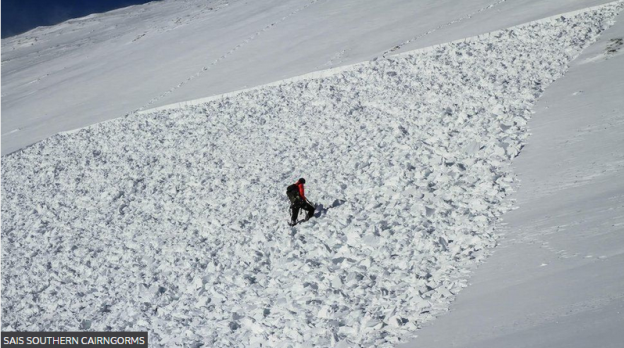
Debris from an artificially released avalanche in the Cairngorms, during training.

Avalanches in Iceland – 133 in Ten Days

An unusually high number of avalanches in Iceland have fallen across East Iceland, North Iceland, and the Westfjords in mid-January. This is from the Icelandic Met Office. There were 133 reports of avalanches in Iceland in 10 days. But the true number is likely higher. The Civil Protection Department has declared an uncertainty phase in the North Westfjords. And also North and East Iceland. Because the risk continues.

Westfjords, Northeast Iceland, and Eastfjords

Most of the 133 reports were from the Westfjords (52) and Northeast Iceland (41). The third-highest number were reported in the Eastfjords (24). “It is clear that many more avalanches have occurred without being recorded. Many fall off the beaten track, others occur without being seen, and not all avalanches are reported.” Of course heavy snowfall is the cause. The snow blanketing the slopes is considered unstable. However, the office reports that some avalanches have fallen in still weather.

Roads Closed

Avalanches in Iceland have fallen on several roads across the country. Causing closures while snow is cleared. The Road and Coastal Administration notifies travelers of road closures across the country. The Met Office reports on avalanche risk.

No people have been injured as a result of the events. Though one recent avalanche in Skagafjörður killed at least three horses and destroyed a shed. One avalanche on the Skarðsdalur skiing grounds in North Iceland caused significant damage to the facilities. A third near Eskifjörður, East Iceland, damaged a shooting range and may have damaged facilities in the area as well.

Avalanches in Iceland are nothing new. There were catastrophic avalanches in the villages Súðavík and Flateyri in 1995. Which killed 34 people and caused extensive economic damage. Those avalanches made it clear that a substantial number of people in several Icelandic towns and villages live in areas where avalanche risk is unacceptable.

(January 27)

An avalanche in Eastern Iceland
An avalanche in Iceland

Swiss Avalanche victims rescued when their dogs bark for help

Two people caught in a Swiss avalanche were rescued after their dogs barked for help. The barking attracted the attention of nearby snowshoers who were able to dig them out.

The Swiss avalanche swept the pair off a hiking trail in the Avers Valley of south-western Switzerland. Near the Italian border and west of St Moritz. It occurred shortly after 3pm on Saturday.

“Their dogs, who were not buried by the masses of snow, drew attention to themselves by barking loudly,” a statement by REGA said.

“The dogs attracted the attention of a group of snowshoers who were some distance away in the same valley but had not witnessed the avalanche.”

About 15-20 minutes after the Swiss avalanche, the group was at the scene, where one of the avalanche victims’ hands was visible; the other person was buried entirely, Rega said. Both were dug out slightly injured and with mild hypothermia. Rega then flew them by helicopter to hospital.

Snowshoeing in Switzerland, file photo
Snowshoeing in Swizerland

Another “Miracle” Recovery as well

This occurred just two days after a man in France was recovered from under 2.5 meters of snow after more than 2 hours. Later that day (Thursday) in Tignes another man had an equally miraculous story.

A huge natural avalanche came down at 7.10pm. In darkness and poor weather the patrol carried out a search. The visibility was described as “very bad”.

Later that night at 11.45 the director of the patrol in Tignes, Frederic Bonnevie, returned. The weather had eased.

He heard a voice calling for help. A 35-year old local man had been caught in the slide, but his face was above the snow. He had been trapped in the snow and avalanche debris and unable to move. He had been buried for over four and a half hours.

Frederic Bonnevie and another pisteur dug him out and gave him first aid at the scene. The man was shaken but otherwise unharmed except for frostbite to his left ear.

That avalanche was 600m long and 200m wide. It had a vertical drop of 300m.

French Alps Avalanche – Snowshoer found alive after hours under snow

Snowshoer found alive after hours buried under snow in French Alps avalanche.

A snowshoer was found alive in the French Alps after being buried for several hours under 2.5 meters of snow. He had been hit by an avalanche during a family walk.

More than 100 rescuers were able to free the buried man, who was still alive, after 2 hours 40 of searching.

The 50 year old man was buried after a French Alps avalanche in Val d’Isère, a ski resort in Savoie, on January 28.

The family – a couple and their two children – had been on a snowshoe walk.

The man was buried by an unexpected avalanche that the family had not heard coming, with his wife and two children managing to escape. They immediately raised the alarm.

Police had to use vehicles to reach the area. The usual rescue helicopters could not take off due to the adverse weather conditions. Local rescuers also headed to the scene. They were joined later by more emergency services.

Alexandre Grether, deputy at mountain police service (PGHM) in Savoie, spoke to the local news. “We quickly had around 100 people [searching]. There were gendarmes, skiers, firefighters, but also mountain guides and ski teachers who were on the mountain.”

Despite the number of searchers, the rescue was not straightforward. The lost man was not wearing an avalanche victim transceiver. Even the rescue dogs could not find a scent due to the deep debris.

As a result, the PGHM police decided to use the “Wolfhound system”, which can detect mobile phone signals.

Mr Grether said: “Usually, we use it to find people who are lost in the forest. This was one of the first times we have used it for an avalanche.”

All people present were asked to turn off their mobile phones. The team then began patrolling the area using the Wolfhound device. It was then that they detected a signal, and were able to dig through the snow to rescue the man.

After 2 hours and 40 minutes of searching, the man was “miraculously” found alive, and taken care of by emergency teams.

Mr Grether said: “He was protected by a tree, that’s what prevented him from being crushed. The snow had surrounded him, but he had a pocket of air,” he explained. The victim is expected to make a full recovery after suffering a fracture to his hip.

Recovery of a 50 year old man from a French Alps avalanche.
Recovering the buried man in the French Alps avalanche in in Val d’Isère.

The Alps see Many Fatal Avalanches

There have been many fatal avalanches recently in the Alps. Some of the people caught were inexperienced, but professionals have also died.

The latest fatality was a massive slide in Verbier, Switzerland in which a local guide, out with clients, died. Verbier also had two other separate and fatal slides last week. One involved an experienced skier and the other an instructor, both locals.

On January 22nd a 23-year old Swedish skier died in the Savoleyres area of Verbier.

Last week there were five fatalities in France. Additional accidents occurred in France over the weekend.

There was at least one fatal avalanche in Italy.

Switzerland, where ski resorts are open, has had 16 avalanche deaths so far this winter.

Is this typical?

At the same period last season the total was 4. Last season saw seven total. But the season ended in mid-March due to coronavirus. In the 2018/19 season it was 21 total and in 2017/18 it was 27.

Weak Snow

The current deaths result from a highly unstable snowpack with weak layers at the bottom of the snowpack. It is not so much the amount of snow that has fallen, but rather its fragility.

“Underneath the wind slabs the bonding of the snowpack is unfavourable at high altitudes, in particular in the western part of the northern flank of the Alps, in Valais and in Grisons,” said a recent advisory from the Swiss Institute for Snow and Avalanche Studies.

Considerable Danger

There remains “considerable” (Level 3) danger across the whole of the Swiss Alps. This is the level which sees the most fatal avalanches.

“In these regions, distinct weak layers exist in the middle part and near the base of the snowpack in all aspects. Fatal avalanches can be triggered in these layers and release the entire snowpack, in particular in places where relatively little snow is lying. Remote triggering has been observed in central Valais and in Upper Engadine in particular. These weak layers are still to be found in the central and eastern parts of the northern flank of the Alps as well, but here they are mostly embedded deep and therefore unlikely to be released. On the southern flank of the Alps, the bonding of the snowpack is more favourable. Here, fractures are unlikely to occur deep in the snowpack.”

So it is quite dangerous in some areas.

Many areas affected

The fatalities in Switzerland have been across the country.

Map of swiss fatal avalanches
Fatal Avalanches in Switzerland

In France conditions are also highly unstable.

“While this is not unprecedented during the middle of a busy winter with a persistent unstable snowpack and moderate snowfalls coming down on top of the weak layer or layers, a lot of people are asking questions about why this is happening now, especially when there’s a lot less skiers out there…and many of the victims are experienced, or even professional,” said Henry Schniewind.

The latest snow is sitting on top of a very weak layer.

Some people claim that coronavirus is adding to the problem. In areas where the lifts are closed, like Italy and France, people are hiking up into the dangerous terrain.

No slopes have been kept safe by the resorts since lifts are closed.

Where resorts are open, Switzerland and Austria, there are not the numbers skiing off piste.

More snow is currently falling in the Alps on the already weak foundation.