Tag Archives: avalanche

Avalanche burial in Colorado

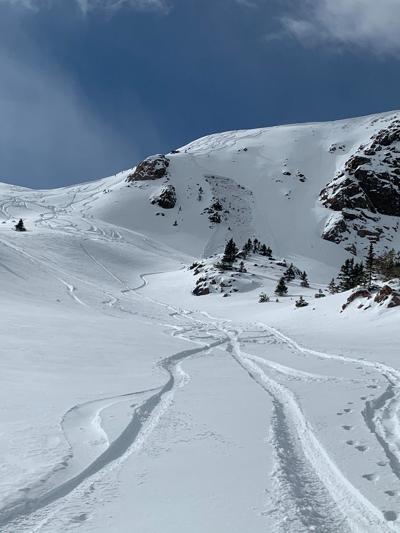
Avalanche risk is already present in Colorado despite the lack of early season snow. According to a report to the Colorado Avalanche Center a skier was caught in a human-caused avalanche burial on Monday near Marble.

The small avalanche occurred in a small gully near a grouping of trees at about 10,400 feet of elevation. As the first skier crossed a steeper section of terrain the slide carried the skier downhill. The skier was uninjured and didn’t require any sort of official search and rescue effort.

While most of the terrain being crossed by skiers in the group at the time was lower angle, small sections of steeper slope were present. According to someone at the scene, ‘complacency’ was a factor in the avalanche burial.

When the slide was triggered, the group was returning to their car. They had previously noted “major instabilities” at higher elevations. However, the terrain they were traveling just prior to the avalanche is described as having a “gentle slope angle”. It was so low-angle that it was impossible to maintain momentum.

The author of the report wrote: “This slide was a sharp reminder of the potential consequences of any backcountry terrain, even in the relatively benign areas that we traverse on approaches to and exists from the main ski runs.”

Current Risk

Those entering the backcountry in Colorado should know that avalanche risk is already present. This example shows that low risk terrain can still have localized high risk areas that should not be overlooked.

Currently the avalanche risk in Colorado is rated as moderate to considerable. Levels two and three on a five-level scale.

Avalanche observation reports made by both officials and the public indicate that there have been 219 slides so far this season. Unobserved and unreported slides have probably occurred in addition to those.

If you’re entering the backcountry this season, do so only with the proper training and equipment.

Colorado Avalanche Center photo

Call to check avalanche transceivers as potential issue reported

A potential issue has been identified with the switches on Black Diamond/PIEPS DSP Pro and DSP Sport models of avalanche transceivers.

Pieps Avalanche Transceivers

Owners and users of these devices are encouraged to follow the manufacturers guidance and check that they are operating correctly.

During filming for this season’s TGR Film, pro skier Nick McNutt was caught in a snow avalanche right in front of the film crew and fellow skiers. As they rushed to search for him, they were quickly hit by the realization that they couldn’t get a signal from his avalanche transceiver. Fortunately for Nick, with a film crew and a bunch of experienced skiers on hand, a probe line was formed and he was found alive, though battered, broken and bruised. On digging him out it was found that his transceiver switch was in the OFF position. He was wearing his transceiver in the chest harness as indicated by the manufacturer.

Unfortunately, the offending transceiver was lost in the post whilst attempting to return it to Black Diamond for testing.

In publicizing this event on social media, and within the North American guiding community, other anecdotes have surfaced involving issues with the switches, and various videos have been posted showing the switches being overridden. Black Diamond/PIEPS state that their testing has shown no change in switch resistance with heavy use, but they noted that switches with visibly damaged lock/switch mechanisms showed a decrease in switch resistance of 50-100%. They also stated there have been only two recorded incidents in which the switch allegedly failed. In the other incident the transceiver was not worn in its harness and the police investigation reported that the victim’s avalanche transceiver was working properly.

Please ensure you check your own transceiver to ensure the switch is free from cracks and is working correctly. Should you be unsure, please contact PIEPS/Black Diamond on dsp@pieps.com

And if you’re wearing a transceiver, make sure you’re well practiced in using it and that you’re carrying the means of finding and digging someone out, which means carrying a probe and shovel.

British Mountaineering Council, December 4, 2020

I-70 Avalanche – Snowboarders say 4th, 5th Amendment rights were violated

Dec 2, 2020

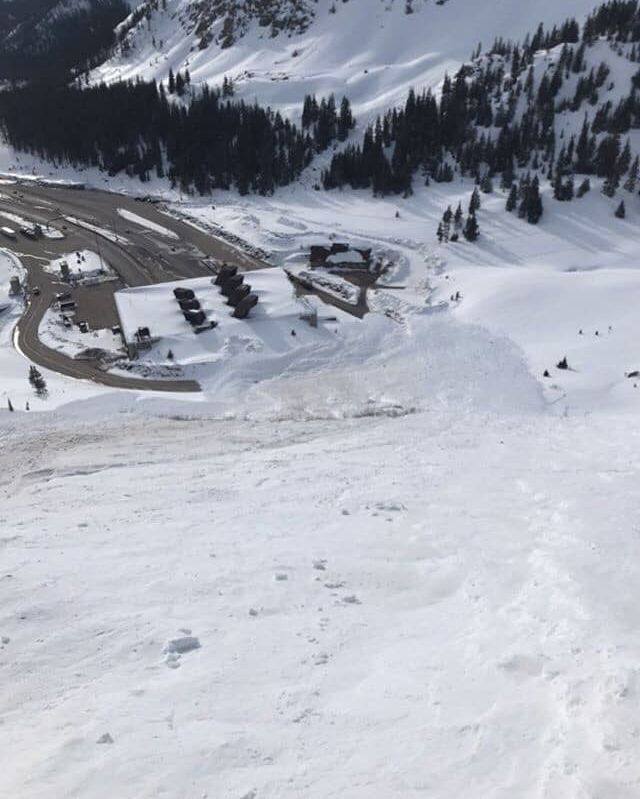
SUMMIT COUNTY, Colo. (KDVR) — Two backcountry snowboarders who allegedly triggered a snow avalanche near the Eisenhower Tunnel last March are now responding with a first-of-its-kind court motion.

Evan Hannibal and Tyler DeWitt are being charged with a single misdemeanor count of reckless endangerment and are being ordered to pay $168,000 in restitution.

However, the pair is claiming the Colorado Avalanche Information Center (CAIC) violated their Fourth and Fifth Amendment rights.

In a motion filed Wednesday attorney Jason Flores-Williams alleges the Go-Pro video being used by prosecutors as evidence should never have been handed over to Summit County prosecutors.

The attorney says his clients gave the video to the CAIC in good faith, not knowing it was going to be used against them as evidence.

“He (Hannibal) believed he was contributing to overall knowledge of snow avalanches. It’s now being used to prosecute. You need to tell them, ‘What we’re using could be used against you,’” Flores-Williams explained.

Flores-Williams believes what happens in the case could have implications that extend far beyond Colorado. He believes his clients are being made an example.

“This is absolutely ridiculous. We’re fighting this message being sent that going forward skiing and backcountry life might be criminalized. What we’re doing here is defending the backcountry and this has implications throughout the entire Mountain West,” he explained.

Nobody was injured in the avalanche. However, a service road used primarily by transportation workers was buried under about 20 feet of snow. Expensive avalanche mitigation equipment was also destroyed.

District Attorney Bruce Brown plans to respond to the motion in court. He released this statement to FOX31:

“Information voluntarily surrendered without coercion enables prosecutors to use that information in court. I am unaware of any express or implied limitation that was placed on information obtained during the law enforcement investigation that would undermine that principal. It is important that every person charged with a crime have an opportunity to fully litigate all legal issues before a judge and have their guilt determined by an impartial jury of their peers.”

A trial is scheduled for late March.

avalanche
Snow avalanche on I-70 which buried the service road

Avalanche risk considerable in East Kootenay

Avalanche Canada is reporting considerable avalanche risk in the alpine in the East Kootenay.

In the Lizard-Flathead, South Rockies and the Parks Canada ranges, Avalanche Canada reports: “It’s expected to be very warm and sunny Wednesday, alpine temperatures could be as warm as +6 C. The snowpack doesn’t like rapid changes like this. Cornice failures and even natural avalanches are possible as we head into the warm spell.”

For the Purcells, Avalanche Canada notes: “Things are looking hot up high for the next couple days. Naturally triggered wet loose avalanches are possible on all aspects and especially likely on solar aspects. Overhead hazards will be a primary concern.”

Travel and Terrain Advice

Be careful around freshly wind loaded features.

Extra caution for areas experiencing rapidly warming temperatures for the first time.

Minimize overhead exposure; avalanches triggered by warming or cornice fall may be large and destructive.

A moist or wet snow surface, pinwheeling and natural avalanches are all indicators of a weakening snowpack.

280 Buried in Avalanche; 70 Saved

Kullu, November 29

Around 280 sheep and goats were buried under the snow due to an avalanche in the Parbati valley on Saturday. According to information, 130 sheep of Gurdayal Singh, 120 sheep of Raju and 30 sheep of Room Singh, all from Barshaini village, were grazing at Shilha Nala and were buried in a large snow avalanche.

The villagers carried out the rescue operation but only 70 sheep could be saved. A team of district administration, police and Animal Husbandry Department visited the spot. Barshaini panchayat president Jairam said adequate compensation should be provided to the herders.

New avalanche-control system on Lizard Head Pass

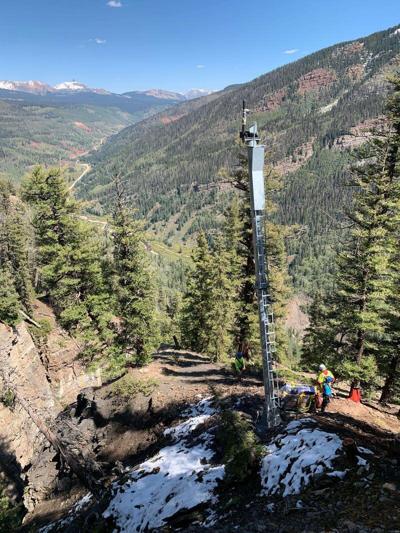
The Colorado Department of Transportation has completed installing a remote avalanche control system on Lizard Head Pass, Colorado 145.

Crews installed five towers on the mountain and ridge about the highway, about 1 mile north of Rico and 20 miles south of Telluride. The towers will be used for triggering avalanches at known snow slide paths in the area.

This summer, CDOT installed the remotely controlled Wyssen avalanche mitigation system. Charges can be tethered and dropped from the towers, into the avalanche paths to bring down the slides in a controlled manner.

Wyssen Avalanche Control of Switzerland’s WAC.3 system replaces aging technology and other methods CDOT currently uses to shoot off avalanches on 145 before they can become a hazard to the motoring public.

The new system is expected to help keep Colorado 145 open, or allow it to be more readily reopened, during heavy snows, as the road is an alternative route for U.S. 550 Red Mountain Pass, which closes frequently during severe weather.

Separately, CDOT has also installed a new remotely controlled avalanche mitigation system on U.S. 6 from the Arapahoe Basin ski area.

Nov 29, 2020

New avalanche-control system installed on Lizard Head Pass

Avalanches reported across Colorado

Several natural and human-triggered avalanches have been reported across the state this week, including one near Vail Pass on Thursday, the Colorado Avalanche Center said.

The Vail Pass avalanche broke at the ground, they said. Although it was relatively small, it could have injured someone if they had been caught in it. The avalanche was triggered by skiers.

People should avoid steep slopes, especially on north and northeast faces where cohesive slabs of snow are formed by the wind. Avalanches can break in upper wind-effected layers or at weak layers near the ground, the Avalanche Center said. “With a relatively shallow early season’s snowpack, it is not difficult to affect these layers and create a failure. It is best to avoid traveling on steep wind-loaded slopes where these conditions exist.”

There were several natural and human-triggered avalanches across the state on Wednesday. Avalanches were reported at Berthoud Pass, Montezuma and near the Eisenhower Tunnel.

The Avalanche Center said most of the mountains will see a moderate risk of avalanches on Friday and Saturday at and above treeline.

Avalanche near Vail

Prince Charles avalanche episode on Netflix criticized

The wife of Hugh Lindsay, killed while skiing with Prince Charles, asked Netflix not to feature the avalanche

Nov 2020

The widow of a British army major who died in an avalanche while skiing with Prince Charles has criticized the producers of The Crown on Netflix as “unkind” for dramatizing the disaster against her wishes.

Major Hugh Lindsay, a former Queen’s equerry, was skiing off-piste at the Swiss resort of Klosters in 1988 with a group including senior royals when disaster struck, with his friend the Prince of Wales and others reported to have dug snow with their hands in a vain attempt to save his life.

After the episode on “The Crown” titled “Avalanche” was made available for streaming last week, Lindsay’s widow, Sarah Horsley, has revealed she had asked Netflix not to adapt the disaster for television.

“I was horrified when I was told [the episode] was happening and was very concerned about the impact on my daughter,” she told the Sunday Telegraph.

“I’m very upset by it and I’m dreading people seeing it. I wrote to them asking them not to do it, not to use the accident. I suppose members of the royal family have to grin and bear it, but for me it’s a very private tragedy.”

She added that the producers replied with “a very kind letter”, saying “that they understood my concerns, but they hope I will feel that they deal with difficult subject matters with integrity and great sensitivity”.

However, Horsley said: “I think it’s very unkind to many members of the family.”

Netflix’s description of the episode reads: “Charles is caught in a deadly avalanche, and he and Diana are prompted to reevaluate their commitment to their troubled marriage.”

At the time of the disaster, Horsley was pregnant with their daughter Alice and still working at her job in the press office at Buckingham Palace. She did not go on the ski trip and stayed at their south London home.

Charles, who went on to become a godfather to Alice, later wrote: “I still find it hard to understand why I survived and he didn’t.”

Patti Palmer-Tomkinson, another friend of the Prince, received severe injuries to both of her legs and her lungs. Princess Diana, who was also on the holiday, was not on the slopes when the avalanche hit and had stayed at their chalet in Davos, along with Sarah, Duchess of York.

The group then flew back to London, where a guard of honor from Major Lindsay’s regiment met his coffin.

Netflix has also faced criticism over the historical accuracy of its script, with calls for it to be accompanied by a disclaimer explicitly stating that some events have been embellished. The scriptwriter, Peter Morgan, has said: “Sometimes you have to forsake accuracy, but you must never forsake truth.”

The Times reported this week that friends of the Prince of Wales had described the show as exploitative and inaccurate. “This is trolling with a Hollywood budget,” a source said.

Austria avalanche: Skier survives five hours

27 December 2019

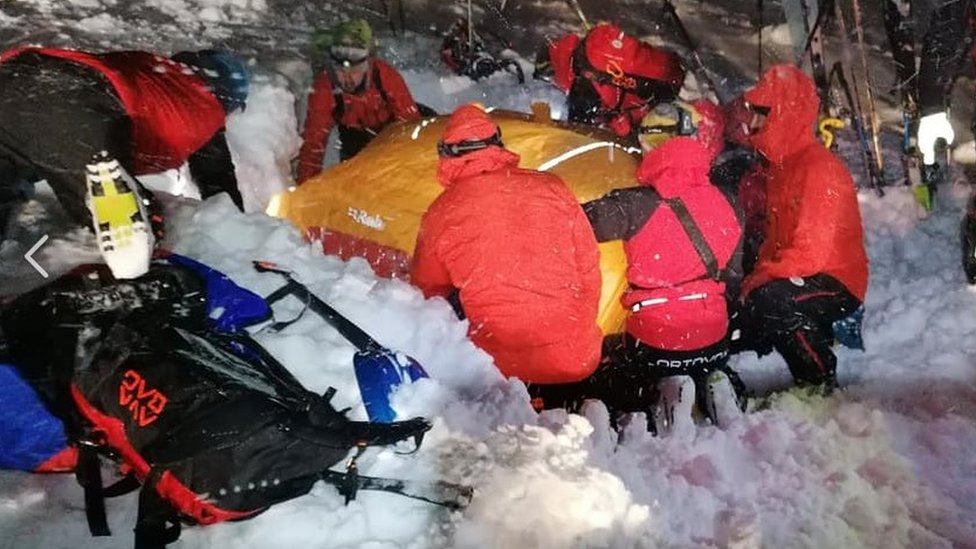
Rescuers have dubbed the survival of a man a “Christmas miracle” after an avalanche in Austria buried him in snow for five hours.

Authorities were contacted shortly before 17:00 (16:00 GMT) on Christmas Day 2019 by a man who said the 26-year-old had not yet returned from skiing.

The man had managed to get through to the skier’s mobile phone but heard only “crackling noises”.

The missing skier was located a couple hours later.

He was found beneath a meter of snow with his avalanche transceiver, which pinpointed the man on Mt Pleschnitzzinken in the north-western area of Upper Styria.

Transceivers are worn on the body and emit an electromagnetic signal. They can also be used in search mode to pick up signals from other devices.

‘Extremely lucky’

A team from the Gröbming mountain rescue and local police dug the man out of the snow and he was taken down to the valley suffering from hypothermia but otherwise unharmed.

“You can’t move under the snow like this,” said Stefan Schröck of the Styria mountain rescue service. “The man was extremely lucky, he had a large enough air pocket under the blanket of snow, so he had oxygen and was able to breathe.”

Surviving for five hours under an avalanche happens only every 20 years in the Alps, according to Mr Schröck. If you are not found within 15 minutes of an avalanche your chances of survival are slim and if you are to survive beyond an hour you need a source of oxygen.

Skier brought out after five hours

North Cascades Highway closes for the season due to avalanche risks

The heavy snows of the past few storms mean the time has come for the annual North Cascades Highway closure in Washington state. WSDOT announced the closure Monday as snow has filled the avalanche chutes that line the highway, which pose a safety risk for drivers and road crews.

The seasonal avalanche closure currently begins at the Ross Dam Trailhead on the west side and Silver Star Gate 37 miles away on the east side. As the snow accumulates this fall and winter, the closure will extend a few more miles in each direction.

The earliest closure was on Oct. 17 in 2003, and the latest “closure” was in 1976 when so little snow fell the pass didn’t need to close that winter. That is the only time that’s occurred since 1972. In the winter of 1989, it didn’t close until Jan. 3, 1990.

Hikers, skiers, snowmobilers and other recreationalists can access the closed portion of highway during the winter season. Users should park in designated parking areas to allow plow drivers the space they need to clear snow around the closed stretch’s access gates.

Sign greets travelers to the North Cascades Highway (WSDOT image)