Category Archives: avalanche control

Avalanche

Avalanche defendants suffer motion dismissal in court

Two avalanche defendants, snowboarders, are facing charges and a $168,000 fine for an avalanche that threatened I-70. A judge just dismissed their motion to dismiss video of the avalanche they gave to Colorado Avalanche Information Center.

Motion to Dismiss

A Summit County Court judge dismissed a motion to suppress a GoPro video of the avalanche. Evan Hannibal and Tyler DeWitt had given the video to the Colorado Avalanche Information Center (CAIC).

The video is evidence in the Summit County District Attorney’s case against Hannibal and DeWitt. They are charged with reckless endangerment and could face a $168,000 fine. These are the first criminal charges ever filed against skiers involved in an avalanche in Colorado.

The prosecution argues that the avalanche defendants endangered drivers near the west portal of the Eisenhower-Johnson Memorial Tunnels. They want $168,000 to replace an avalanche control system destroyed they destroyed. The CAIC said they triggered the avalanche.

The snowboarders argued that prosecutors conducted an unlawful search and seizure when they based the allegations on the helmet-cam video. The men gave the video to the CAIC voluntarily. They hoped it could be useful so others might avoid a similar slide.

CAIC is a State Agency

“This is a state agency, a constitutional actor, not informing citizens that what they are voluntarily disclosing in good faith to that that state agency could, and in this case was, turned over to law enforcement for purposes of prosecution,” Jason Flores-Williams, the attorney for DeWitt and Hannibal, said during the motions hearing on Tuesday. “This is extraordinarily problematic. There was a duty to inform Mr. Hannibal that what he was providing to the CAIC could be turned over to law enforcement.”

CAIC director Ethan Greene and avalanche forecaster Jason Konigsberg testified that the avalanche defendants voluntarily provided information and video about the avalanche. The CAIC report said the snowboarders triggered the avalanche. And also that the two “assumed that the avalanche mitigation to protect the tunnel infrastructure decreased the avalanche hazard on the slope.”

Greene said it is common for law enforcement to request information. The CAIC shares its reports. The state agency offers all reports for public review. “Our role is to facilitate people understanding avalanches, and we do that by sharing information,” Greene said. “If the public requests information from us, we provide it.”

The CAIC did not include the video in its public report, although they often do publishes videos. “It was my judgment that the content of the video did not add to the educational messages we were trying to get across in the report,” Greene said.

Video Provided Voluntarily

Konigsberg agreed with Flores-William in saying the sharing of the video was “voluntary and collegial.”

Flores-William asked Konigsberg if he thought the video could be handed over to law enforcement. “Can I think about that for a second?” Konigsberg asked. “Honestly, it’s not something I thought about. I kind of had a one-track mind to collect information for avalanche education and safety, like I always do.”

The prosecution argued that Hannibal and DeWitt, experienced with CAIC reports, should have known that CAIC publishes information. “I understand there is a concern about the public policy side of this, but we have to focus on the law,” McCollum said. “And none of the law supports the … argument that this video or the photos that were obtained should be suppressed.”

Judge Ed Casias found there was not any violation of constitutional protections from unlawful search and seizure because there was no search and nothing was seized. “It wasn’t a search of any kind. Mr. Hannibal was asked if he would provide it and he did,” Casias said.

Casias said he wouldn’t expect Konigsberg to tell Hannibal the video could be used by law enforcement. “Frankly, he didn’t know that was going to happen. That was not the reason he was collecting information,” Casias said.

Miranda Rights don’t apply

Casias also denied the argument that the collection of the video violated the men’s Miranda rights, which only applies to people in custody when they are advised that what they say can be used against them in court. “There is information here that was provided voluntarily. It was provided to CAIC, not law enforcement,” Casias said.

The courts should ensure police don’t circumvent constitutional protections against unlawful search and seizure, Casias said. Still, he could not connect a skier providing information to an avalanche center with a constitutional violation. 

“If there are things that you, as a backcountry traveler do that cause new concern that law enforcement may be involved and someone reaches out and asks for information, you don’t have to give it,” Casias said. “I can’t make you disclose and I can’t make you withhold. But if your common goal is to make it safer for other people … it’s your decision.”

The avalanche started by the defendants
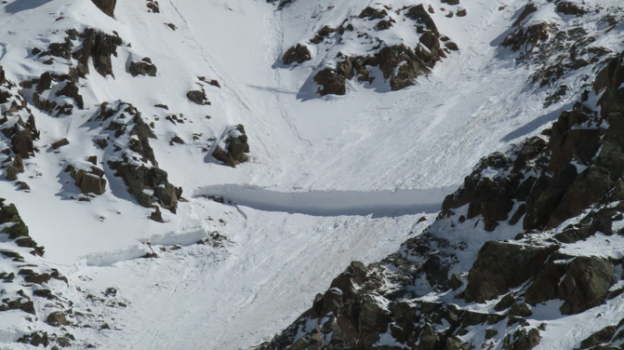
The two avalanche defendants started an avalanche that created a threat to I-70.

Elk Survived an Avalanche after fortuitous rescue by an observer

An elk survived an avalanche after being rescued by a nearby observer.

Jesse Dahlberg was watching railroad avalanche control crews use explosives to start relatively small avalanches near Field British Columbia. He noticed a lone elk was in the path of one of the avalanches. He hoped the elk might outrun the snow. But it was engulfed as the avalanche came down around it.

“I didn’t know how big the avalanche was going to be so I was hoping for the best. When I saw it, I thought there’s no way that elk is going to survive.” Dahlberg told CBC. “That wall of snow caught up to that elk so fast and just blasted it.”

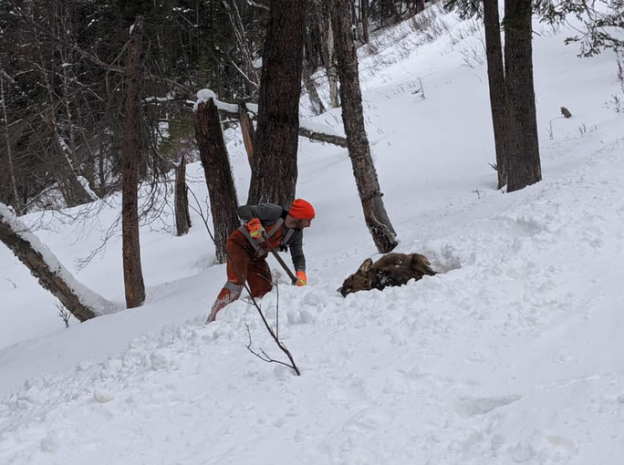
Dahlberg decided to go see if there was a chance the elk survived an avalanche. After parking close to where the elk was last seen he and a friend followed debris uphill. Miraculously, Dahlberg saw a portion of the animal’s face peering out from the snow. The elk was trapped and immobilized in the avalanche debris.

Once Dahlberg found that the elk was alive he knew they’d have to act quickly. He began digging with his handsand sent his friend back to the vehicle for a shovel. It took only 15 minutes to dig the elk’s back legs free. Then, with a little prompting, the critter was able to shake its way clear and climb out of the snow.

“I put my arms up and started cheering because I was so excited that it was alive,” Dahlberg said. “I was so happy.” Rather than take flight, the forest denizen calmly gazed at them as they left the scene as if saying a silent “thank you.”

Jesse Dahlberg has a video of the avalanche and some photos of the rescue on his facebook page.

An Elk survived and avalanche thanks to a rescue.
Jesse Dahlberg rescuing an elk that survived an avalanche.

Avalanche bombing deployed from the sky help rescuers on the ground

SUMMIT COUNTY, Utah — Avalanche bombing experts work to ensure the safety of rescuers working on the ground. And on Sunday search and rescue crews worked on an avalanche recovery mission in Summit County.

The Utah Avalanche Center, Sheriff’s Office and Park City Mountain Resort Ski Patrol worked with Utah Department of Public Safety. Together they conducted avalanche mitigation. This was to help rescuers recover the skier who was buried the day before.

“We arrive and we serve the search and rescue or the sheriff’s office in that area. So if they say we’re going to mitigate, then we just follow their lead.” So said Sgt. Wyatt Weber, a tactical flight officer with the Utah Department of Public Safety Aero Bureau. “Obviously, the snow safety experts that know these avalanches from front to back. Whatever they suggest we just try to help them and assist them and do it as safely as possible with the tool.”

Utah DPS used explosive charges from Park City Ski Patrol for avalanche bombing the unstable snow above the area. The avalanche mitigation allowed rescuers to access the area with minimized risk of further avalanches.

“You talk to the Park City Ski Patrol and they’ll tell you [Square Top is] one of their scariest areas up there for avalanche potential. It always gives them sleepless nights,” said Utah DPS Aero Bureau pilot Bret Hutchings.

Hutchings piloted the helicopter on Sunday as members of the team deployed the explosives.

“Avalanche bombing requires the pilot and a crew of three comprised out of the various ski resort areas. You have a controller and a bomber and a prepper,” he said.

Two Avalanches by lift skiers at Park City Mountain Resort

There have been two deadly avalanches in Utah this winter. Both have taken place just outside of Park City Mountain Resort boundaries. In both cases the avalanche victims accessed the backcountry from the resort boundary area.

“Park City Mountain places the highest value on the safety of our guests and employees. Within the ski area boundaries, Ski Patrol performs avalanche mitigation work and provides emergency response. Park City Mountain does not prohibit public access to U.S. Forest Service lands outside the ski area boundary. Guests that access the backcountry from Park City Mountain must do so from designated backcountry gates that provide warnings and information about the inherent risks of backcountry travel. Park City Mountain does not manage the lands or the inherent hazards that exist outside its ski area boundary. Guests who access backcountry terrain do so at their own risk and are responsible for their safety. Guests leaving the Resort boundaries should be experienced and knowledgeable about backcountry travel, and be prepared with the appropriate gear and safety equipment.” – Jessica Miller, Park City Mountain Resort

Dramatic video of avalanche control near Revelstoke

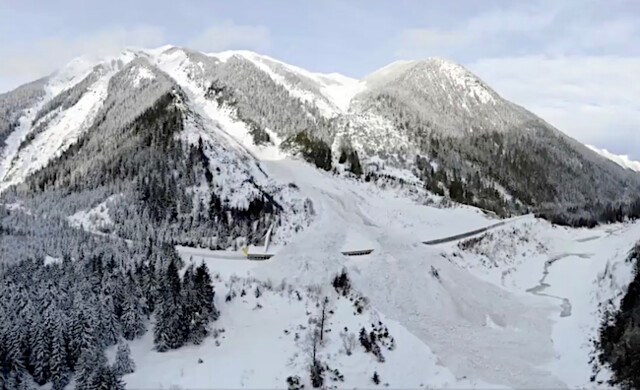
DriveBC has shared dramatic aerial video of avalanche control work along the Trans-Canada Highway near Revelstoke.

Avalanche control east of Revelstoke. Ministry of Transportation
Avalanches east of Revelstoke. Ministry of Transportation

The Ministry of Transportation’s Rocky Mountain District posted the avalanche control video to Twitter. It shows a slide being triggered and then thundering down a steep mountainside east of Revelstoke. The wave of snow careens down the slope and over a snow shed.