Category Archives: avalanche beacons

Above average Sierra snowpack prompts avalanche awareness

Above average Sierra snowpack for the month of February continues, with California at 190% of normal snowpack for this time of year. With all this snow, the ski patrol team at Heavenly Ski Resort in South Lake Tahoe is urging skiers to be extremely cautious of avalanche danger.

In 2023, the Sierra Avalanche Center has reported two avalanches where a person was either caught, buried, or injured in an avalanche. One of the two incidents took place outside the ski area boundary at Heavenly. Avalanches that take place inbounds are rare.

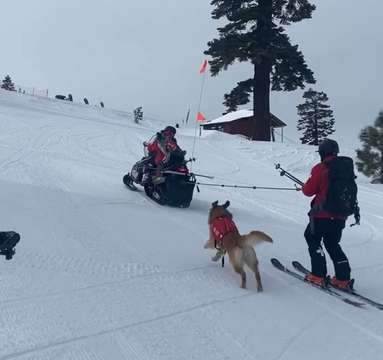
Ryan McPartland is the Ski Patrol Assistant Director at Heavenly Ski Resort. He has been on the ski patrol team for 25 seasons. For the last seven years, he’s had Yuba, his seven year old rescue dog by his side. Before that, McPartland also raised Yuba’s dad.

The legacy of patrol pups is nothing knew for the resort, which started the Heavenly Avalanche Rescue Dog or HARD team back in the late 1980’s. Today, Yuba is one of seven rescue dogs at Heavenly.

Avalanche dogs can search up to two football fields in 30 minutes, while it might take a human about 4 hours to conduct the same search. Making the role of an avalanche dog at a big resort like Heavenly that much more invaluable. McPartland explained,

People get excited by the above average Sierra snowpack, and they should. But they also need to know the risks.

The risk of an avalanche go up significantly once you exit the ski area boundary. McPartland warns. There is no ski patrol there to help you, so it’s very important that you have the training that you’re exposing yourself to a higher level of risk — and you know how to deal with it.

If you do decide to leave the ski area boundary, and ski in the backcountry, there are three things you are going to need:

  • An avalanche transceiver
  • An avalanche probe
  • A shovel

An avalanche transceiver can locate you from an isolated location underneath the snow. The avalanche probe will help with finding how deep under the snow you are, and the shovel that allows the rescuer to chop the snow up, and find you.

Above average Sierra snowpack prompts avalanche awareness

‘Are you beeping?’ Avalanche program aims to save lives in the Cascades

February 26, 2021 – SNOQUALMIE PASS, Wash. — A volunteer ski patroller started an “Are You Beeping?” project to help save lives in the Cascade mountains.

A snowy year in the Cascades

It has been an especially snowy February in the mountains of western Washington. There have been feet of snow falling in a matter of days. Significant storm systems have forced closures at the passes. And raised the avalanche danger for the backcountry.

On Friday Snoqualmie Pass got another foot of snow overnight. This brought the season total to 396 inches, or 33 feet. The evidence of that is clear. There are mounds of snow reaching the top of light poles, and walls of ice taller than semi-trailers.

Stevens Pass closed for a period Friday after avalanche debris covered US 2.

So it’s no doubt that avalanches are on Scott Waller’s mind. He’s a volunteer ski patroller with King County Search and Rescue. He started a project to improve avalanche safety a decade ago. 

The “Are you beeping?” Project

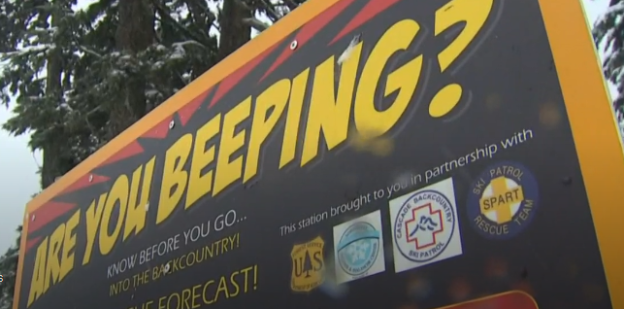
Waller’s project “Are You Beeping?” installs avalanche beacon test sites and signage at resort gates and forest trailheads before users enter risky terrain. It’s a chance for explorers to turn on their avalanche beacons. The signs also include information about avoiding risky terrain and unstable snow conditions.

Waller sees it as a friendly reminder to be prepared. 

“It’s amazing how people will intend to put on their avalanche transceiver. But then they forget it in their car,” he said.

Some ski resorts have purchased the signs at cost, and some are funded by non-profit donations.

On Friday he installed a new one on the Pacific Crest Trail near the Alpental exit off I-90. Which is a popular snowshoeing and touring destination. It was funded by Ski Patrol Rescue Team (SPART). Which is a volunteer group that works with King County Search and Rescue. Two more check stations will be installed at Alpental’s backcountry gates this weekend.

Saving Lives

It’s tough to know if the signs have saved lives, Waller said, but that’s the goal.

“That’s the hope,” he said. “It’s hard to measure, or quantify it. But know I’ve sat at trailheads putting these up all over. And it’s amazing how someone will show up, they’re a backcountry skier, and they forgot to turn it on. Yeah, it happens. Just reminding them.”

Are you beeping?

Avalanche beacon training park established near Minturn

A new avalanche beacon training park outside Minturn gives the public an accessible opportunity to practice using avalanche transceivers. Beacons are a critical piece of safety equipment for winter backcountry recreation.

“Record numbers of people are venturing into the backcountry, and the need for winter backcountry safety education is higher than ever,” said Ranger Leanne Veldhuis. “Avalanche transceivers are key to finding avalanche victims as soon as possible. But they are only effective if people know how to use them.”

The avalanche beacon training park is situated a short climb up the slope at the Mountain Meadow Trailhead on U.S. 24. Which is about quarter mile from the I-70 Minturn exit.

The park consists of eight buried transmitters that can be turned on and off from a small control panel. This allows for multiple search scenarios to familiarize people with using their avalanche transceivers and probing the snow for victims. It’s a self-operating system open all day to the public.

“Beacon parks have traditionally been located at ski areas, where access may be limited to pass holders,” Veldhuis said. “This accessible location should help encourage more people to become proficient using avalanche transceivers, which can help save lives.”

While avalanche transceivers are important if someone becomes buried in an avalanche, avoiding avalanches in the first place is the best strategy.

avalanche beacon training park

[DISPLAY_ULTIMATE_SOCIAL_ICONS]

Call to check avalanche transceivers as potential issue reported

A potential issue has been identified with the switches on Black Diamond/PIEPS DSP Pro and DSP Sport models of avalanche transceivers.

Pieps Avalanche Transceivers

Owners and users of these devices are encouraged to follow the manufacturers guidance and check that they are operating correctly.

During filming for this season’s TGR Film, pro skier Nick McNutt was caught in a snow avalanche right in front of the film crew and fellow skiers. As they rushed to search for him, they were quickly hit by the realization that they couldn’t get a signal from his avalanche transceiver. Fortunately for Nick, with a film crew and a bunch of experienced skiers on hand, a probe line was formed and he was found alive, though battered, broken and bruised. On digging him out it was found that his transceiver switch was in the OFF position. He was wearing his transceiver in the chest harness as indicated by the manufacturer.

Unfortunately, the offending transceiver was lost in the post whilst attempting to return it to Black Diamond for testing.

In publicizing this event on social media, and within the North American guiding community, other anecdotes have surfaced involving issues with the switches, and various videos have been posted showing the switches being overridden. Black Diamond/PIEPS state that their testing has shown no change in switch resistance with heavy use, but they noted that switches with visibly damaged lock/switch mechanisms showed a decrease in switch resistance of 50-100%. They also stated there have been only two recorded incidents in which the switch allegedly failed. In the other incident the transceiver was not worn in its harness and the police investigation reported that the victim’s avalanche transceiver was working properly.

Please ensure you check your own transceiver to ensure the switch is free from cracks and is working correctly. Should you be unsure, please contact PIEPS/Black Diamond on dsp@pieps.com

And if you’re wearing a transceiver, make sure you’re well practiced in using it and that you’re carrying the means of finding and digging someone out, which means carrying a probe and shovel.

British Mountaineering Council, December 4, 2020