Category Archives: Uncategorized

Heavy snowfall, avalanche warning in 4 Kashmir districts

New Delhi, Nov 16 (PTI)

Heavy snowfall and landslides in the Union Territory forced closure of the important Jammu-Srinagar National Highway in Ramban and authorities in Kashmir have issued an avalanche warning for four districts — Kupwara, Bandipora, Baramulla and Ganderbal.

While a medium danger avalanche warning has been issued for the higher reaches of Kupwara and Bandipora districts, a low danger avalanche warning has been issued for the higher reaches of Ganderbal and Baramulla districts, they said.

Several high-altitude areas of Jammu and Kashmir, Uttarakhand and Himachal Pradesh were wrapped in thick white sheets of snow, with many tourist destinations like Kufri, Manali and Auli receiving the season’s first snowfall, while temperatures dipped in Delhi, Haryana and Punjab following rains.

The Jammu-Srinagar National Highway, the only all-weather road connecting Kashmir with rest of the country, was closed for traffic following snowfall around Jawahar Tunnel and landslides from the hillocks at several places in Ramban district, officials said. The alternate link between the valley and rest of the country, Mughal Road, also remained closed for the third day as high-altitude areas experienced snowfall.

https://th.thgim.com/news/national/other-states/wk36mo/article33106821.ece/ALTERNATES/FREE_660/SRINAGAR

Upper Himalayan areas, including Kedarnath, Badrinath, Gangotri, Yamunotri, Auli and Harsil, of Uttarakhand received the season’s first heavy snowfall, intensifying cold conditions across the state. Snowfall began on Sunday night and continued till Monday morning, according to officials. The shrines of Kedarnath and Yamunotri in Uttarakhand closed for the winters amid the heavy snowfall.

In Jammu and Kashmir, security forces have rescued 10 people, including two women and a child, after they were trapped in heavy snowfall at the high-altitude Sinthan pass. The rescue operation was carried out late Sunday night after information was received about a group of stranded civilians. The rescue team, comprising army and police personnel, walked for five hours along the National Highway 244 in zero visibility conditions during the night and brought the stranded people to Sinthan ground where they were provided with food and shelter.

Delhi recorded a maximum temperature of 25.8 degrees Celsius, the lowest this season so far, following rains under the influence of a Western Disturbance. However, the minimum temperature rose to 16 degrees Celsius, the highest since October 22, according to the India Meteorological Department (IMD). IMD officials attributed the drop in the maximum temperature and the increase in the minimum temperature to the presence of clouds in the region under the influence of the Western Disturbance. Until now, Delhi had been witnessing a trend of low minimum temperatures this month due to the absence of cloud cover. Clouds trap some of the outgoing infrared radiation and radiate it back downward, warming the ground.
Skiers Trigger Avalanches Near Independence Pass

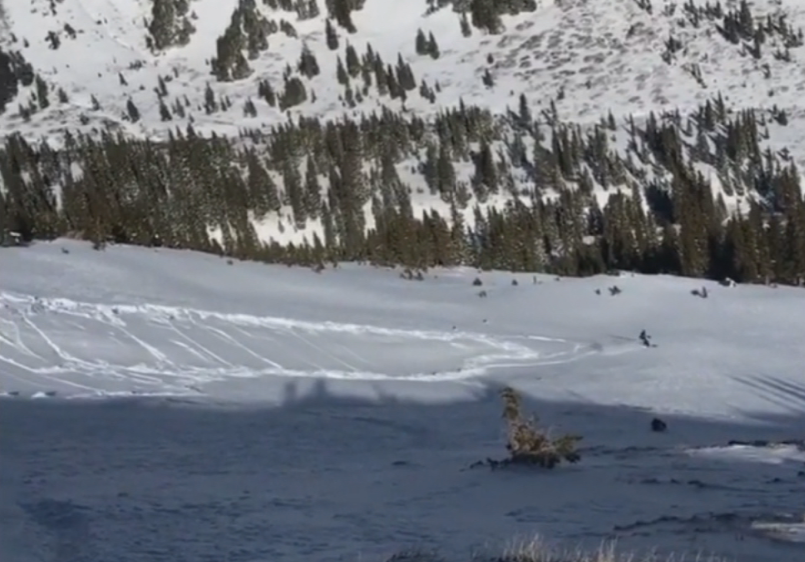
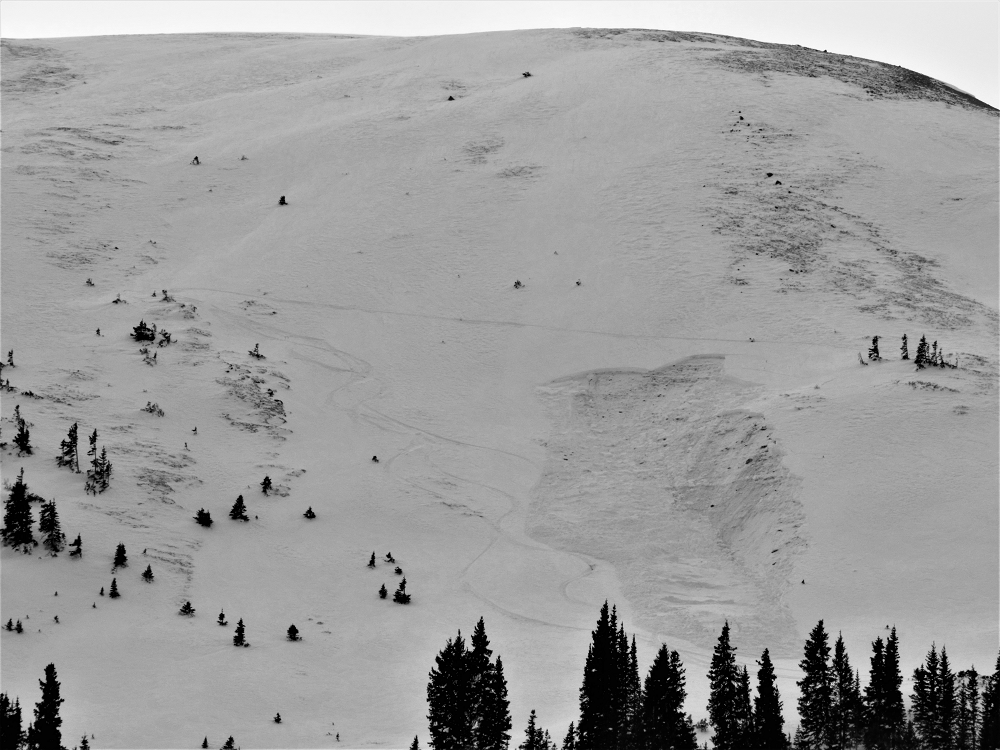
Avalanche forecasters recently raised warning flags following a pair of skier-triggered snowslides. Neither skier was injured.

The Colorado Avalanche Information Center (CAIC) suggests that backcountry skiers stay clear of steeper slopes or simply wait for greater depth of solid snow.

The first occurred Tuesday near Independence Pass. The skier was caught in the avalanche and pulled off their feet.

The second avalanche happened Friday in Mountain Boy Gulch, south of Independence Pass, on a north-facing slope.

The skier was traveling quickly and moved out of the slide’s path.

CAIC said dry snow from an October storm is now the weak base for additional depth. Both of the locations that slid last week are subject to drifting that proves attractive to early season recreationists. “Attractive for riding, but also the slopes with enough snow for avalanches.”

Avalanche in Colorado

In a new Avalanche Safety initiative survivors share harrowing experience

A new avalanche safety initiative started in Alberta is looking to prepare backcountry explorers for the unthinkable.

The founders of the Backcountry Safe are drawing from their own tragic story of surviving an avalanche in 2016.

“Upon reflection, over the last couple of years every member of our group has come to realize that we had a shared responsibility,” Sheila Churchill, avalanche survivor and Backcountry Safe co-founder, said.

“There were lessons that we have learned that we need to share with the greater public about safe travel in the backcountry.”

They say having experience and confidence just aren’t enough to prevent a tragedy.

“Obviously we thought we would be fine too,” Churchill said.

“We thought this would never happen to us. We thought we had done our due diligence, but the reality is the mountains don’t care.”

Co-founder Mitch Putnam said an incident during the group’s ski trip continues to leave each of the members with heavy hearts as well as scars.

“There’s no doubt it was very tragic,” Putnam said. “We lost a dear friend and Sheila’s husband Doug Churchill passed away as a result of the tragedy and we had multiple injuries within our group.”

Putnam said hiring a guide is not where the preparation should end.

“We did not come as prepared as we should have been individually,” Putnam admitted. “We checked out mentally and left everything to the guide, which was a mistake.”

Backcountry lessons

The initiative groups learned lessons into main themes:

Know yourself and your group. Plan your day. Know what to do in an emergency.

“How are you communicating and making decisions?” Putnam said. “That’s a really interesting piece for anyone heading into the backcountry or undertaking any outdoor adventure.”

“We know that the stories are there and that is where we will learn as a community,” Churchill said. “By sharing these stories together and keeping everyone safe.”

A documentary on their harrowing experience is included on the Backcountry Safe website.

If you have your own experience, tips or warnings to share feel free to add a comment, no login is required.

Pieps DSP Controversy

Do you have anything to add? A similar experience, a positive experience, a response? Please feel free to comment, our comments are open for all with no login currently required.

In an accident which occurred on March 9, 2020 pro skier Nick McNutt was using a Pieps DSP avalanche beacon, which is now believed to have malfunctioned and switched off while McNutt was skiing.

“In the following days I was in disbelief that Nick’s transceiver had turned off,” ACMG guide Christina Lustenberger, who was present, wrote. “The experience left me questioning the integrity of the Pieps DSP Pro. A few days after the incident I sent an email to the guiding community inquiring about similar experiences or issues with this device. I was surprised to see my email flooded with similar accounts.”

According to Lustenberger, the possible problem is that the DSP Pro beacon “can switch modes easily without the user’s knowledge … Due to poor design the button wears out and no longer provides resistance allowing it to slide out of send mode,” she continued in her post.

Since then, several others in the guiding and skiing community have subsequently noted similar issues with the slide lock mechanism, and Pieps and Black Diamond now face a class-action lawsuit related to these claims.

For a complete story and video check out the story on Gear Junkie: https://gearjunkie.com/nick-mcnutt-avalanche-pieps-beacon-dsppro

‘Hazards’ a concern in early season backcountry

SALT LAKE CITY — Upwards of 30 inches of snow have fallen in some areas in the Wasatch Mountains with those eager for powder already hiking in to take advantage.

Utah Avalanche Center has been observing the conditions and heeds warning for those taking some early season turns.

“You don’t want to ruin your season before it gets started,” said Craig Gordon with the Utah Avalanche Center. “Rocks and deadfall and stumps and slamming into those objects I mean that’s probably the biggest hazard right now.”

UAC anticipates a busy winter season following suit from a busy summer with more people flocking to the mountains during the pandemic.

“Sometimes our avalanche awareness skills don’t really keep up with our ski or riding or snowmobile skills so we’ve got to think about toning it down a little bit,” said Gordon. “Actually, we saw a huge uptick in human-triggered avalanches, close calls and near-misses so that’s the exact thing we want to avoid.”

In the 2019/2020 season, six deaths stemmed from avalanches in Utah. Four of the six were snowmobilers.

Fox 13 – Salt Lake City